A Local Guide to Learning to Drive in Bromley
 Embarking on the journey of learning to drive in Bromley marks a significant step towards independence and opens up a world of possibilities. This comprehensive guide is designed to equip you with the knowledge and insights necessary to navigate the process effectively, ensuring you build a solid foundation for safe and confident driving. For those seeking a professional and structured approach to acquiring their driving licence, exploring the services offered by ELSDrivingSchool.co.uk is a worthwhile endeavour as you begin your quest. Learning to drive is akin to learning a new language; it requires dedication, practice, and a willingness to understand the nuances of communication on the road.
Before the first lesson begins, there are essential administrative and preparatory steps that lay the groundwork for your driving education. These are not merely bureaucratic hurdles but crucial elements that ensure you are legally and practically ready to learn.
Obtaining Your Provisional Driving Licence
The first tangible step towards taking the wheel is to apply for a provisional driving licence. This document signifies your legal permission to begin learning to drive a motor vehicle on public roads, provided you are supervised by a qualified driving instructor or a designated person who meets specific age and experience criteria.
Eligibility Criteria
To apply for a provisional driving licence, you must meet certain age and residency requirements. Generally, you can apply for a car provisional licence up to three months before your 17th birthday, but you cannot start driving on public roads until you are 17. You will also need to provide proof of identity and address. A thorough understanding of these requirements ensures a smooth application process, preventing potential delays.
The Application Process
The application is typically completed online through the official government website or by obtaining a D1 form from a Post Office. You will need to provide personal details, including your national insurance number, and undergo an eyesight test. The application also requires you to confirm that you are not disqualified from driving for any reason and to declare any medical conditions that might affect your ability to drive.
The Theory Test: The Theoretical Compass
The theory test is the gateway to your practical driving journey. It assesses your knowledge of the Highway Code, road signs, and safe driving practices. Passing this test demonstrates that you have the theoretical understanding necessary to operate a vehicle safely and responsibly.
Structure of the Theory Test
The theory test is divided into two parts: multiple-choice questions and a hazard perception test. The multiple-choice section covers a broad range of topics related to road rules, vehicle maintenance, and driving techniques. The hazard perception test presents you with a series of video clips, where you must identify developing hazards as they appear.
Preparing for the Theory Test
Effective preparation is key to success in the theory test. Numerous resources are available to aid your studies, including official revision materials, mobile applications, and online courses. Understanding the rationale behind the rules, rather than simply memorizing them, will foster a deeper comprehension and improve your long-term retention of this vital information. This theoretical knowledge acts as your compass, guiding your decisions on the road.
If you’re considering learning to drive in Bromley, you might also find it helpful to explore resources that cover nearby areas. A related article that could provide valuable insights is about driving lessons in Catford, which can offer additional perspectives on local driving schools and regulations. For more information, you can check out the article here: Driving Lessons in Catford.
With your provisional licence secured and a grasp of the theoretical, the real adventure of practical driving begins. These lessons are where theory transforms into tangible skill, and textbook knowledge is applied in the dynamic environment of Bromley’s roads.
Choosing a Driving Instructor and School
Selecting the right driving instructor and school is paramount. An experienced and patient instructor can significantly influence your learning pace and confidence levels. Bromley offers a variety of driving schools, each with its unique approach and instructors.
Qualities of a Good Driving Instructor
A proficient driving instructor will possess not only a thorough understanding of driving mechanics and regulations but also excellent communication skills, patience, and the ability to adapt their teaching style to your individual needs. They should be able to provide clear explanations, constructive feedback, and create a supportive learning environment. Look for instructors who are Approved Driving Instructors (ADIs), as indicated by a green badge displayed in their vehicle.
The Benefits of Professional Instruction
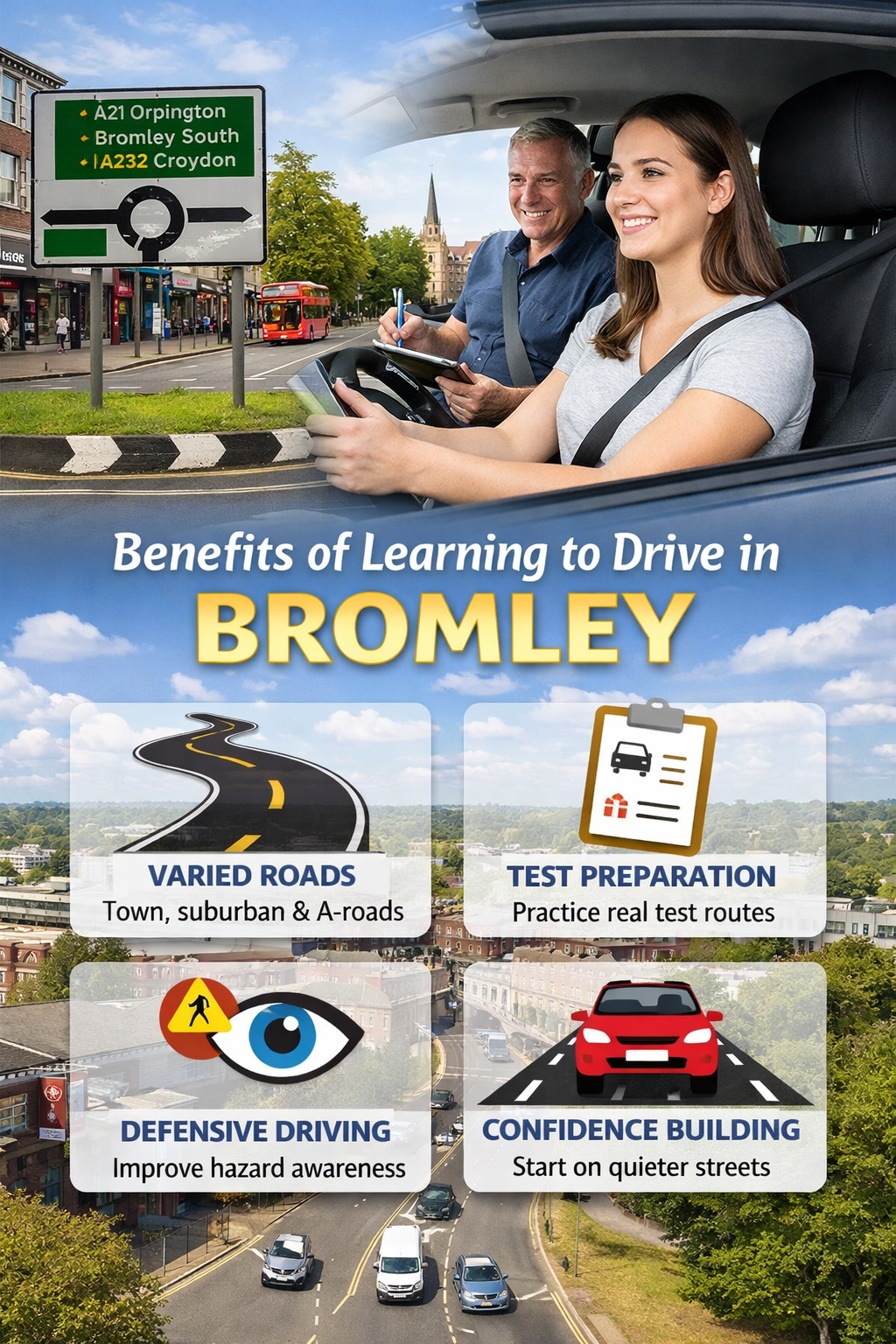
Professional instruction goes beyond simply teaching you to operate a car. It involves instilling a deep understanding of defensive driving techniques, hazard awareness, and the responsibilities that come with driving. An instructor can identify your specific weaknesses and provide targeted practice, ensuring you are well-prepared for the practical driving test.
Developing Essential Driving Skills
Practical lessons will cover a comprehensive range of skills, from basic vehicle control to navigating complex traffic situations. Each skill builds upon the last, creating a layered understanding of driving.
Vehicle Control and Manoeuvres
This foundational stage involves mastering the basics of steering, braking, acceleration, and gear changes. You will learn to control the car smoothly and accurately, which is crucial for all subsequent driving activities. Manoeuvres such as parallel parking, bay parking, and the ‘pull up on the right and reverse’ manoeuvre are systematically taught and practiced. These are the building blocks upon which all confident driving is constructed.
As your confidence grows, you will progress to driving on various types of roads within Bromley, from quiet residential streets to busier A-roads. Learning to anticipate traffic flow, interpret road signs and road markings, and interact safely with other road users, including cyclists and pedestrians, are vital components of this stage. Understanding the rhythm of traffic is like learning to dance with it.
Advanced Driving Techniques and Hazard Perception
Beyond the core skills, your lessons will likely delve into more advanced techniques designed to enhance your safety and competence.
Anticipation and Planning
Effective driving is not just about reacting to immediate situations but about anticipating what might happen next. Your instructor will guide you on how to scan the road ahead, identify potential hazards, and plan your actions accordingly. This proactive approach is a cornerstone of safe driving.
Dealing with Different Road Conditions
Bromley, like any urban environment, presents a variety of road conditions. You will learn to adapt your driving to factors such as adverse weather (rain, fog, ice), poor lighting, and varying road surfaces. Understanding how these conditions affect vehicle grip and stopping distances is critical.
Preparing for the Practical Driving Test
The practical driving test is the culmination of your learning journey. It is a formal assessment designed to ensure you can drive safely and independently. Thorough preparation is the key to approaching this test with confidence.
Understanding the Test Format and Requirements
The practical test is conducted by an examiner and typically lasts around 40-50 minutes for standard car tests. It assesses your ability to drive safely in various road and traffic conditions, alongside performing a manoeuvre and a set of independent driving tasks.
The Driving Assessment
The examiner will observe your general driving ability, including your observation skills, use of mirrors, signalling, road positioning, and speed. They will assess your ability to deal with junctions, roundabouts, pedestrian crossings, and other traffic situations.
Independent Driving Section
A significant part of the test involves independent driving. For approximately 20 minutes, you will be asked to follow directions from a sat nav or follow traffic signs. This section evaluates your ability to navigate independently while maintaining safe driving practices.
Mock Tests and Practice Sessions
To simulate the real test environment and identify any remaining areas for improvement, mock tests are invaluable.
The Value of Mock Tests
A mock test, conducted by your instructor under exam conditions, provides a realistic preview of the actual test. It helps you to manage nerves, understand the time constraints, and receive feedback on your performance in a low-pressure setting. This practice is like rehearsing a play before the opening night.
Targeted Practice on Weaknesses
Following a mock test or based on your instructor’s ongoing assessment, you will engage in targeted practice to address any specific areas where you struggled. This concentrated effort ensures you are confident and competent in all aspects of the driving syllabus.
Beyond the Test: Continuing Your Driving Journey
Passing your practical driving test is a momentous achievement, but it marks the beginning of a lifelong learning process. The skills and habits you develop early on will shape your driving for years to come.
Developing Post-Test Confidence
While you have proven your competence, the transition to driving independently can feel daunting. Gradually increasing your driving exposure to different situations and distances can help build lasting confidence.
Gradual Exposure to Different Driving Scenarios
Start with shorter journeys in familiar areas and gradually venture further afield. Driving during different times of day and in varying weather conditions will further broaden your experience.
Building a Habit of Safe Driving
The principles learned during your lessons – observation, anticipation, and adherence to the Highway Code – should become ingrained habits. Continually being aware of your surroundings and the actions of other road users is paramount.
Further Training Opportunities
The learning doesn’t have to stop after obtaining your full licence. There are various advanced driving courses available that can refine your skills and enhance your safety.
Advanced Driving Courses
Courses such as the Pass Plus scheme offer additional training in areas like motorway driving, night driving, and rural road driving. These courses can not only improve your driving expertise but may also lead to reduced insurance premiums.
Maintaining and Updating Knowledge
The Highway Code and driving regulations are subject to change. Regularly reviewing this information and staying informed about new driving technologies and safety advice is a responsible practice for any driver. This continuous learning is the engine that keeps your driving knowledge current.
If you’re looking for additional insights on preparing for your driving lessons in Bromley, you might find it helpful to check out a related article that offers valuable tips on how to book a driving lesson effectively. This resource can guide you through the process and ensure you make the most of your learning experience. For more information, you can read the article here.
Local Driving Considerations in Bromley
Bromley presents a unique driving landscape with its blend of suburban roads, busy arterial routes, and varying traffic patterns. Understanding these local characteristics can significantly aid your learning experience.
Bromley boasts a diverse road network. You will encounter a range of driving challenges, from navigating busy town centres with their associated traffic lights and pedestrian activity to cruising along the quieter residential streets.
Busy Town Centre Driving
The Bromley town centre, with its shops, public transport hubs, and pedestrian zones, requires a high level of awareness and anticipation. You will need to be adept at managing complex junctions, understanding bus lane restrictions, and being mindful of vulnerable road users.
Suburban and Residential Roads
While generally quieter, suburban roads present their own challenges. You will encounter parked cars, driveways, and cyclists. Mastering the ability to manoeuvre safely and courteously in these areas is essential.
Understanding Local Traffic Patterns and Challenges
Bromley’s traffic can be unpredictable, influenced by local events, school runs, and commuting times. Being prepared for these variations is a key part of becoming a competent local driver.
Rush Hour Commuting
During peak commuting hours, the main roads into and out of Bromley can experience significant congestion. Learning to navigate these situations calmly and safely, employing techniques such as maintaining a safe distance and planning your route effectively, is important.
School Run Dynamics
Certain areas of Bromley observe heightened traffic activity during school drop-off and pick-up times. This heightened activity demands extra vigilance from drivers, as children and parents may be present on pavements and crossing roads.
By approaching your driving education with a structured mindset, diligent preparation, and a commitment to continuous learning, you will be well-equipped to become a safe, confident, and responsible driver on the roads of Bromley and beyond.