Bromley Driving Test Success Rate Explained
Understanding the driving test pass rate in Bromley can offer valuable insights for aspiring drivers. It’s not just a number; it reflects the collective success of individuals learning to navigate the roads and demonstrate their competency. For those embarking on their driving journey, a grasp of these statistics can help manage expectations and inform their preparation. This information is particularly relevant to individuals in the Bromley area seeking to gain their independence. Learning to drive is a significant milestone, and knowing what contributes to success on the Bromley tests is a practical step. For more information on how to prepare for your driving lessons and tests, you can explore resources on driving instruction services.
The Bromley driving test pass rate is a complex metric, influenced by a multitude of factors that extend beyond the individual candidate’s abilities. These elements create a landscape within which learners must operate, and understanding them is crucial for anyone aiming to pass their test.
Candidate Preparedness and Skill Development
The most direct influence on any driving test pass rate is the preparedness of the candidates themselves. This encompasses a broad spectrum of elements, from foundational driving skills to a deep understanding of road rules and hazard perception.
Driving Instructor Quality and Teaching Methodologies
The quality of instruction received plays a pivotal role. Experienced and qualified driving instructors are vital in instilling the correct techniques, building confidence, and identifying areas for improvement. Effective teaching methodologies ensure that learners not only memorize maneuvers but truly understand the underlying principles of safe driving. This includes a structured approach to lessons, tailored to individual learning styles and paces.
Continuous Assessment and Feedback
A good instructor will provide ongoing assessment and constructive feedback. This means regularly evaluating a student’s performance during lessons, highlighting strengths and weaknesses, and offering clear strategies for improvement. This iterative process allows learners to address issues before they become ingrained habits, which is essential for test success.
Development of Hazard Perception Skills
Hazard perception is a critical component of modern driving. Instructors should actively train candidates to anticipate potential dangers, assess risks, and react appropriately. This involves simulated scenarios, discussions about real-world driving situations, and encouraging a proactive mindset on the road.
Learner’s Commitment and Practice Regimen
Beyond formal instruction, a learner’s personal commitment to practice is indispensable. Simply attending lessons is not enough; consistent and varied practice solidifies skills and builds muscle memory.
Frequency and Duration of Practice Sessions
The frequency and duration of practice sessions directly correlate with skill development. Regular, shorter practice sessions are often more effective than infrequent, prolonged ones, as they help reinforce learning without causing fatigue or burnout.
Variety of Driving Conditions and Environments Practiced
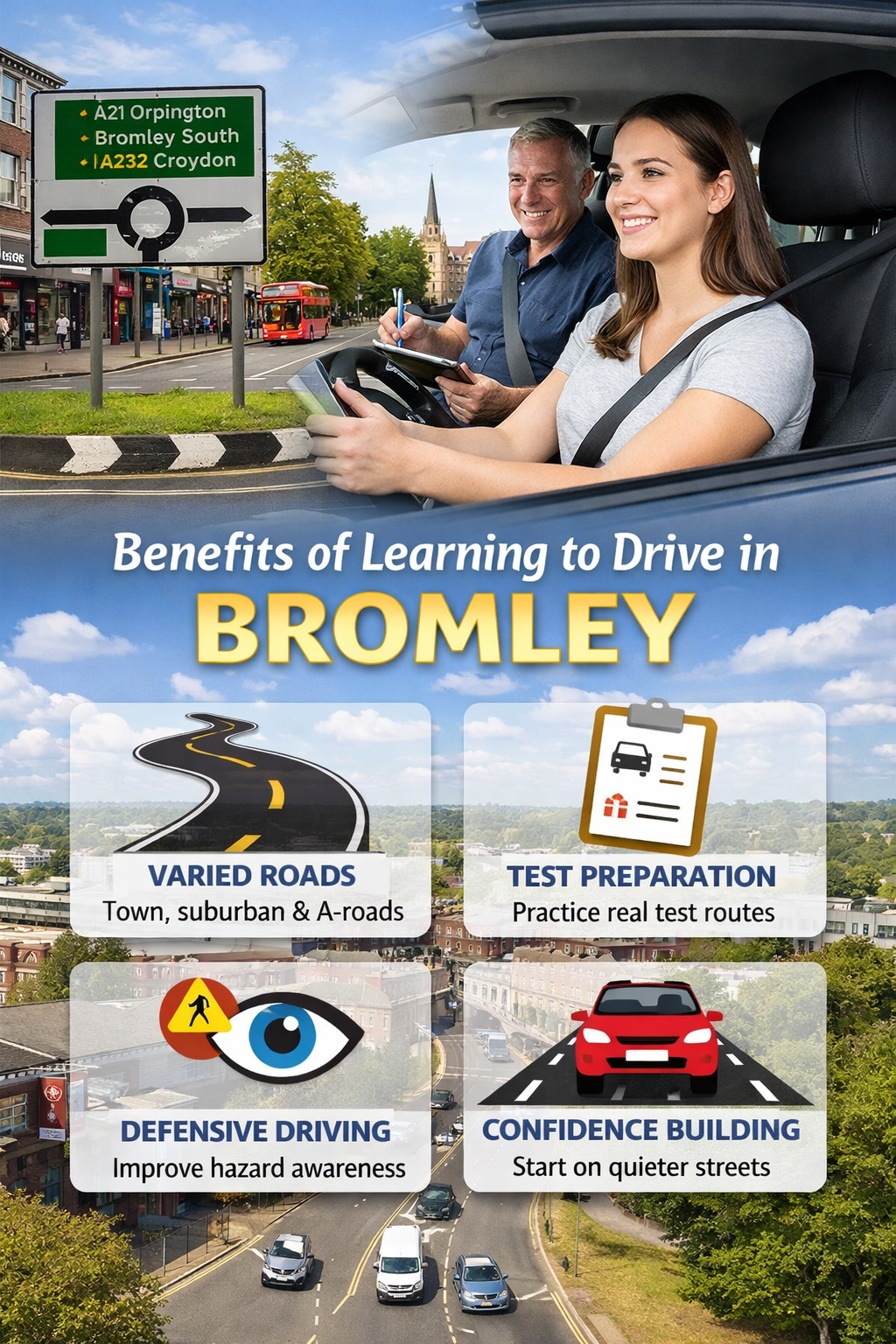
Exposure to a wide range of driving conditions and environments is crucial. This includes practicing in different weather conditions (rain, fog, glare), at various times of the day (daylight, dusk, night), and in diverse traffic situations (urban, rural, dual carriageways). Bromly’s varied road network, from busy town centers to quieter suburban streets, offers ample opportunities for such practice.
Solo Practice and Independent Driving Preparation
While supervised practice with an instructor or accompanying driver is essential, developing independent driving skills is paramount. This involves practicing routes with a focus on independent decision-making and navigating without constant instruction, preparing candidates for the independent driving section of the test.
The Role of the Driving Test Centre and Examiner
The driving test centre in Bromley and the examiners who administer the tests are integral to the pass rate. Their environment and their assessment criteria shape the testing experience.
Standardisation of Test Routes and Assessment Criteria
Driving tests are designed to be standardized, ensuring fairness and consistency across all candidates. Test routes are typically chosen to expose candidates to a variety of road conditions and traffic situations typical of the Bromley area. Examiners are trained to assess candidates against a rigorous set of criteria, ensuring that only those who demonstrate a safe standard of driving are awarded a pass.
Understanding the Test Syllabus and Marking Scheme
A thorough understanding of the driving test syllabus and the marking scheme is vital for both learners and instructors. This knowledge allows for targeted preparation and helps candidates understand what constitutes a minor or serious driving fault.
Common Mistakes and How to Avoid Them
Examiners often encounter recurring mistakes. Being aware of these common pitfalls – such as poor observation at junctions, incorrect speed progression, or inadequate lane discipline – allows candidates to actively work on avoiding them during their test.
Examiner Demeanour and Test Administration
While examiners are professionals adhering to strict protocols, their demeanour can influence a candidate’s nerves. A calm and clear approach from the examiner can help candidates feel more at ease. The administration of the test, including clear instructions and fair assessment of maneuvers, is also a key component.
Managing Test Anxiety
Test anxiety is a significant factor for many learners. Instructors often work with students on techniques to manage nerves, such as deep breathing exercises and positive self-talk, helping them to perform to their best ability on the day.
Communicating with the Examiner
Clear and concise communication with the examiner is important. This includes understanding their instructions and asking for clarification if needed, without causing undue disruption to the test itself.
External Environmental Factors
Beyond the direct control of the candidate or the test centre, external environmental factors can also play a role in driving test outcomes.
Traffic Conditions on Test Day
The density and flow of traffic on the day of the test can significantly impact performance. Unexpectedly heavy traffic might present more challenging situations, while unusually light traffic might mean fewer opportunities to demonstrate certain skills in a busy environment.
Adapting to Real-Time Traffic Situations
Candidates need to be adept at adapting their driving to real-time traffic conditions. This involves making appropriate speed adjustments, anticipating the behaviour of other road users, and maintaining a safe distance.
Bromley’s road network includes various complex junctions and roundabouts. Successfully navigating these requires precise observation, correct lane discipline, and clear signalling, all of which are closely scrutinised during the test.
Weather Conditions
Adverse weather conditions, such as heavy rain, fog, or icy roads, can create additional hazards and make driving more challenging. While examiners expect candidates to drive at a reduced speed and with increased caution in such conditions, it can still affect overall performance and pass rates.
Safe Driving in Adverse Weather
Candidates must demonstrate proficiency in driving safely regardless of the weather. This includes understanding the reduced grip on wet or icy surfaces, the impact of reduced visibility, and the importance of appropriate lighting.
Maintaining Visibility and Awareness
Ensuring clear visibility through wipers and defrosters, and maintaining a heightened awareness of surroundings, are crucial when driving in poor weather. These are aspects that examiners will be observing.
If you’re interested in understanding more about driving lessons and their safety, you might find the article on intensive automatic driving lessons insightful. It explores the effectiveness and safety of intensive courses, which can be particularly relevant for those preparing for their driving tests. You can read more about it here: Intensive Automatic Driving Lessons: Are They Safe?.
Understanding the Data: Bromley’s Driving Test Statistics
Delving into the actual statistics for Bromley driving test pass rates provides a quantifiable measure of success, but it’s essential to interpret this data within its broader context. These figures are not static and can fluctuate for various reasons.
Regional and National Pass Rate Comparisons
Comparing Bromley’s pass rates with regional averages and national figures can offer a broader perspective. It’s important to note that pass rates can vary significantly between different test centres due to local driving conditions, the demographics of candidates, and the specific routes used.
Trends Over Time
Examining trends in pass rates over several months or years can reveal whether the rate is increasing, decreasing, or remaining stable. These trends might be influenced by changes in DVSA (Driver and Vehicle Standards Agency) assessment criteria, shifts in teaching methodologies, or evolving traffic patterns.
Impact of New Driving Test Regulations
The DVSA periodically updates its driving test requirements to reflect modern driving challenges. Any new regulations, such as changes to the independent driving section or the introduction of new manoeuvre assessments, can initially impact pass rates as candidates and instructors adapt.
Influence of Local Development and Roadworks
Extensive roadworks or significant urban development in the Bromley area can alter traffic flow and introduce new hazards, potentially affecting test difficulty and consequently the pass rate. These external factors are beyond the control of individual candidates.
Demographic Factors and Pass Rates
While the test itself is designed to be objective, certain demographic factors can sometimes correlate with differences in pass rates. However, it’s crucial to avoid generalizations, as individual ability and preparedness are paramount.
Age and Experience of Candidates
Generally, younger drivers with less experience tend to have a lower pass rate compared to older drivers or those with more extensive supervised practice. This is often attributed to differing levels of cognitive development, risk perception, and decision-making maturity.
Impact of Prior Driving Experience (e.g., overseas licences)
Individuals who have driven in other countries and are converting their licences may have varying levels of experience and familiarity with UK road laws. The transition period and any necessary additional training can influence their success rates.
Gender and Pass Rates
Research on gender and driving test pass rates has shown some variations, though the reasons are complex and debated. These differences are generally marginal and are more likely to be influenced by societal factors and learning styles rather than inherent ability.
Pass Rates by Test Centre Location
While this article focuses on Bromley, it’s worth noting that even within a single town or borough, different test centres might have slightly different pass rates. This can be due to the specific routes available from that centre and the associated traffic complexities.
Characterising Bromley’s Test Routes
Bromley’s test routes are designed to include a variety of typical driving situations encountered in a suburban and urban environment. This can involve navigating busy high streets, residential roads with restricted speed limits, roundabouts, and junction scenarios.
Identifying Common Test Routes and Their Challenges
While test routes are not publicly disclosed in advance to prevent rote learning, instructors familiar with the area will know the types of roads and traffic situations that are likely to be encountered. Understanding these challenges beforehand is crucial for preparation.
Preparing for Your Bromley Driving Test: Strategies for Success

Achieving a successful outcome on your Bromley driving test requires a strategic and dedicated approach. It’s about more than just passing; it’s about becoming a safe and confident driver for life.
Structured Learning and Professional Instruction
The foundation of successful test preparation lies in structured learning guided by a qualified professional.
Choosing the Right Driving School and Instructor
Selecting a reputable driving school in Bromley with experienced and patient instructors is paramount. Researching schools, reading reviews, and potentially having an introductory lesson can help ensure a good fit.
Instructor Qualifications and Experience
Ensure your instructor is fully qualified by the DVSA and has a strong track record. Experience with testing in the Bromley area is a distinct advantage.
Importance of a Patient and Encouraging Teaching Style
A calm, patient, and encouraging instructor can significantly boost a learner’s confidence and reduce test anxiety.
Developing a Comprehensive Lesson Plan
A structured lesson plan ensures all aspects of the driving syllabus are covered systematically.
Covering All Essential Driving Skills
This includes fundamental skills like pulling away, stopping, gear changes, and steering, as well as more advanced techniques.
Mastering Specific Test Maneuvers
Maneuvers such as parallel parking, bay parking (forward and reverse), and pulling up on the right side of the road must be practised until they are executed with precision and confidence.
Practicing Independent Driving Segments
Dedicated practice sessions focusing on the independent driving section, often involving following sat-nav directions or traffic signs, are crucial.
Mock Tests and Self-Assessment
Simulated test conditions and honest self-assessment are vital for identifying and rectifying weaknesses.
Conducting Realistic Mock Driving Tests
Mock tests conducted by your instructor under exam conditions simulate the pressure and format of the actual test.
Mimicking Test Duration and Route Complexity
These mock tests should replicate the length of the real test and incorporate the types of roads and traffic situations likely to be encountered in Bromley.
Receiving Detailed Feedback from the Instructor
After a mock test, detailed feedback on performance, including any minor or serious faults, is essential for targeted improvement.
Self-Reflection and Identifying Areas for Improvement
After each lesson and mock test, engaging in self-reflection is a powerful tool.
Honest Evaluation of Performance
Ask yourself honestly: what went well? What could have been better? Where did I feel uncertain?
Seeking Specific Guidance for Weaknesses
Use this self-assessment to ask your instructor for specific drills or explanations to address any identified weaknesses.
Mental Preparation and Test Day Strategies
The psychological aspect of the driving test is as important as the practical skills.
Managing Test Anxiety and Nerves
Learning to manage test anxiety is key to performing at your best.
Relaxation Techniques
Practice deep breathing, mindfulness, or visualization techniques to remain calm before and during the test.
Positive Self-Talk and Mindset
Focus on your preparation and your ability to drive safely, rather than dwelling on potential mistakes.
Understanding Test Day Procedures
Familiarise yourself with the test day procedures to reduce uncertainty.
What to Bring and Who to Bring
Ensure you have your provisional licence and any required documents, and understand whether you can have your instructor present.
Communicating Effectively with the Examiner
Listen carefully to instructions and don’t hesitate to ask for clarification if you are unsure about something.
Continued Learning and Safe Driving Habits
The driving test is a gateway, not an endpoint. Cultivating safe driving habits is a lifelong commitment.
Importance of Continued Practice
Even after passing, consider continuing to practice, perhaps with an accompanying driver, to build further confidence and experience in diverse conditions.
Exploring Advanced Driving Courses
Consider advanced driving courses such as Pass Plus, which can further enhance your skills and potentially lead to insurance discounts.
Developing Defensive Driving Techniques
Focus on developing defensive driving techniques – anticipating potential hazards and driving to minimize risk – which will serve you well throughout your driving career.
Common Misconceptions About Bromley Driving Test Pass Rates

Numerous misunderstandings and myths can surround the statistics of driving test pass rates, including those for Bromley. Dispelling these can help learners approach their test with a clearer and more realistic perspective.
The “Harder” Test Myth
One common misconception is that certain test centres are inherently “harder” than others. While traffic conditions and local road layouts can present different challenges, the DVSA’s standardized assessment criteria mean that the fundamental requirements for passing remain the same everywhere.
Standardization of the DVSA Test
The Driver and Vehicle Standards Agency (DVSA) ensures that all driving tests are conducted to national standards. Examiners are trained to assess candidates on the same core competencies, regardless of the test centre.
Focus on Competence, Not Location Difficulty
The focus is on a candidate’s ability to drive safely and competently, not on their ability to navigate a particularly “easy” or “difficult” set of roads.
Understanding Local Nuances vs. Overall Difficulty
While a test centre’s location might expose candidates to more complex junctions or busier traffic, this is intended to assess their ability in real-world scenarios, not to unfairly penalize them.
The Idea of “Fixed” Pass Rates
Another misconception is that pass rates are fixed or predetermined for a particular test centre. In reality, pass rates are a dynamic reflection of the collective performance of candidates. They fluctuate based on the preparedness of the pool of learners taking tests at any given time.
Pass Rates as a Reflection of Candidate Performance
If a group of candidates are exceptionally well-prepared, the pass rate for that period will naturally be higher. Conversely, if candidates are less prepared, the rate may decrease.
Influence of External Factors on Fluctuations
As discussed, external factors like weather and traffic can also cause short-term fluctuations.
The “Examiner Bias” Theory
Some candidates may believe that examiners are biased or have a quota to fill. This is unfounded. Examiners are professionals who are trained to assess candidates objectively based on their driving performance against the established marking scheme.
Rigorous Training and Oversight of Examiners
Examiners undergo extensive training and are subject to regular quality control checks by the DVSA to ensure impartiality and adherence to assessment standards.
Emphasis on Objective Assessment Criteria
The assessment criteria are objective and focus on demonstrable driving behaviours, faults, and decision-making.
The Impact of Specific Test Routes
While examiners do use a variety of routes from a test centre, the idea that specific routes are systematically more difficult or easier is often an oversimplification.
Variety in Route Planning
Test routes are selected to provide a representative cross-section of driving situations. Examiners have a pool of routes and will choose one on the day, sometimes incorporating elements not on a standard route to assess adaptability.
Instructor Familiarity vs. Test Difficulty
Instructors may become familiar with the types of roads and challenges a particular test centre’s routes might present, but this familiarity does not equate to one route being inherently “harder.” It allows for more targeted preparation.
The “Magic Number” of Hours
There’s no specific number of driving hours that guarantees a pass. While adequate practice is essential, the quality and nature of that practice are far more important than the sheer quantity.
Quality Over Quantity of Practice
Concentrated practice that addresses specific learning needs and develops a deep understanding of road safety is more effective than simply clocking up hours without focused learning.
Individual Learning Curves
Everyone learns at a different pace. Some individuals may require fewer hours of instruction than others, while some may benefit from more extensive practice to build confidence and mastery.
Understanding the factors that influence the Bromley driving test pass rate can greatly enhance your chances of success. For those preparing for their driving test, it is equally important to focus on the theoretical aspects of driving. You may find valuable insights in this article about tips for passing the theory test, which can complement your practical driving skills and help you become a more confident driver.
Analyzing Bromley’s Pass Rate Contextually
To truly understand Bromley’s driving test pass rate, it’s important to analyze it within a specific context, considering the factors that are unique to the area and its driving population.
Local Driving Conditions and Road Network
Bromley, like any urban and suburban area, presents a specific set of driving challenges.
Urban vs. Suburban Driving Environments
The test routes will likely encompass a mix of busy urban streets with pedestrian crossings, traffic lights, and potentially cyclists, alongside quieter residential roads where observational skills and hazard perception are key.
Bromley likely has several multi-lane roundabouts and complex junction systems that require precise lane discipline, observation, and decision-making. Understanding the rules specific to these can be vital.
Dealing with Varying Speed Limits
Candidates will encounter a range of speed limits, from 20mph in residential areas to potentially higher limits on main roads. Maintaining appropriate and legal speeds, and adjusting them smoothly according to conditions, is a crucial skill.
The Demographics of Bromley Learners
The characteristics of individuals taking their driving tests in Bromley can also influence the overall pass rate.
Age Profile of Learners
Is Bromley known for having a higher proportion of younger learner drivers, or is it a more mixed demographic with a significant number of mature learners? This can impact average pass rates, as younger drivers may require more initial training.
Local Employment andcommuting Patterns
If Bromley has a strong commuter culture, there might be a higher demand for driving skills among those needing to travel for work, potentially influencing the motivation and dedication of learners.
Socioeconomic Factors
While not a direct determinant, socioeconomic factors can sometimes influence access to driving lessons and the ability to take sufficient practice. This is a broader societal consideration rather than a reflection of driving ability itself.
DVSA Test Centre Operations in Bromley
The operations of the specific DVSA test centre serving Bromley can also play a role.
Examiner Availability and Test Slot Management
The availability of examiners and the booking system for test slots can indirectly affect pass rates. If tests are heavily oversubscribed, learners may feel pressured to book before they are fully ready.
Local Interpretations of Assessment (within standardized framework)
While the assessment framework is national, examiners are individuals. Their emphasis on particular aspects of driving, within the bounds of the standardized criteria, can vary subtly. This is not a sign of bias, but rather the natural variation in human assessment.
The Impact of Test Centre Location on Routes
The geographical location of the test centre itself will dictate the types of routes that can be efficiently incorporated into a test. A centre in a very rural area will have different potential routes to one situated within a bustling town.
Comparison with Neighbouring Areas
Comparing Bromley’s pass rates with those of nearby areas can offer further insight.
Identifying Local Trends
Are pass rates generally higher or lower in surrounding boroughs? This could indicate broader regional trends or factors specific to Bromley.
Understanding Similarities and Differences in Driving Conditions
Are the driving conditions and road networks in neighbouring areas similar or markedly different? This can help to explain any statistical variations.
By understanding these contextual elements, one can interpret Bromley’s driving test pass rate not just as a number, but as an outcome shaped by a complex interplay of individual effort, instructional quality, and the specific environment in which the learning and testing take place. For further information on preparing for your driving test with expert guidance, visit driving lesson services.