Become A Confident Driver in Bromley, Kent
Learning to drive is a significant life milestone, a rite of passage that unlocks new levels of independence and opportunity. For residents of Bromley, embarking on this journey means navigating the unique blend of urban driving challenges and suburban tranquillity the area offers. The process can seem daunting, akin to learning to sail a ship through both calm waters and bustling harbours, but with the right guidance and structured approach, it becomes a smooth and rewarding experience. At the heart of this journey lies the necessity of quality instruction, emphasizing not just the mechanics of driving, but also the development of a confident and responsible mindset. To initiate your journey with a focus on comprehensive training and a proven track record, consider exploring the resources and courses available at ELSDrivingSchool.co.uk. This foundation is crucial for anyone looking to master the roads of Bromley and beyond, transforming apprehension into assurance behind the wheel.
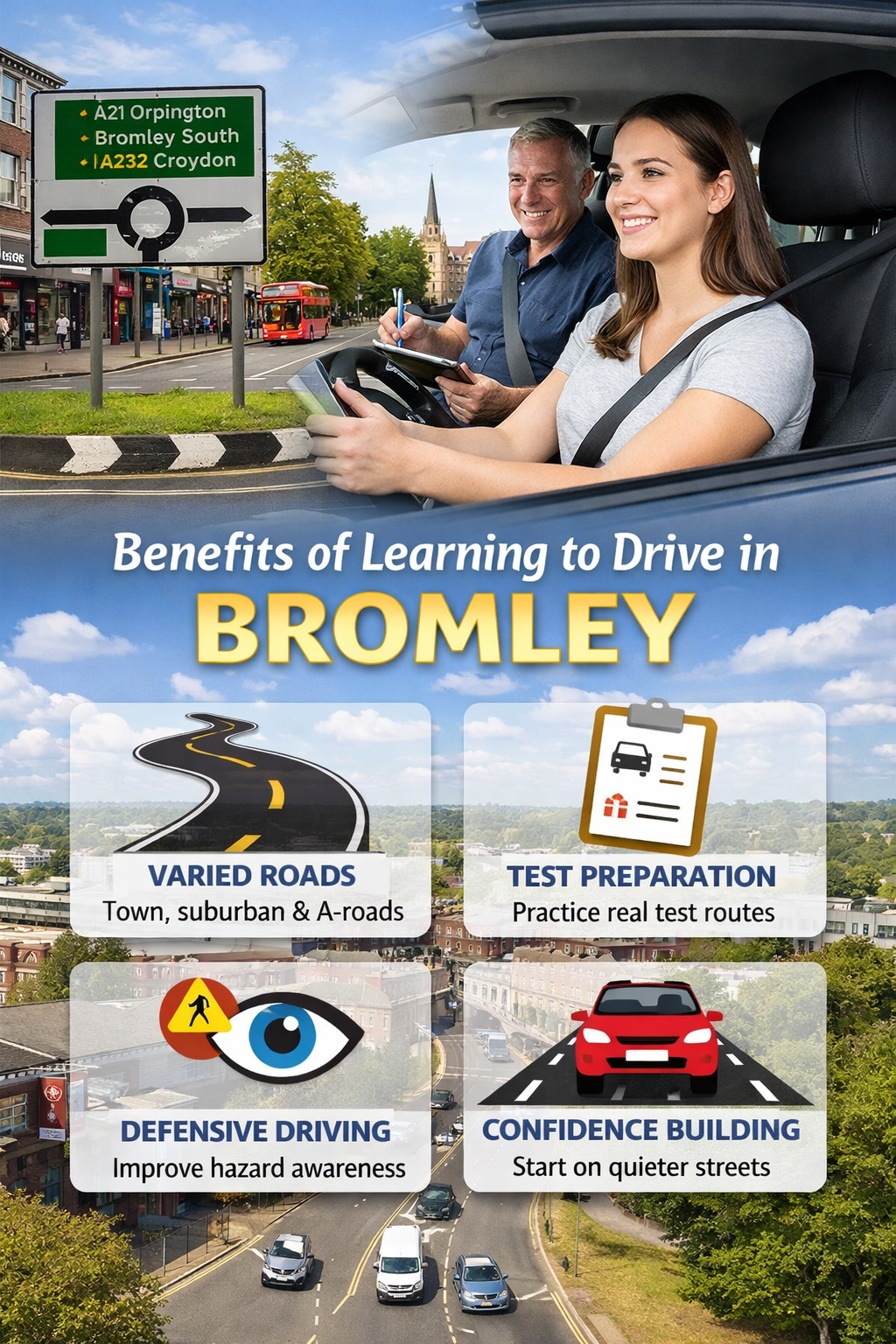
Bromley presents a diverse driving environment, offering a practical training ground for new drivers. The area encompasses a range of road types, from quiet residential streets ideal for initial lessons to busier arterial routes that demand greater concentration and skill. Understanding these nuances is fundamental to developing a well-rounded driving ability.
Residential streets in areas like Sundridge Park or Bickley provide an excellent starting point for new learners.
- Low Traffic Volume: These streets typically have less traffic, allowing learners to focus on basic controls, steering, and clutch coordination without the pressure of heavy through traffic. It’s here that the fundamental ‘feel’ for the car is developed, much like a musician practicing scales before a symphony.
- Manoeuvre Practice: Parallel parking, reversing around a corner, and three-point turns are often practiced in these quieter settings, honing precision and spatial awareness. The limited space mimics real-world scenarios without the added stress of immediate consequences.
- Identifying Hazards: Even in quiet areas, learners are taught to identify potential hazards such as parked cars, pedestrians emerging from driveways, and children playing, fostering an early habit of defensive driving.
Adapting to Main Roads and Urban Centres
As proficiency grows, lessons naturally progress to busier roads, including the A21 and A22, and the town centre itself.
- Multi-lane Driving: Learners are introduced to lane discipline, safe overtaking procedures, and navigating more complex junctions and roundabouts. This transition is vital for preparing drivers for the varying demands of interconnected road networks.
- Traffic Management: Experiencing heavier traffic flows teaches patience, anticipation, and the ability to maintain safe following distances. It’s akin to learning to flow with a river, rather than fighting against its current.
- Pedestrian Awareness: Bromley High Street, for instance, presents a dynamic environment with numerous pedestrians, cyclists, and bus lanes, requiring heightened awareness and observation skills. This exposure is critical for developing a comprehensive understanding of urban road sharing.
Mastering Rural Sections and Speed Changes
Beyond the immediate urban fabric, Bromley’s periphery includes roads that transition into more semi-rural settings, offering further learning opportunities.
- Variable Speed Limits: These roads often feature transitions between 30 mph, 40 mph, and national speed limit zones, teaching learners to adjust their speed appropriately and safely.
- Changing Road Conditions: Encountering narrower roads, potentially with less defined verges, helps develop adaptability to different road surface conditions and widths. This prepares you for the unexpected and cultivates a versatile driving style.
If you’re looking to enhance your driving skills and gain confidence behind the wheel, you might find the article on the benefits of learning to drive in Bromley particularly helpful. It provides valuable insights into the advantages of taking driving lessons in this area, including local road conditions and tailored instruction. For more information, you can read the article here: Benefits of Learning to Drive in Bromley.
The Structured Path to Driving Competence
A structured learning approach is paramount for building competence systematically. This involves breaking down the complex skill of driving into manageable components, each building upon the last.
Initial Consultation and Assessment
The journey often begins with an initial consultation, which may include a brief assessment drive.
- Goal Setting: This phase allows the instructor to understand your prior experience, if any, and discuss your learning objectives and timeline.
- Personalized Plan: Based on this, a bespoke training plan is developed, tailored to your individual learning pace and style. This ensures efficient use of lesson time, much like a compass guiding a ship on the most direct route.
Foundational Skills Development
Early lessons focus on the absolute fundamentals, creating a solid base.
- Vehicle Controls: Understanding and operating the clutch, accelerator, brake, and steering wheel becomes second nature. This stage is about developing muscle memory and intuitive control.
- Basic Manoeuvres: Starting, stopping, changing gears, and smooth steering are practiced repeatedly until proficiency is achieved. The consistency of practice at this stage sets the tone for future mastery.
- Road Safety Theory: Concurrently, theoretical knowledge of road signs, markings, and basic road rules is reinforced practically. This intertwining of theory and practice helps solidify understanding.
Intermediate Skill Refinement
As foundational skills are secured, lessons advance to more complex scenarios.
- Junctions and Roundabouts: Navigating various types of junctions confidently, understanding priority rules, and mastering multi-lane roundabouts are key focuses. This is where your spatial reasoning and decision-making skills are truly tested.
- Hazard Perception: Developing keen observational skills to identify potential hazards early and react appropriately is emphasized. This proactive approach saves crucial seconds in real-world scenarios.
- Independent Driving: Learners are gradually encouraged to make more independent decisions, guided by instructions or road signs, fostering critical thinking under pressure. This builds self-reliance, transforming the learner from a passenger of instruction to a navigator of their own journey.
Advanced Topics and Test Preparation
The final stages of learning are geared towards refining skills and preparing for the practical driving test.
- Mock Tests: Performing simulated driving tests under examination conditions helps identify areas for improvement and reduces test day anxiety. This rehearsal is invaluable for peak performance.
- Complex Scenarios: Practicing driving in various weather conditions, at different times of day (if feasible), and on unfamiliar routes builds resilience and adaptability.
- Defensive Driving Principles: Reinforcing principles of defensive driving prepares you not just to pass the test, but to be a safe driver for life. This goes beyond mere compliance, aiming for proactive safety.
The Role of Confidence in Driving

Confidence is not merely a desirable trait in driving; it is a fundamental pillar of safety and competence. A confident driver is an alert driver, making timely decisions and handling unexpected situations with composure.
Building Self-Assurance Behind the Wheel
Confidence is cultivated through a combination of effective instruction, repetitive practice, and positive reinforcement.
- Mastery through Repetition: Repeatedly successfully executing maneuvers and navigating challenging situations gradually builds a sense of capability. Each successful turn of the wheel adds a brick to the wall of your self-assurance.
- Overcoming Nerves: Addressing initial anxieties and fears through a supportive learning environment helps in transforming apprehension into a focused calm. Understanding that mistakes are part of the learning process is crucial.
- Positive Reinforcement: Constructive feedback and acknowledgement of progress are vital in cementing a positive self-image as a driver. Regular encouragement acts as fuel, propelling you forward.
Impact on Decision Making
A confident driver makes more decisive and accurate decisions.
- Timely Reactions: Hesitation can be dangerous on the road. Confidence fosters the ability to react promptly and appropriately to changing traffic conditions or sudden hazards.
- Clear Judgment: When faced with complex situations, a confident driver trusts their judgment, leading to smoother and safer maneuvers rather than uncertain, abrupt actions. This clarity of thought is a valuable asset.
- Reduced Stress: Confidence intrinsically reduces stress levels, allowing drivers to remain calm and focused, even in challenging environments like busy roundabouts or heavy traffic. Stress impairs judgment; confidence enhances it.
Fostering Independent Driving
Ultimately, the goal is to drive independently and safely.
- Trusting Your Skills: Confidence enables you to trust the skills you’ve developed, allowing you to confidently plan routes, deal with diversions, and adapt to unfamiliar roads.
- Problem-Solving: When faced with unforeseen circumstances, a confident driver is more inclined to calmly assess the situation and find a safe solution, rather than succumbing to panic. This resilience is a hallmark of a skilled driver.
- Continuous Improvement: A confident driver is also more open to continuous learning and self-assessment, understanding that driving is a lifelong skill to be refined.
Choosing the Right Driving Instructor in Bromley

The instructor acts as your compass and guide through the intricate world of driving. Selecting the right one is arguably the most critical decision in your learning journey.
Qualities of an Effective Instructor
An excellent driving instructor is more than just someone who teaches you how to operate a vehicle; they are a mentor.
- Patience and Empathy: Learning to drive can be frustrating at times. An instructor who demonstrates endless patience and understands your perspective can make a significant difference. This emotional intelligence smoothens the learning curve.
- Clear Communication: The ability to explain complex concepts simply and effectively, using various teaching methods, ensures understanding and retention. They break down the ‘how’ and the ‘why,’ making concepts digestible.
- Professionalism: Punctuality, reliability, maintaining a clean and well-maintained vehicle, and adhering to professional standards are non-negotiable. This sets a serious and respectful tone for learning.
- Adaptability: A good instructor can adapt their teaching style to suit your individual learning pace and preferences, recognizing that every learner is unique. They don’t apply a one-size-fits-all approach.
- Up-to-Date Knowledge: Staying current with the latest road laws, driving techniques, and test requirements ensures you receive the most relevant and accurate instruction. The road is dynamic, and so must their knowledge be.
Considerations When Making Your Choice
Beyond personal qualities, practical considerations are important.
- Instructor Qualifications: Ensure your instructor is fully qualified (ADI – Approved Driving Instructor) and prominently displays their green badge. This signifies a rigorous training standard and commitment to professional teaching.
- Vehicle Type: Consider the type of car used for lessons. Is it comfortable, easy to control, and representative of a typical vehicle you might drive? Learning in a car with dual controls is standard and provides an essential safety net.
- Lesson Structure and Pricing: Understand the duration of lessons, package deals, and cancellation policies. Transparency in pricing and scheduling is key. Ensure there are no hidden costs.
- Reviews and Recommendations: While not the sole factor, checking reviews and seeking recommendations from past learners can provide valuable insights into an instructor’s effectiveness and teaching style. This social proof offers a glimpse into others’ experiences.
The Importance of Rapport
Ultimately, a good rapport between you and your instructor fosters an environment where you feel comfortable asking questions, admitting difficulties, and learning effectively. This personal connection transforms a transactional relationship into a genuinely supportive partnership. You are, in essence, entrusting them with your initial foray into a critical life skill.
If you’re looking to enhance your driving skills and build confidence behind the wheel in Bromley, you might find it helpful to explore techniques for mastering gear changes in a manual vehicle. A related article on this topic can provide valuable insights and tips that will aid you in your learning journey. For more information, check out this informative piece on changing gears in a manual car.
From Learner to Licensed Driver: The Journey Beyond the Test
Passing the driving test is a momentous achievement, but it marks the beginning, not the end, of your journey as a driver. The real learning often truly begins once you are on the road independently.
Post-Test Experience and P-Plates
Upon passing, new drivers often feel a mix of elation and a new sense of responsibility.
- P-Plates: Displaying P-plates (passer plates) is optional but can signal to other road users that you are a new driver, potentially encouraging greater patience and understanding. It’s a visual cue, saying “I’m still learning.”
- Initial Independent Drives: Your first few drives alone will likely feel different. Start with familiar routes and gradually expand your radius to build confidence without the direct presence of an instructor.
- Insurance Considerations: New drivers typically face higher insurance premiums. Researching options and considering telematics (black box) insurance can help manage costs.
Advanced Driving Skills and Further Training
Even after passing, there’s always more to learn and hone.
- Pass Plus Course: Many new drivers opt for the Pass Plus course, an additional training program designed to enhance skills in areas not typically covered comprehensively in standard lessons, such as motorway driving, all-weather driving, and driving at night. This extends your capacity beyond the minimum.
- Motorway Driving: Gaining experience on motorways is crucial for long-distance travel. If not covered in Pass Plus, consider specific lessons focused on motorway safety and etiquette. This prepares you for higher speeds and more demanding environments.
- Defensive Driving Refreshers: Periodically reviewing defensive driving techniques and staying informed about changes in road laws is a practice of responsible driving. The world of driving evolves, and so should your knowledge.
Developing Good Driving Habits for Life
The goal extends beyond merely holding a license; it’s about becoming a safe, responsible, and considerate road user for the entirety of your driving life.
- Continuous Observation: Always maintaining a high level of observation, anticipating potential hazards, and scanning the environment far ahead. This is the cornerstone of proactive driving.
- Patience and Courtesy: Practicing patience, sharing the road courteously, and avoiding aggressive driving behaviours contribute to a safer and more pleasant driving experience for everyone. A calm demeanour is contagious.
- Vehicle Maintenance: Understanding basic vehicle maintenance (checking oil, tire pressure, lights) ensures your car is always roadworthy and reduces the risk of breakdowns. A well-maintained vehicle is a safe vehicle.
- Avoiding Distractions: The absolute commitment to avoiding distractions, especially mobile phone use, is paramount for road safety. Your full attention is the most valuable safety feature.
Learning to drive confidently in Bromley is a journey that prepares you not just for the local roads, but for diverse driving environments wherever you may go. It is an investment in your independence, safety, and future mobility. By choosing a structured approach, a skilled instructor, and committing to continuous learning, you will successfully navigate the path from novice to confident, responsible driver.