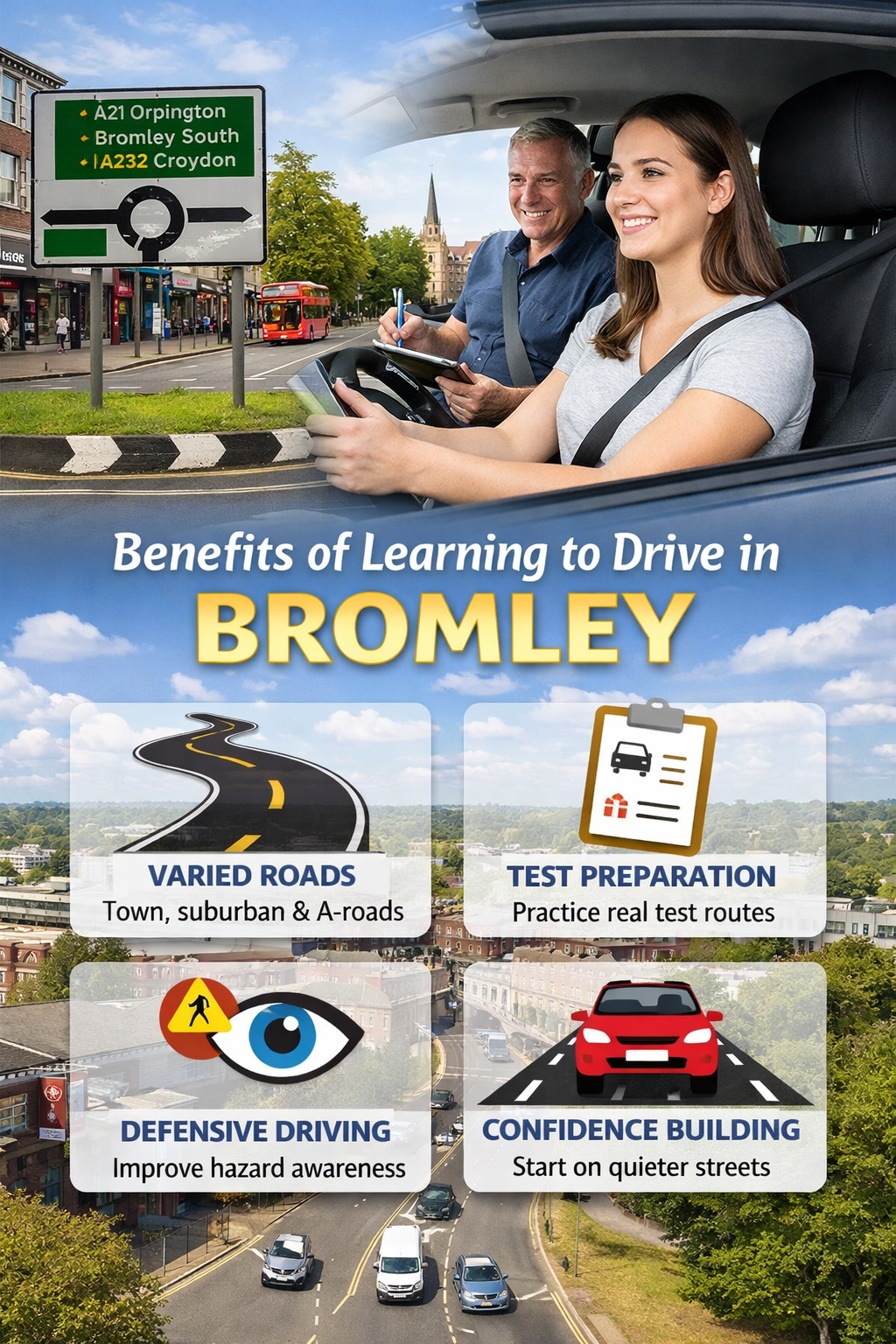
Top Driving Schools in Bromley: Your Guide to Safe and Skilled Driving

A guide to driving schools in Bromley, detailing factors to consider when selecting a provider.
Selecting a driving school is a significant step for aspiring drivers. The choice of institution can influence not only the individual’s ability to pass their driving test but also their confidence and safety on the road for years to come. This guide aims to provide a structured approach to identifying suitable driving schools in the Bromley area, focusing on factual information and practical considerations.
Learning to drive is a complex skill that involves a blend of theoretical knowledge and practical execution. Professional instruction provides a structured environment to acquire these competencies.
The Role of a Qualified Instructor
Qualified driving instructors are the cornerstone of effective driver training. They possess the knowledge and experience to impart essential driving techniques, road awareness, and hazard perception. Their role extends beyond simply teaching the mechanics of operating a vehicle; they are tasked with instilling a sense of responsibility and a commitment to safe driving practices. A good instructor will tailor their teaching methods to the individual learner’s pace and learning style, ensuring that concepts are understood and retained. They are trained to identify and address common learner errors, providing constructive feedback to facilitate improvement. Furthermore, they are up-to-date with current driving legislation and test requirements, ensuring that learners are prepared for the official examination.
Beyond the Test: Developing Lifelong Driving Habits
While passing the driving test is a primary objective, the true value of professional instruction lies in developing safe and responsible driving habits that last a lifetime. The skills learned during lessons contribute to a driver’s ability to navigate diverse road conditions, anticipate potential hazards, and make sound decisions under pressure. This foundational knowledge and ingrained good practice act as a shield against the unpredictable nature of road travel. It is about cultivating a proactive mindset, rather than a reactive one, where potential dangers are identified and mitigated before they escalate.
The Financial Investment in Safety
Choosing a driving school represents an investment in personal safety and the safety of others. While cost is a factor, prioritizing affordability over quality can have detrimental long-term consequences. A cheap lesson might seem appealing, but it could lead to insufficient training, requiring more lessons later or, worse, contributing to accidents. The cost reflects the quality of instruction, the condition of the learning vehicles, and the administrative support provided by the school. It is akin to investing in good tools for any trade; the right equipment and guidance facilitate better outcomes.
If you’re considering enrolling in a driving school in Bromley, you might find it helpful to read about quick pass driving lessons that can accelerate your learning process. For more information on how to enhance your driving skills efficiently, check out this related article on quick pass driving lessons at ELS Driving School. It provides valuable insights and tips that can help you become a confident driver in no time.
Key Criteria for Evaluating Driving Schools
When assessing driving schools, a systematic approach is crucial. Several objective criteria can be used to compare providers and make an informed decision.
Instructor Qualifications and Registration
The primary indicator of a driving school’s credibility is the qualification and registration of its instructors. In the UK, driving instructors must be approved by the Driver and Vehicle Standards Agency (DVSA). This approval signifies that they have passed rigorous examinations and adhere to a code of conduct.
DVSA Approved Instructor Status
When inquiring about a driving school, always ask for confirmation of their instructors’ DVSA approval. This information can often be verified on the DVSA website. Approved instructors are identified by a green badge displayed on their vehicle’s windscreen. This badge is a clear sign of their legitimacy and competence. Without this, the instruction may not meet the required standards.
Instructor Experience and Specializations
Beyond basic approval, consider the experience of the instructors. Schools with a long-standing presence in Bromley often have a pool of experienced instructors. Some instructors may also have specializations, such as training nervous drivers, international drivers, or those seeking additional advanced driving courses. Understanding these specializations can help match learners with an instructor who best suits their specific needs. A seasoned instructor can draw upon a wealth of past learning experiences, anticipating a learner’s struggles before they arise.
Vehicle Fleet and Maintenance
The vehicle used for driving lessons is a critical component of the learning process. Its condition, suitability, and safety features directly impact the learning experience.
Suitability of Learning Vehicles
Driving schools typically use dual-control vehicles, meaning the instructor has access to the brake and clutch pedals. This is a fundamental safety feature, allowing the instructor to intervene when necessary. The cars should be well-maintained, clean, and of a size and type that is manageable for learners. Many schools use popular, reliable models, but it’s worth inquiring about the specific vehicles used for lessons. A poorly maintained vehicle can be a distraction and a potential hazard.
Regular Maintenance and Safety Checks
A reputable driving school will have a rigorous schedule for vehicle maintenance and safety checks. This includes regular servicing, tire checks, brake inspections, and ensuring all lights and indicators are functioning correctly. This proactive approach minimizes the risk of mechanical failure during lessons, providing a safer and more reliable learning environment. It’s a testament to their commitment to student well-being.
Teaching Methodology and Learner Support
The way in which driving skills are taught and the level of support provided to learners are crucial for success.
Structured Lesson Plans
Effective driving schools employ structured lesson plans that cover the entire syllabus required for the driving test and beyond. These plans ensure that all essential topics, from basic maneuvers to hazard perception and independent driving, are covered systematically. A well-defined curriculum acts as a roadmap, ensuring progress and covering all necessary ground.
Feedback and Progress Tracking
Regular, constructive feedback is vital for learner development. Instructors should clearly identify areas of strength and weakness, providing actionable advice for improvement. Some schools may offer progress tracking tools or regular progress reports, allowing learners to monitor their development and identify areas requiring more attention. This transparency helps build confidence and keeps the learner motivated.
Accommodating Different Learning Styles
Learners absorb information in different ways. Some are visual learners, others auditory, and some kinesthetic. The best driving instructors can adapt their teaching style to accommodate these different learning preferences. This might involve using diagrams, verbal explanations, or practical demonstrations. The ability to adapt is like a skilled conductor orchestrating a symphony, ensuring each instrument plays its part effectively.
Cost and Value Proposition
While safety and quality of instruction are paramount, financial considerations are also important. Understanding the cost structure and the value offered by a driving school is essential.
Transparent Pricing and Packages
Driving schools should offer transparent pricing for their lessons. This includes the cost per hour, as well as any discounts or special packages available for block bookings. Be wary of schools that are vague about their pricing or offer unusually low introductory rates that increase significantly later. Clarity in pricing builds trust.
Value Beyond Price
It is important to consider the overall value proposition. A slightly more expensive school might offer more comprehensive training, better resources, or more flexible scheduling, which could ultimately prove to be more cost-effective and lead to quicker test success. The cheapest option can sometimes be the most expensive in the long run if it leads to repeated test failures or insufficient skills.
Exploring Driving Schools in Bromley
Bromley offers a range of driving schools, each with its own strengths. Understanding their general offerings and reputations can guide the selection process.
Local Reputation and Testimonials
A driving school’s reputation within the local community is a valuable indicator of its effectiveness. Online reviews, testimonials from past students, and word-of-mouth recommendations can provide insights into the student experience.
Online Reviews and Ratings
Websites that host driving school reviews can offer a broad overview of student satisfaction. Look for consistent patterns in feedback regarding instructor professionalism, teaching quality, and student success rates. While individual negative reviews can occur, a preponderance of positive feedback is a strong indicator.
Word-of-Mouth Recommendations
Personal recommendations from friends, family, or colleagues who have learned to drive in Bromley can be highly reliable. These individuals can offer firsthand accounts of their experiences and the effectiveness of the instruction they received.
Types of Driving Schools Available
Bromley has a mix of different types of driving schools, ranging from large national franchises to smaller, independent local providers.
National Driving School Franchises
National franchises often have a standardized approach to training and a large network of instructors. They may offer online booking systems and consistent branding. However, the quality of instruction can vary by individual instructor within the franchise.
Independent Local Driving Schools
Independent schools, often run by a few instructors, can offer a more personalized service. They may have a deep understanding of local test routes and examiner preferences. The relationship with the instructor can be more direct and less bureaucratic.
Small Driving Schools and Sole Proprietors
Some schools consist of a single instructor. This can lead to a very close working relationship and highly tailored lessons. However, availability might be more limited, and the instructor’s approach will be singular.
Preparing for Your First Driving Lesson
The initial driving lesson is a critical step in the learning journey. Proper preparation can help maximize the effectiveness of this first encounter.
What to Bring and Expect
Before your first lesson, ensure you have any necessary provisional driving license documentation. Most instructors will confirm this during the booking process.
Provisional Driving License
You must have a valid provisional driving license to drive on public roads. The instructor will likely ask to see this at the beginning of your first lesson. It is the key that unlocks the door to practical driving.
Correct Eyewear (If Required)
If you wear glasses or contact lenses for driving, ensure you bring them. You must be able to meet the minimum eyesight standards for driving, and this will be checked.
Appropriate Attire
Wear comfortable clothing and sensible shoes that allow you to operate the pedals easily. High heels or sandals are generally not recommended for initial lessons.
Setting Expectations with Your Instructor
The first lesson is also an opportunity to discuss your learning goals and your instructor’s teaching style.
Discussing Learning Goals
Communicate your aspirations. Are you aiming for a quick pass, or do you want to build a high level of confidence? Understanding your goals helps the instructor tailor the lesson plan.
Understanding Instructor’s Approach
Ask about their teaching style, how they provide feedback, and their approach to dealing with common learner anxieties. This open dialogue sets the stage for a productive learning relationship.
If you’re looking to enhance your driving skills, particularly in mastering the technique of pulling over safely, you might find this informative article on how to pull over on the left quite helpful. Many driving schools in Bromley emphasize the importance of this skill, as it is crucial for both learner drivers and experienced motorists. Understanding the proper method can significantly improve your confidence and safety on the road.
The Road Ahead: Continuous Learning and Test Preparation
Learning to drive is an ongoing process, and the driving test is a milestone, not the final destination.
Developing Hazard Perception Skills
Hazard perception is the ability to identify potential dangers on the road and take appropriate action. This skill is developed through practice and is a crucial component of the driving test.
Recognizing and Responding to Hazards
Instructors will guide you in identifying and responding to common road hazards, such as pedestrian crossings, junctions, and changing traffic conditions. This is like learning to read the subtext of the road.
Using the ‘Clutch Control’ and ‘Mirror-Signal-Maneuver’ Routine
Consistent application of the ‘Mirror-Signal-Maneuver’ routine and precise clutch control are fundamental to safe and effective driving, especially in complex situations.
Mock Driving Tests
As the test date approaches, mock tests become invaluable for simulating the real examination environment and identifying any remaining areas of weakness.
Simulating Test Conditions
A mock test helps you practice the test format, timings, and the types of situations you will encounter. It’s a dress rehearsal for the main event.
Receiving Constructive Feedback
The instructor will provide detailed feedback on your performance, highlighting both strengths and areas that need further attention before the official test. This feedback is the whetstone for sharpening your skills.
Post-Test Learning and Development
Even after passing the driving test, learning and development should continue. Many driving schools offer advanced driving courses.
Advanced Driving Courses
Courses such as Pass Plus can enhance your skills in areas like motorway driving, night driving, and adverse weather conditions, making you a more capable and safer driver. This is akin to graduating from basic training to specialized forces.
Building Confidence and Experience
The more experience you gain after passing your test, the more confident and skilled you will become. Regularly driving in various conditions and on different types of roads is essential for ongoing development.
By following these guidelines, aspiring drivers in Bromley can approach the process of selecting a driving school with confidence, ensuring they receive the professional instruction necessary to become safe, skilled, and responsible road users.