Top Driving Test Tips in Bromley: How to Pass with Flying Colours
 This guide offers practical advice for individuals preparing for their driving test in the Bromley area. It provides strategies to enhance readiness and increase the likelihood of success, based on common challenges and best practices.
I. Understanding the Test Environment: Bromley’s Unique Landscape
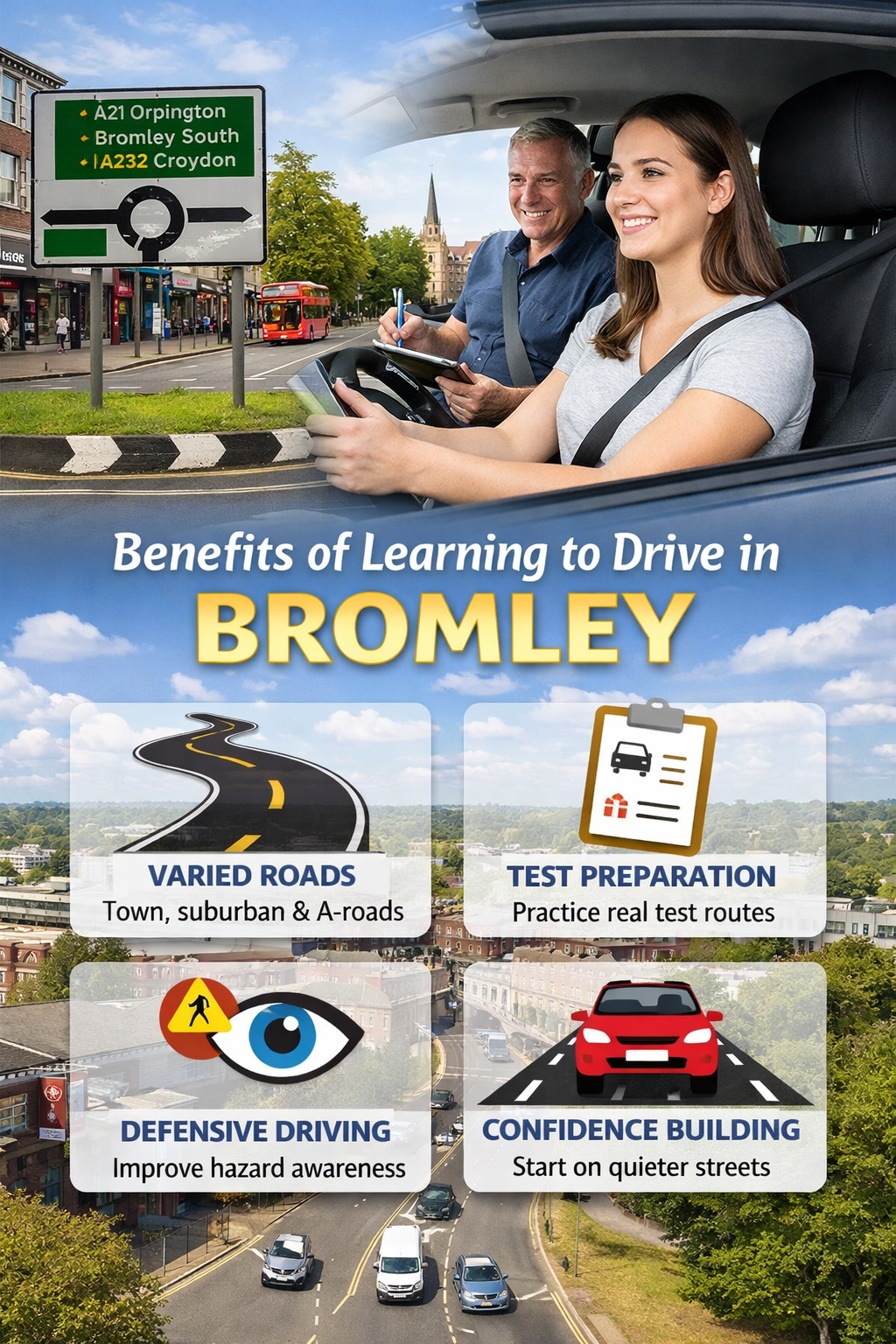
Bromley presents a diverse driving environment, encompassing urban, suburban, and semi-rural roads. Familiarity with these varying conditions is crucial for test success. The examiner will assess your ability to adapt to different scenarios, requiring more than just basic vehicle control.
A. Common Test Routes and Their Characteristics
While examiners do not follow predetermined routes, they frequently utilize specific road types and junctions. Bromley test routes often incorporate:
- Residential Streets: These typically feature parked cars, narrower passages, and higher pedestrian activity. You will be expected to demonstrate proficiency in hazard perception, safe overtaking of stationary vehicles, and maintaining appropriate speeds. The ability to navigate these areas without undue hesitation or excessive caution is key.
- Main Arterial Roads: Roads like the A21 and A232 are common. Here, maintaining appropriate speed, executing safe lane changes, and understanding complex junction layouts (e.g., roundabout systems, traffic light sequences with multiple phases) are paramount. The flow of traffic on these roads can be significant, demanding confident decision-making.
- Dual Carriageways: Sections of roads such as the A20 are present. On these, demonstrating an understanding of safe entry and exit, maintaining a consistent speed, and performing observations (mirror checks, head checks) are critical. Lane discipline and appropriate following distances are rigorously assessed.
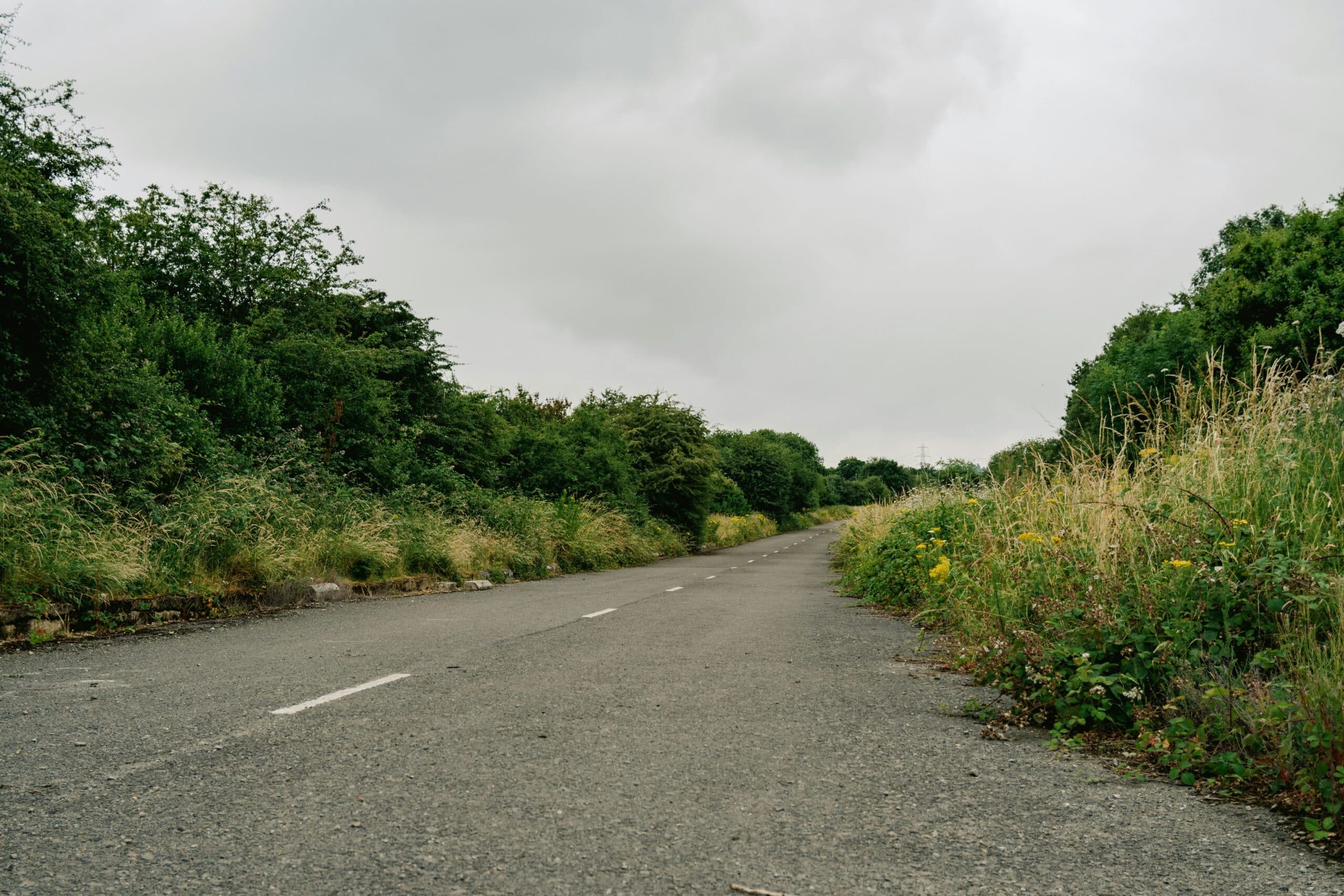
- Rural or Semi-Rural Sections: While less prevalent than urban areas, some routes may involve roads with varying speed limits, fewer streetlights, and potential for encountering wildlife or less standard road markings. Adaptation to these conditions, including appropriate use of headlights and understanding of varying road surfaces, is important.
B. Typical Traffic Patterns
Bromley experiences fluctuating traffic patterns. Peak hours (e.g., morning and evening commutes, school run times) present denser traffic, requiring heightened awareness and patience. Off-peak hours may offer clearer roads but can still feature unexpected hazards. Your ability to maintain composure and safe driving practices regardless of traffic volume is a central tenet of the test.
II. Mastering Core Driving Skills
The driving test is a detailed assessment of fundamental driving competencies. A strong foundation in these areas is non-negotiable.
A. Vehicle Control and Manoeuvres
- Steering: Smooth and controlled steering is essential. Avoid jerky movements or excessive corrections. The ‘push-pull’ method is generally preferred.
- Braking and Acceleration: Gradual and progressive application of brakes and accelerator is expected. Abrupt actions can indicate a lack of control or forward planning.
- Clutch Control (Manual Vehicles): For manual drivers, precise clutch control for smooth gear changes, slow-speed maneuvering, and hill starts is crucial. Frequent stalling or kangarooing will be noted.
- Gear Selection: Appropriate gear selection for the speed and road conditions is important for fuel efficiency and vehicle control. Avoid over-revving or laboring the engine.
- Manoeuvres: The test includes one reversing manoeuvre chosen from:
- Parallel Park: Executing this manoeuvre within acceptable proximity to the curb and without undue shunting or multiple attempts is required. Observation throughout the manoeuvre is key.
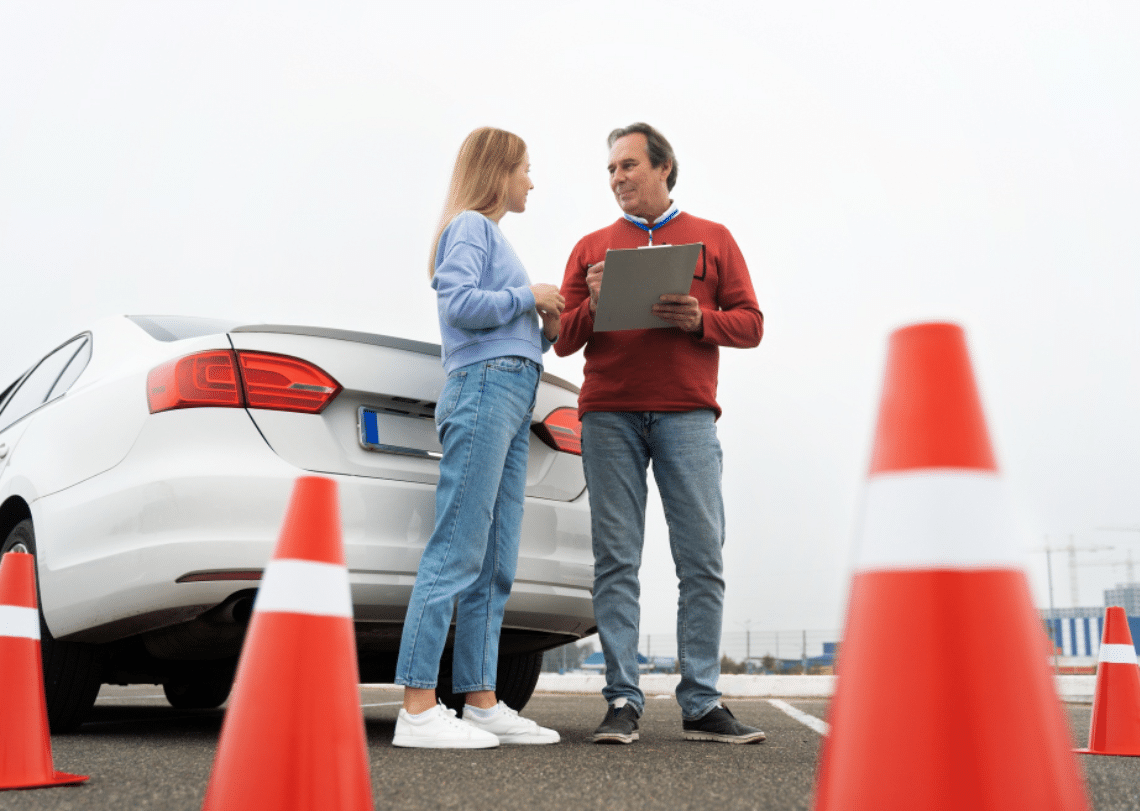
- Reverse into a Bay: This can be performed either on arrival at the test centre or at a public car park. Precise control and observation are necessary.
- Forward Park into a Bay (followed by reversing out): Similar to reversing in, this requires accuracy and comprehensive observation.
- Pull Up on the Right and Reverse: This manoeuvre requires safe stopping on the right, comprehensive all-round observation, and reversing two car lengths.
B. Observation and Awareness
- Mirror Checks: Regular and purposeful use of all mirrors (rearview, side mirrors) is fundamental before changing speed, direction, or approaching hazards.
- Head Checks: Brief but thorough head checks, particularly before changing lanes, turning at junctions, or reversing, are necessary to identify objects in blind spots.
- Hazard Perception: The ability to anticipate and react to potential hazards (pedestrians, cyclists, parked cars, road works) well in advance is a major component of safe driving. This is akin to being one step ahead of the unfolding road situation.
C. Road Positioning and Lane Discipline
- Normal Road Positioning: Maintaining an appropriate distance from the curb (or centre line on un-marked roads) is important.
- Lane Discipline: Selecting the correct lane for your intended direction and maintaining it throughout turns or multi-lane sections is vital. Avoid weaving or sudden lane changes.
- Roundabouts: Correct lane selection, appropriate signalling, and adherence to priority rules are crucial at roundabouts, which are common in Bromley.
III. Communicating Your Intentions: Signalling and Beyond
Effective communication is not merely a courtesy; it is an integral part of safe driving and a critical aspect of the driving test. It’s about ensuring other road users understand your actions.
A. Correct Use of Indicators
- Before Changing Direction: Signal in good time before turning, changing lanes, or exiting a roundabout.
- Lane Changes: Indicate before initiating a lane change, ensuring a safe gap.
- Pulling Away/Stopping: Signal when pulling away from the curb or when stopping in a position other than regular traffic flow.
- Situational Awareness: There are instances where signalling might confuse other road users (e.g., passing a series of closely spaced side roads when you intend to turn further down). In such cases, use judgment, prioritising clarity and safety.
B. Eye Contact and Body Language
While not directly assessed as a fault, demonstrably making eye contact with pedestrians or cyclists at junctions can show an examiner you are aware of their presence and anticipating their movements. This non-verbal communication adds a layer of safety. Avoid aggressive or confrontational gestures.
C. Headlight Use
Using headlights appropriately, particularly in adverse weather or low light conditions, is a safety measure and demonstrates responsible driving. This includes sidelights, dipped beam, and main beam where appropriate, and knowing when to use front and rear fog lights.
Beyond daily driving skills, the test incorporates specific elements that require dedicated practice. These are structured assessments of your ability to follow instructions and respond to real-time situations.
A. Independent Driving
- Following Sat Nav: Approximately 20 minutes of the test will be independent driving, guided by a sat nav. You will be expected to follow its instructions accurately and safely. If the sat nav fails or gives unclear directions, you should return to following road signs. This assesses your ability to plan and execute a route independently, even with assistance.
- Following Road Signs: Alternatively, you may be asked to follow road signs to a specific destination. This requires active observation of signage and understanding of road markings.
- Decision Making: The key here is not just following directions, but doing so safely. If a turn is missed, or a direction becomes unclear, the expectation is to continue safely and reassess, rather than making an abrupt or dangerous correction. This demonstrates a calm and rational approach to unexpected situations.
B. Show Me, Tell Me Questions
- “Tell Me” Questions: Before commencing the drive, the examiner will ask one “tell me” question, requiring you to explain how you would carry out a safety check (e.g., checking tyre pressure, opening the bonnet to check engine oil). Knowing the location and basic function of key components under the bonnet and around the car is essential.
- “Show Me” Questions: During the drive, the examiner will ask one “show me” question, requiring you to demonstrate how you would carry out a safety task (e.g., operating the windscreen wipers, turning on the demister). This must be done safely whilst driving, ensuring the primary task of driving is not compromised. Practise these so they can be performed without extensive distraction.
V. Strategic Preparation and Mental Fortitude
Passing the driving test is a culmination of practical skills, theoretical knowledge, and mental preparedness. Approach it with systematic preparation.
A. Intensive Practice and Mock Tests
- Regular Lessons: Consistency in driving lessons with an approved driving instructor (ADI) is fundamental. They provide structured learning and feedback.
- Private Practice: Supplementing lessons with private practice (with a qualified accompanying driver) is invaluable for consolidating skills and gaining experience in varied conditions and times of day. Bromley’s diverse road network offers an ideal environment for this.
- Mock Tests: Conduct several mock tests with your instructor. These simulate the actual test environment, identifying areas for improvement under pressure. They are a dress rehearsal, revealing weaknesses before the main performance.
B. Pre-Test Routine
- Rest: Ensure adequate rest the night before the test. Fatigue can impair judgment and reaction times.
- Nutrition: A light meal and hydration are advisable. Avoid heavy or sugary foods that can cause energy crashes.
- Arrival Time: Arrive at the test centre with sufficient time to spare (e.g., 10-15 minutes before). This allows you to acclimatise and avoid rushing, which can elevate stress levels.
- Vehicle Check: Ensure the vehicle you are using for the test is roadworthy, clean, and in good working order. All lights, indicators, and tyres must meet legal requirements.
C. Managing Test Nerves
- Breathing Techniques: Simple deep breathing exercises can help regulate heart rate and reduce anxiety.
- Positive Self-Talk: Remind yourself of your preparation and abilities. Negative thoughts can be self-fulfilling prophecies.
- Focus on the Task: During the test, concentrate solely on the road and your driving. Avoid dwelling on past mistakes or anticipating future challenges. Treat each moment as a fresh opportunity to demonstrate competence. The examiner is not looking for perfection, but consistent safe driving.
- Don’t Assume Failure: If you make an error, do not assume you have failed. Many minor errors are permissible. The key is to acknowledge the mistake (internally) and continue driving safely, demonstrating recovery and resilience.
VI. Post-Test Reflection (Regardless of Outcome)
The driving test is a learning experience, regardless of whether you pass or fail.
A. Examiner Feedback
- Listen Carefully: After the test, the examiner will provide feedback. Listen attentively and ask clarifying questions if needed. This feedback is invaluable for understanding your performance.
- Review Report: You will receive a driving test report detailing any faults. Review this thoroughly to understand specific areas that require improvement.
B. Moving Forward
- If you Pass: Congratulations. However, passing the test marks the beginning of your learning journey as an independent driver. Continue to drive cautiously and increase your experience gradually. Consider advanced driver training.
- If you Don’t Pass: View it as a temporary setback. The report will highlight areas for focused practice. Work with your instructor to address these specific weaknesses before re-booking the test. Many successful drivers did not pass on their first attempt; it is a common experience.
The Bromley driving test, like any driving test, is a methodical appraisal of your ability to operate a vehicle safely and responsibly within a live traffic environment. Systematic preparation, attention to detail, and a composed approach are your best assets for achieving a successful outcome.