You’ve booked your Bromley driving test, it’s two to three weeks away, and now comes a question that trips up almost every learner at this stage: should you spend your remaining time on a mock test or squeeze in more lessons? It sounds simple, but getting this decision wrong could be the difference between a first time pass on your driving test and an unnecessary second attempt.
Here’s the thing. This isn’t really a question about which option is better in general. It’s a diagnostic question about where you specifically are right now. Mock tests and extra lessons do very different jobs, and the right choice depends entirely on your own fault profile, not a blanket rule that applies to everyone.
In this post, we’ll walk through exactly what each option does and doesn’t deliver, how to read your own progress to make the smarter call, why the Bromley test centre adds its own considerations, and when combining both in sequence is actually the strongest move. By the end, you’ll have a clear framework for allocating your remaining time and budget in the way that genuinely maximises your chances.
This Is a Diagnostic Question, Not a Product Decision

Most learners ask the wrong question. “Should I book a mock test or an extra lesson?” quickly becomes “which is cheaper?”, but cost is the wrong lens entirely. The real question is: what don’t I yet know about my driving?
These two options serve fundamentally different functions. A mock test surfaces weaknesses you didn’t know you had, by placing you under uninterrupted, examiner-condition pressure. An extra lesson addresses weaknesses you’ve already identified. Treating them as interchangeable wastes the one resource you genuinely cannot recover: preparation time before your Bromley test centre appointment.
With the national pass rate sitting at just 49%, the margin between a pass and a fail is narrower than most learners expect. Spending your final sessions on the wrong activity doesn’t just cost money, it leaves real gaps untouched going into test day.
The only reliable way to allocate your remaining hours is to work from your personal fault profile, not a blanket recommendation. What your record of lesson debriefs and previous assessments actually shows should drive this decision entirely.
Timing also matters practically. The DVSA allows free rescheduling with more than 10 working days’ notice. If a mock test reveals serious gaps, that window gives you room to act without losing your test fee. If you book a mock test too close to your appointment, you lose that safety net entirely.
For a fuller picture of how mock tests work in this context, the frequently asked questions on mock driving tests in Bromley covers the practical detail worth reading before you decide.
What a Mock Test Actually Does (and Does Not Do)
So what exactly happens during a mock test, and why does it matter to your preparation?
A properly conducted mock test replicates the real thing: 40 minutes of independent driving, examiner-style commentary withheld until the end, and a marking sheet that categorises every fault as minor, serious, or dangerous, exactly as your examiner at Bromley test centre will. That structure removes the safety net of instructor prompts and puts you in uninterrupted test conditions, many learners for the first time.
The government’s Ready to Pass? campaign is clear on what this achieves: mock tests help you identify areas to improve and build confidence before the real test. They are gap-identifiers, not teaching sessions. That distinction is crucial.
What a mock test reveals, it does not fix. If you run a wide left turn or hesitate at a roundabout, the mock surfaces that fault and records its severity. It does not explain how to correct your road position or rebuild your decision-making at junctions. That work belongs to lessons. The DVSA’s guidance for instructors deliberately separates assessment from remediation: the mock captures and classifies faults; instruction addresses them.
This is why a mock test is most valuable when you think you are ready but have not yet been assessed without instructor input. Smooth lessons do not guarantee composed solo performance. A mock stress-tests that assumption before your actual appointment does.
DVSA guidance treats mock tests as standard preparation for learners approaching readiness, not as a rescue tool for those who are struggling. Timing matters: a mock test used too early wastes its diagnostic value; used in the right window, it tells you exactly where to focus your remaining hours.
Before your test, it is also worth being confident on the questions you will face on the day, from theory topics through to show me tell me requirements for automatic cars.
What Extra Lessons Actually Do (and Do Not Do)
Where a mock test diagnoses, extra lessons treat. But that treatment only works if you know precisely what you are treating.
Extra lessons are remediation sessions, and their value is almost entirely dependent on specificity. If you and your instructor can name the exact fault or manoeuvre before the lesson starts, the hour has a clear purpose. “Work on emerging at junctions on the Bromley test routes” is a brief that produces measurable improvement. “Just get some more practice in” is not. An unstructured lesson close to your test date risks spending an hour repeating things you already do well, which feels reassuring but changes nothing.
The more significant limitation is this: extra lessons cannot surface what you do not know about your own driving. If you have a recurring fault you are unaware of, additional practice simply reinforces the error. You will repeat the mistake more confidently, not less frequently. This is the scenario where structured preparation requires a clear fault input to work from. Without one, the lesson lacks direction.
For learners with a known, specific fault profile, targeted lessons on the actual Bromley test routes offer something a mock test cannot: direct, transferable practice on the exact roads and junctions you will encounter on the day.
The one trap worth naming is over-lesson dependency. Some learners book extra sessions primarily to manage anxiety rather than to close a genuine skills gap. More hours in the car feels productive, but if there is no identified fault being addressed, those hours are not moving your test readiness forward.
How to Read Your Fault Profile to Make the Right Call
So both options have clear functions. The question is which function you actually need right now, and the answer sits in your fault record, not your instincts.
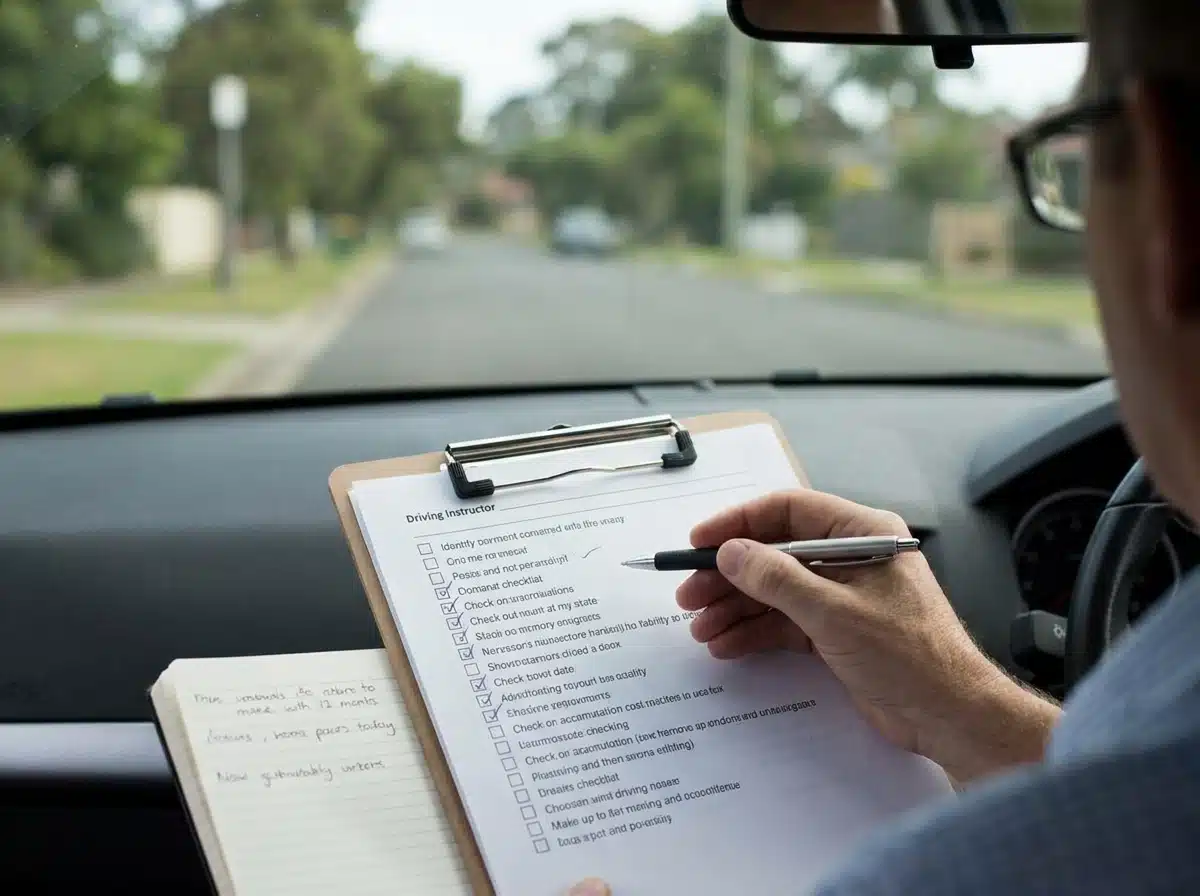
Pull out your instructor’s lesson debrief notes and any previous mock test marking sheets before you book anything. The DL25 marking sheet your instructor uses records faults by category and severity, so if you have one, read it as data rather than general feedback. That written record is your starting point.
Fault Type A: known, recurring, specific. You can name the problem. Your instructor can name it. Extra lessons are the priority, ideally on the actual Bromley test routes where the fault will matter most.
Fault Type B: infrequent, minor, situational. You’ve seen this fault once or twice but it isn’t consistent. A mock test is the priority here. You need to find out whether it surfaces under uninterrupted test pressure or disappears when you’re driving well. That distinction matters, and only a realistic assessment will give you it.
Fault Type C: no recent fault record, lessons have felt smooth. Book a mock test. Smooth lessons reflect performance with instructor input available. They tell you very little about how you’ll drive when the pressure is real and no one is prompting you. For a genuine look at what to expect at the Bromley driving test centre, including routes and what examiners focus on, it helps to understand the environment you’re being assessed against.
Fault Type D: multiple serious faults across different categories. Neither a mock test nor extra lessons is the right first step. Have a direct, fault-by-fault conversation with your instructor about whether the test date itself remains realistic.
The framework keeps your preparation honest. You’re choosing the option your fault profile requires, not the one that feels most comfortable.
Why Your Bromley Test Centre Context Matters
Your fault profile tells you what to work on. Where you practise is a separate question entirely, and one that matters more than most learners realise.
The Bromley test centre routes cover the BR1 to BR4 postcode areas, local knowledge your instructor can map out in detail. These roads have their own character: particular junctions, pedestrian crossings, and traffic patterns that you will not encounter if your preparation has been elsewhere. A general mock test or remediation lesson conducted across different roads carries full diagnostic value, but zero route-familiarity value. Those are two distinct things, and conflating them leaves a gap.
This is where a mock test conducted specifically on the Bromley test routes earns its place. It delivers both functions at once: you get assessed under realistic test conditions and you accumulate time on the actual roads you will drive on test day. That dual return is genuinely difficult to replicate any other way.
If you are working towards a first time pass on your driving test, treat local knowledge that gives you an advantage as its own preparation layer, not a by-product of fault work. If your extra lessons are tackling a real weakness but are not being conducted on or near the Bromley test routes, their remediation value is solid; just recognise that route familiarity remains an open variable.
One thing worth knowing: the DVSA does not publish pass rate data at individual test centre level, so you cannot benchmark Bromley specifically. What national data does show, consistently, is that overall preparation quality and honest readiness assessment matter more than any single method you choose.
When Using Both in Sequence Is the Right Answer
Once you know your routes matter, the next question is sequencing your remaining preparation time effectively.
For most learners two to four weeks out, the strongest approach is mock test first, targeted lessons second. The mock establishes your current fault baseline under genuine test pressure; the lessons then address exactly what the mock exposed, rather than guessing at what to work on.
Timing is everything here. A mock test booked 48 hours before your Bromley test appointment leaves no time to act on what it reveals. You need enough runway between the mock and the real test to actually remediate.
The DVSA’s 10-working-day free rescheduling window means a mock that uncovers serious faults need not cost you your test fee.
That said, the combined approach is not always necessary. If you already have a single, clearly identified fault, two targeted lessons will likely serve you better than a mock test plus one follow-up. The sequence earns its cost when genuine unknowns remain, not when the problem is already named.
Rather than defaulting to a fixed package, EL’s Driving School starts by assessing where you actually are before deciding what you need next. If you’re still sorting out where your theory test fits into all of this, the local guide to theory test centres for Bromley learners covers that side of the process separately.
A Practical Cost and Time Reality Check
Here is something that often surprises learners: a one-hour mock test and a one-hour targeted lesson are typically priced very similarly. If you are curious about current figures, our breakdown of what Bromley learners pay per session in 2026 puts the numbers in context.
What you are genuinely allocating is time. Money can be earned back; the two to four weeks before your Bromley test cannot be extended. An hour spent on the wrong activity is an hour gone, and that is the resource worth protecting.
If budget genuinely limits you to one further session, the fault-profile framework covered earlier in this article gives you a principled basis for choosing. If you can stretch to two sessions, the mock-then-lesson sequence is generally the stronger approach for most learners at this stage.
Working with a school that knows the Bromley test routes and can provide both mock assessments and targeted lessons also removes a practical headache. You are not coordinating between different instructors or hoping a mock is run on the roads your test will actually cover.
Finally, watch out for the sunk-cost trap. The money already spent on your lessons to date is gone regardless of what you book next. It should play no part in this decision. The only question that matters is what your current fault profile tells you that you need.
Making the Call: Your Final Preparation Decision
So, with cost and time both accounted for, the decision comes down to one question: what does your fault record actually show?
- Known, specific faults? Book targeted lessons on the Bromley test routes. Named problems need direct remediation, not a diagnostic you do not need.
- Faults that are unclear, infrequent, or untested under real pressure? Book a mock test first. You need an accurate picture before you can act on it.
- Time for both? Use the mock-then-lesson sequence. If the mock reveals serious gaps, the DVSA’s 10-plus working day free rescheduling window lets you push your test date without losing your fee.
Use the fault-by-fault review from the framework above as your pre-booking checklist. Once you have that picture, EL’s Driving School offers both mock tests and structured preparation lessons on Bromley test routes. Speak to your instructor about which option fits your current profile, because the right preparation is the one that matches where you actually are, not where you hope you are.
Conclusion
The framework above makes the call for you, let your fault record, not instinct, decide.
Your test result is shaped by the preparation you choose today. Choose it deliberately, choose it based on evidence, and give yourself the best possible chance.