Learning to drive is one of the most valuable skills you can develop, but before you book your first lesson, it is important to understand what you are actually paying for. The driving lessons cost in Bromley and South East London can vary significantly depending on a range of factors, and many new learners are caught off guard by the total investment required to reach test standard.
In this analysis, we break down exactly what you can expect to pay for driving tuition in this part of London. We cover hourly lesson rates, the average number of hours most beginners need, the cost of theory and practical tests, and how to spot genuine value versus a suspiciously cheap deal that could cost you more in the long run.
Whether you are just starting to explore your options or you are ready to book your first lesson, this guide will give you a clear and honest picture of the real costs involved. By the end, you will have everything you need to budget confidently and make an informed decision about your driving education.
Driving Lesson Costs in the UK: The 2026 National Picture
If you are budgeting for driving lessons in 2026, the national data delivers a clear message: costs are substantially higher than they were just three years ago, and the upward trajectory shows no meaningful sign of reversing.
The current national average for a standard manual driving lesson sits between £35 and £55 per hour, with a mid-point average of approximately £42 per hour. That figure represents a significant shift from 2023, when the typical range was £30 to £45 per hour. The year-on-year progression tells a consistent story: £30–£45 in 2023, rising to £32–£48 in 2024, then £34–£52 in 2025, and reaching £35–£55 in 2026. According to RAC’s 2026 guide to the cost of learning to drive, prices in London regularly exceed £50 per hour, placing the capital and its surrounding areas noticeably above the national average. The primary cost drivers behind this sustained inflation are rising fuel prices, increased instructor professional insurance premiums, and higher vehicle finance costs. These are operating expenses that Approved Driving Instructors (ADIs) absorb directly, and learners ultimately bear those costs through their hourly rate.
What the Data Actually Shows
The most authoritative snapshot of current pricing comes from a DVSA survey of more than 5,000 ADIs, conducted in September 2024. The findings are striking. The £36–£40 per hour bracket remains the most common nationally, but the distribution around it has shifted dramatically. Only 31.5% of ADIs now charge £35 or under per hour, a figure that has halved since the equivalent survey in June 2023. Meanwhile, 20.8% of ADIs charge over £40 per hour, nearly triple the proportion recorded just 15 months earlier. As The Guardian reported in May 2025, the cost of learning to drive in the UK is accelerating, with real-world learner testimony confirming that affordability pressure is reshaping how frequently people can book lessons. This is not a temporary pricing spike; it reflects a structural repricing across the profession.
Supply, Demand, and What It Means for You
A national shortage of qualified ADIs has compounded the pricing dynamic. When demand for instruction consistently outpaces the supply of available instructors, pricing power shifts firmly toward the provider. There is currently no regulatory cap on lesson rates; ADIs set their own prices based on their costs and local market conditions. With instructor attrition outpacing new entrants to the profession, this supply-demand imbalance is expected to persist.
For learners weighing up when to start, the financial case for acting sooner is straightforward. Every quarter you delay, you are likely to encounter a higher hourly rate than the one available today. Beginning lessons now locks in current pricing with your chosen instructor and reduces the total spend over your learning journey.
How Much Do Driving Lessons Cost in London and South East London?
The national average of approximately £42 per hour is a figure you will encounter repeatedly when researching driving lesson costs online. For learners based in Bromley or anywhere across South East London, that number is not a reliable budgeting baseline. It is a UK-wide average that absorbs pricing from rural areas, small towns, and regions where ADI operating costs are considerably lower than those in the capital. Treating it as your expected local rate risks a significant and frustrating miscalculation when you begin contacting instructors.
In London and the South East, hourly rates in 2026 range from £45 to £65, with inner and central London zones consistently sitting at the upper end of that band. According to the 2026 London driving lesson price guide from DriveThruL, rates across the capital carry a 20 to 35% premium over the national average, and it is common for London-based lessons to exceed £50 per hour. This is not a recent anomaly; it reflects the structural cost environment that all ADIs operating in the capital must navigate.
Why London Pricing Is Higher
The premium is not discretionary. Approved Driving Instructors working in London face measurably higher running costs than their counterparts elsewhere in the UK. Stop-start urban driving conditions significantly increase fuel consumption per lesson hour compared to smoother rural or suburban routes. Vehicle insurance premiums for instructors are higher in the capital, reflecting both traffic density and claim frequency. Layered on top of this is a persistent supply and demand imbalance; the national shortage of qualified ADIs means that learner demand in high-population areas like South East London consistently outpaces instructor availability, sustaining upward pressure on rates.
What to Expect in Bromley and South East London
For learners in the Bromley postcodes, specifically BR1, BR2, BR3, and BR4, realistic hourly rates in 2026 sit within a band of approximately £47 to £57. This places Bromley above the national average, which accurately reflects its position within the South East London pricing zone, while remaining below the peak rates charged in inner and central London. SE London Driving School, operating across the SE and BR corridor, charges £50 per hour for a standard weekday lesson, which is a useful real-world reference point for the local market.
This context matters enormously when you are evaluating quotes. A Bromley-based instructor pricing within the £47 to £57 range is not charging above the market rate. They are pricing accurately in line with South East London norms. Recognising this helps you make informed decisions rather than dismissing competitive local quotes based on national figures that simply do not apply to your area.
Automatic vs Manual Driving Lessons: What Is the Cost Difference?
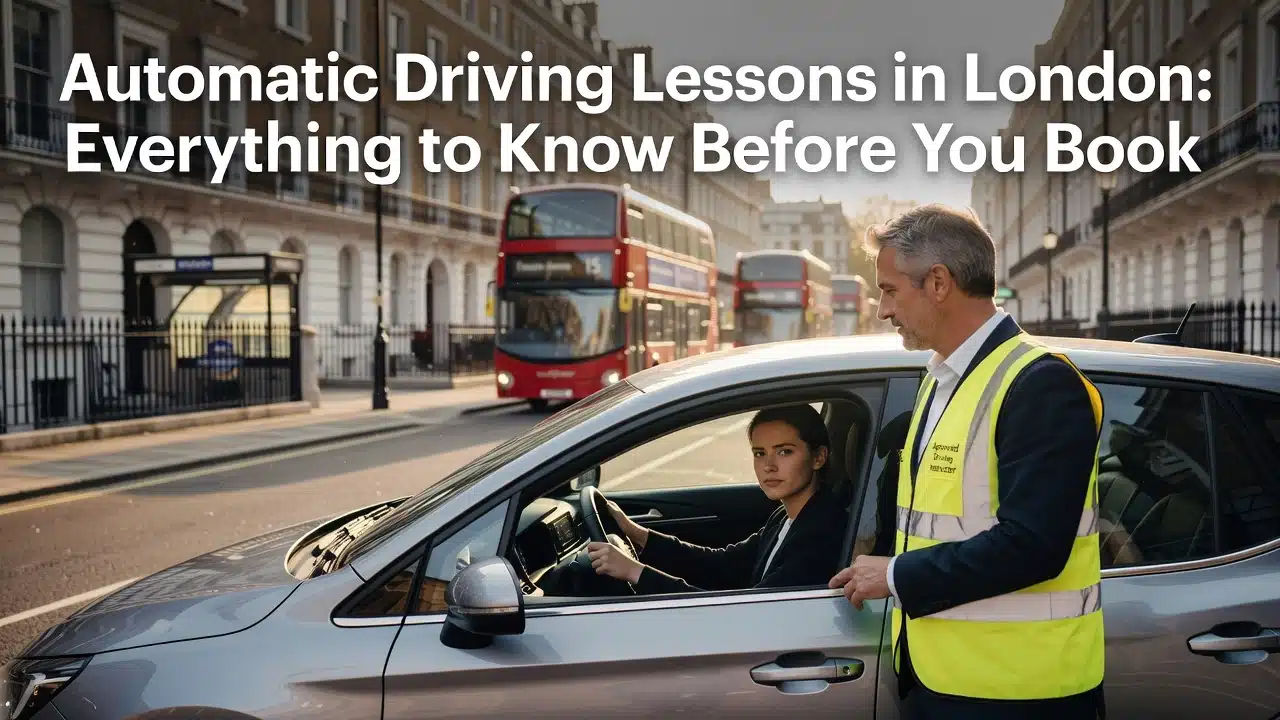
In the London and South East market, automatic driving lessons typically cost £3 to £8 more per hour than their manual equivalents. National figures place manual lessons at £35 to £48 per hour and automatic lessons at £38 to £55 per hour, representing a premium of roughly 10 to 15%. In the Bromley and South East London area, where standard manual lesson rates already sit at the higher end of the national range, automatic lessons will typically sit above that ceiling. Two structural factors drive this premium: there are fewer qualified automatic-specialist instructors operating in the market, which reduces supply and supports higher pricing, and automatic vehicles carry higher purchase and running costs that instructors must recover through their hourly rate.
Does the Higher Rate Mean Automatic Lessons Cost More Overall?
This is where the analysis becomes more nuanced, and where the hourly rate alone can be a misleading metric. For learners who find manual coordination genuinely difficult, such as managing clutch control, finding the biting point, hill-start rollback, or gear selection under pressure, automatic lessons can reduce the total number of hours needed to reach test-ready standard. The DVSA recommends approximately 45 hours of professional tuition before the practical test. A learner who reaches that standard in 38 automatic hours rather than 50 manual hours may well spend less in total, even accounting for the higher per-lesson rate. Fewer hours also means fewer lessons lost to relearning stalled-car recovery or managing common manual faults that frequently appear in DVSA test failure data.
The cognitive load reduction is a significant part of this equation. Removing gear changes and clutch management from the learning process allows learners to redirect their attention to road awareness, positioning, junction approach, roundabout navigation, and independent driving decisions from a much earlier stage in their training.
The Licence Restriction: A Decision Worth Careful Thought
One consideration carries more long-term weight than the cost question: passing your practical test in an automatic vehicle results in an automatic-only licence. You would not be legally permitted to drive a manual car without passing a further test. This is not a reason to avoid automatic lessons; it is simply a personal decision that should be weighed against your circumstances, your long-term vehicle plans, and the growing reality that electric vehicles (all of which are effectively automatic) now represent an increasing share of the UK car market. Automatic practical tests have grown from approximately 17% of all UK car tests in 2022 to around 25% in the most recent available data, reflecting a genuine shift in how learners are approaching this decision. You can review current driving lesson pricing benchmarks for 2026 to contextualise where automatic rates sit relative to the broader market.
EL’s Driving School: Automatic Instruction as a Genuine Specialism
EL’s Driving School has specialised in automatic driving instruction across Bromley and South East London since 2004. That specialism reflects a deliberate investment in expertise and the right vehicle, not simply a vehicle preference. Learners choosing an automatic-specialist instructor benefit from tuition that is structured around the automatic format from the first lesson, rather than adapted from a manual teaching approach. For learners in the BR1, BR2, BR3, and BR4 postcode areas weighing up the automatic versus manual question, that depth of local, format-specific experience is a practical advantage worth factoring into your decision alongside the hourly rate.
The True Total Cost of Learning to Drive in 2026
Most guides to driving lessons cost present a single headline figure: the hourly rate. That figure tells you only part of the story, and for learners in Bromley and South East London, the gap between the headline and the reality is significant. Building an accurate budget means accounting for every mandatory fee, every likely lesson hour, and the very real possibility of a test retake.
The Fixed Government Fees Every Learner Must Pay
Before you book your first lesson, three government fees are unavoidable. Applying for your provisional driving licence costs £34 online. Your theory test adds a further £23. When you are ready to sit your practical test, the weekday fee is £62, rising to £75 for evening, weekend, or bank holiday slots. These three items alone total a minimum of £119, yet they are rarely mentioned in the pricing content learners encounter first. You can verify the current test fee structure directly on the official DVSA driving test costs page.
Lesson Hours and What They Actually Cost in This Region
The DVSA recommends approximately 45 hours of professional tuition combined with 22 hours of private practice for the average learner to reach test-ready standard. In practice, professional lesson hours in Bromley and South East London sit within a rate band of £47 to £57 per hour. Across the 40 to 50 hours most learners realistically require, that produces a professional lesson spend of approximately £1,880 to £2,850. These figures are notably higher than national estimates based on the UK average of around £42 per hour, reflecting the established London and South East pricing premium covered earlier in this guide.
The Realistic Total: What a First-Attempt Pass Costs in 2026
When all confirmed cost components are combined, the full picture looks like this:
- Provisional licence (online): £34
- Theory test: £23
- Practical test (weekday): £62
- Professional lessons (40 to 50 hours at London rates): £1,880 to £2,850
- Realistic total for a first-attempt pass: approximately £2,000 to £2,970
The Uswitch total cost of learning to drive guide aligns with this broader range when London regional rates are applied. Community budgeting advice consistently suggests learners in this area save at least £2,000 before starting their driving journey.
Why Retake Costs Must Feature in Your Budget
The national first-time practical test pass rate sits at approximately 50%, meaning statistically half of all learners will face additional expenditure. Each failed attempt triggers a further £62 test fee and, for most learners, between £300 and £600 in additional refresher lessons before they are ready to retake. A single unsuccessful attempt can therefore add between £362 and £675 or more to your total spend, making a realistic contingency budget an important part of financial planning rather than an afterthought.
Using Private Practice to Reduce Overall Costs
Supplementing your professional lessons with private practice in a suitably insured vehicle remains the most direct lever available for reducing total driving lessons cost. Logging meaningful hours with a supervising driver allows you to consolidate skills between paid lessons, potentially reducing the total professional hours required. The supervising driver must be 21 or older and have held a full licence for at least three years. Appropriate learner driver insurance is also essential, either through a standalone policy or an addition to the vehicle owner’s existing cover. The practical barrier is access: not every learner has a patient, experienced adult available, and not every household vehicle is suitable. Where private practice is accessible, however, it remains one of the most cost-effective tools in a learner’s budget.
How the Driving Test Backlog Is Pushing Up the Total Cost for Learners
The driving test backlog is not simply an inconvenience. For learners in 2026, it is a direct and measurable financial burden that inflates the total cost of learning to drive well beyond what hourly lesson rates alone would suggest.
By late 2025, the average waiting time for a practical driving test had reached approximately 22 weeks, with 70% of test centres operating at the maximum permitted wait of 24 weeks. That means learners who achieve test-ready standard face a wait of over five months before they can sit their test. The DVSA’s own target of reducing waits to seven weeks is not expected to be met until at least 2027, meaning this is not a temporary disruption. It is a sustained structural problem that learners booking tests in 2026 must plan and budget around.
Skill Fade: The Hidden Cost Inside the Backlog
Reaching test-ready standard is one milestone. Staying there across a five-month wait is a different challenge entirely. Driving skills are not static; they require regular reinforcement to remain sharp. Manoeuvres, independent driving sequences, and familiarity with specific test-route junctions all degrade without consistent practice. A learner who stops taking lessons the moment they book their test and then returns five months later is unlikely to perform at the same level. Most instructors recommend maintaining at least one lesson per fortnight throughout the waiting period, and a focused block of preparation sessions in the two to four weeks before the test date.
The financial implication is significant. At South East London rates of £50 or more per hour, even six top-up lessons across the waiting period adds £300 or more to total spend. A structured pre-test block of three to four sessions adds further cost on top. This is money learners had not budgeted for when they began their lessons.
Why Structured Pre-Test Preparation Matters
The most cost-effective response to the backlog is not to pause lessons entirely during the wait, but to shift from learning mode into a structured maintenance and preparation phase. This approach, centred on mock tests, focused test-route familiarisation, and targeted pre-test sessions timed close to the actual test date, helps learners arrive at their test in genuine peak condition rather than having to rebuild faded skills from scratch.
Learners should also be aware of an additional risk embedded in the backlog. Theory test certificates are valid for two years. With the backlog not expected to clear until November 2027, learners who passed their theory test in early 2025 or before may face expiry before they secure a practical test slot, adding a further £23 retake fee and the time cost of resitting to an already stretched budget.
The backlog, in short, does not merely delay the test. It actively inflates the total cost of learning to drive, and understanding that dynamic is essential for any learner building a realistic budget in 2026.
Practical Ways to Reduce Your Total Driving Lesson Cost
Understanding where your money actually goes is the first step. Knowing how to protect it is the more useful skill.
Block Booking: Fewer Hours, Lower Rate
Purchasing a lesson package rather than booking one lesson at a time is one of the most straightforward ways to reduce your effective driving lessons cost. Most driving schools offer a reduced per-lesson rate when you commit to a block of sessions, meaning the headline saving is immediate. The less obvious benefit is continuity. When you learn with the same instructor, in the same vehicle, on a consistent schedule, your skills build cumulatively rather than fragmenting between sessions. Less recap time means more of each lesson is spent progressing, which translates directly into fewer total hours needed to reach test-ready standard. Block booking is therefore a dual saving: cheaper per hour and a shorter overall learning journey.
The Frequency Trap Most Learners Fall Into
One of the most counterproductive responses to rising lesson costs is reducing how often you have lessons. BBC reporting from May 2025 documented learners doing exactly this, and the financial logic works in reverse. When sessions are spaced too far apart, driving skills regress between appointments. Your instructor must spend the opening portion of each lesson re-covering ground you have already paid for, compressing the time available for genuine progress. The result is a longer, more expensive learning journey than if you had maintained a consistent rhythm from the start. If budget is a genuine constraint, block booking at a lower per-lesson rate is a far more cost-effective solution than spacing out bookings.
Private Practice as a Strategic Supplement
The DVSA recommends approximately 22 hours of private practice alongside 45 hours of professional tuition. Using that private practice time well can meaningfully reduce the number of paid lessons you need. The key variable is the quality of supervision. A calm, constructive accompanying driver who allows you to build confidence is genuinely valuable. An anxious or critical passenger who introduces stress at every junction is not. For the private practice to count, it needs to reinforce good habits rather than entrench poor ones.
First-Time Passing Is the Most Powerful Saving Available
With the national first-time pass rate sitting at approximately 50%, the financial risk of an avoidable failure is substantial. A retake costs £62 in test fees alone, and given current waiting times of around 22 weeks, failing also means paying for additional lessons during a prolonged wait for a second slot. Under new 2026 DVSA booking rules, learners are now restricted to moving their test to one of the three nearest test centres to their original booking, making cancellation-hunting a much less reliable fallback. Quality instruction is not a premium expense in this context; it is direct financial protection against avoidable retake costs.
Matching Lesson Type to Your Learning Profile
Automatic lessons carry a higher hourly rate than manual in the London and South East market, typically by £3 to £8 per hour. For some learners, particularly those who find clutch control and gear changes genuinely difficult to manage, the total number of hours needed to reach test standard in an automatic vehicle can be meaningfully lower. When you multiply fewer total hours by even a slightly higher hourly rate, the overall cost can be equal to or less than a longer manual course. The right question is not simply which type is cheaper per hour, but which type gets you to test-ready standard in the fewest professional sessions given your specific learning profile.
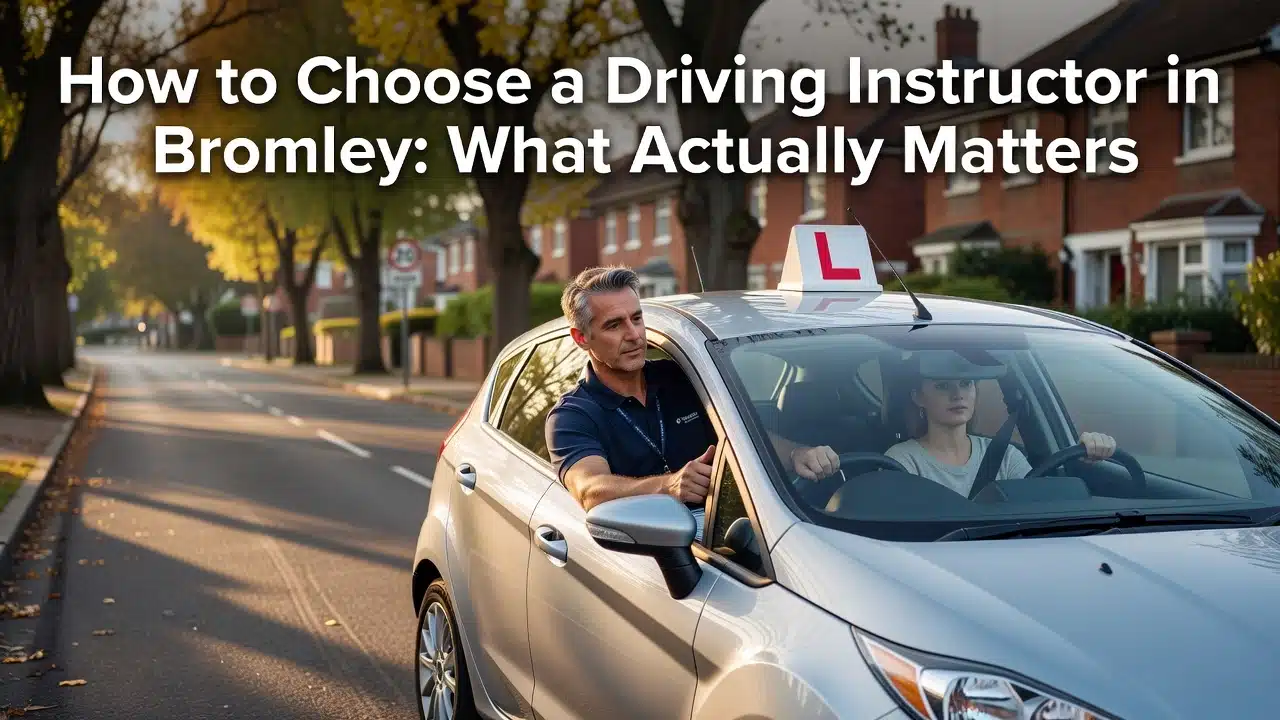
What to Look for Beyond Price When Choosing a Driving School in Bromley
Price is the most visible variable when comparing driving schools, but it is rarely the most important one. Once you move beyond the hourly rate, several factors carry far greater influence over how quickly you pass, how much you ultimately spend, and how confident you feel behind the wheel on test day.
ADI Status: The Non-Negotiable Starting Point
Every driving instructor who teaches for payment in the UK must be registered as an Approved Driving Instructor (ADI) with the DVSA. ADI qualification is not a formality; it requires passing three separate examinations covering theory, hazard perception, and in-car instructional ability. An instructor holding a valid ADI badge has met a rigorous, government-mandated standard. Before booking any driving school, verify that your instructor holds a current ADI registration. This single check protects you from under-qualified tuition and ensures your lessons count toward a structured path to test readiness.
Why Local Knowledge Has a Direct Impact on Your Pass Rate
Instructor quality and local expertise are not the same thing, and in Bromley both matter. An ADI who knows the roads around Bromley test centre intimately, including the junctions, roundabouts, and residential areas that appear repeatedly on test routes, delivers preparation that a generalist instructor simply cannot replicate. Familiarity with local hazard patterns, road markings, and the specific conditions learners encounter in BR1, BR2, BR3, and BR4 translates into focused, efficient lessons rather than generic driving practice.
Established Presence, Consistent Standards
EL’s Driving School has been operating in the Bromley community since 2004. That represents over 20 years of consistent instruction, accumulated local knowledge, and a reputation built on learner outcomes rather than advertising. An established independent school offers something national franchise models rarely can: continuity with a single, experienced instructor who knows your progress, adapts to your learning style, and is accountable to the community they serve.
Flexibility Across All Areas of the Driving Test
The driving test has both theory and practical components, and a good driving school supports both. Access to online theory and hazard perception support alongside practical in-car instruction allows learners to progress efficiently on every front. This format flexibility reduces wasted time and helps learners arrive at their practical test fully prepared, not just competent behind the wheel.
Research Outcomes Before You Book
With the national first-time pass rate sitting at approximately 50%, the cost of a failed test, including the £62 retest fee and additional preparatory lessons, is a real financial risk. Reading verified reviews, checking pass rates, and assessing instructor experience before booking on price alone is the most cost-effective decision a beginner learner can make. The cheapest hourly rate rarely delivers the cheapest path to a licence once instructor quality, local knowledge, and consistency are properly weighed.
Frequently Asked Questions About Driving Lesson Costs
How much do driving lessons cost in Bromley?
Bromley learners should budget for hourly rates in the £47 to £57 range. This reflects the South East London market premium above the national average of approximately £42 per hour. The premium is not arbitrary; it is driven by the higher operating costs instructors face in the area, including fuel consumption in dense urban traffic, elevated vehicle insurance premiums, and consistent demand that outpaces local ADI supply.
Are automatic driving lessons more expensive than manual?
Yes, automatic lessons typically cost £3 to £8 more per hour than manual equivalents in the London market. However, this per-lesson premium does not always translate into a higher total spend. Some learners progress faster in an automatic vehicle, particularly those who find manual gearwork a significant source of anxiety or distraction. Fewer total hours can partially or fully offset the higher hourly rate. One important practical note: passing your test in an automatic restricts your licence to automatic vehicles only, which is a longer-term financial consideration worth factoring into your decision.
How many driving lessons will I need?
The DVSA recommends an average of 45 professional hours combined with 22 hours of private practice before sitting the practical test. These are averages, not guarantees. Your actual requirement depends on prior driving exposure, how consistently you book lessons, and your individual learning pace. Learners who book weekly and supplement with private practice in a suitably insured vehicle tend to reach test-ready standard in fewer paid hours than those who allow long gaps between lessons.
What is the cheapest way to learn to drive?
The most effective combination is block booking lessons to secure a per-lesson discount, maintaining weekly lesson frequency to preserve skill retention between sessions, and supplementing with regular private practice. Each of these strategies works in isolation, but together they have the greatest impact on total spend.
Why are driving lessons more expensive in London?
Instructor running costs in London are meaningfully higher than elsewhere. Stop-start urban driving increases fuel consumption, vehicle insurance is more expensive, and the sustained concentration of learner demand relative to available qualified instructors keeps prices elevated. These factors compound to produce the South East premium you see reflected in local hourly rates.
How much does a driving test cost in the UK?
The DVSA charges £62 per attempt for the practical driving test and £23 for the theory test. Applying for a provisional licence online costs £34 (postal applications cost more, making the online route the better option). These fees are fixed government charges payable on top of your lesson costs. With a national first-time pass rate of approximately 50%, retake fees are a realistic budget line for many learners, making thorough test preparation a sound financial investment, not just an academic one.
Key Takeaways: Budgeting for Driving Lessons in Bromley and South East London
Bromley and South East London learners should plan for hourly rates of £47 to £57, with a realistic total cost to pass at first attempt sitting between £2,000 and £2,970 when all fees are included. Each failed test attempt adds £300 to £600 or more in retake fees and additional lessons, making first-time success the single most powerful cost-saving strategy available.
Chasing the lowest hourly rate is a false economy. A qualified, experienced ADI with local knowledge of Bromley test routes will move you to test-ready standard more efficiently than an unfamiliar instructor offering a cheaper rate. The difference of a few pounds per hour is insignificant compared to the cost of a second attempt.
Three practical levers remain within every learner’s control: block booking to secure a reduced per-lesson rate, consistent lesson frequency to maintain progression without costly repetition, and supplementary private practice to accelerate skill consolidation between paid sessions.
EL’s Driving School has been supporting Bromley and South East London learners since 2004. Contact the team to discuss automatic lesson packages, practical test preparation, and current availability tailored to your learning needs.
Conclusion
Understanding the true cost of learning to drive in Bromley and South East London puts you firmly in control of your journey. To recap the key points: hourly lesson rates vary between instructors, most beginners need more hours than they initially expect, and test fees are an additional cost worth factoring in from the start. Crucially, the cheapest option is rarely the best value when pass rates and lesson quality are taken into account.
Now that you have a realistic picture of the investment involved, you are in the best position to budget smartly and choose an instructor who will genuinely get you to test standard efficiently.
Ready to take the next step? Book your first lesson today and start your driving journey with complete confidence, knowing exactly what to expect every step of the way.