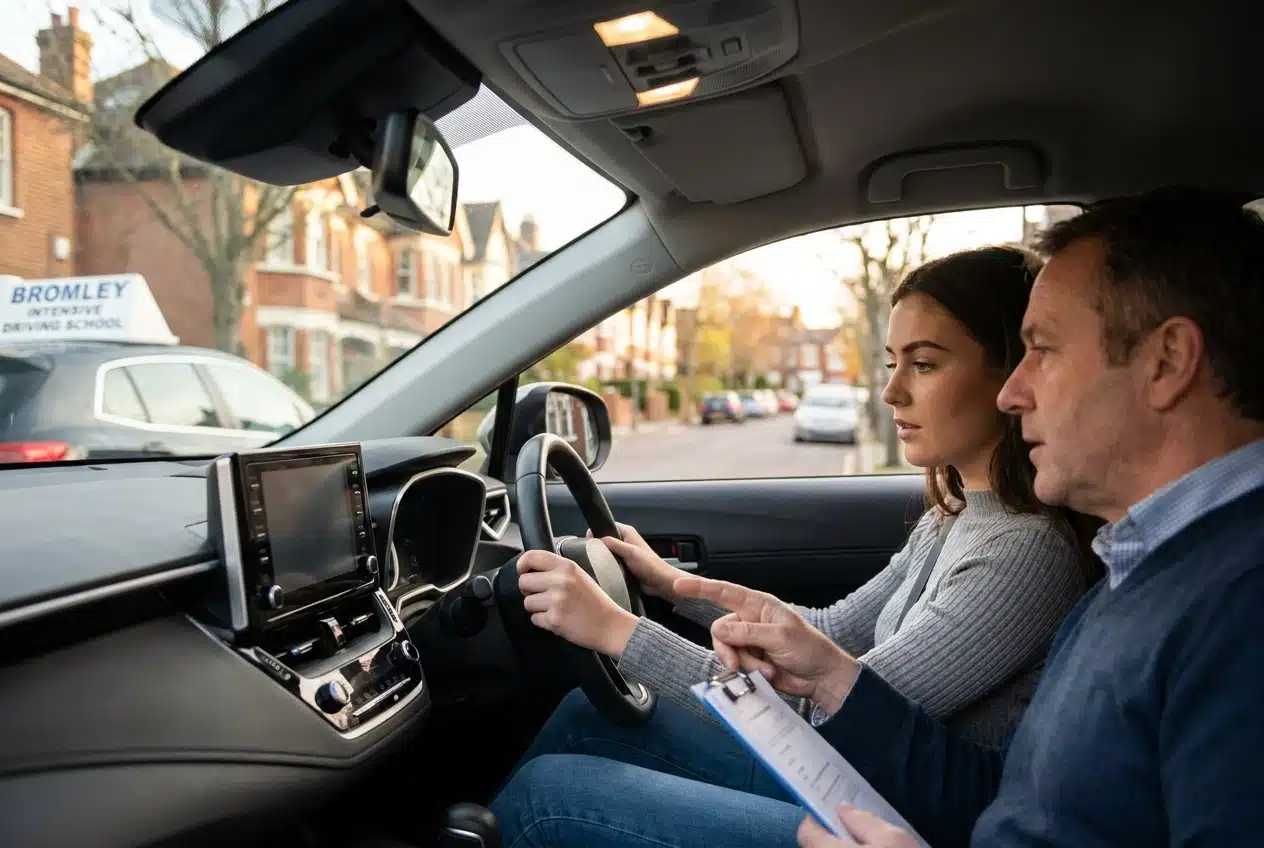
The notion that learning to drive an automatic car is somehow “cheating” is a persistent myth that unfortunately deters many potential drivers from considering this often more accessible route to obtaining a licence. For those residing in Bromley and seeking to embark on their driving journey, this article aims to demystify the process and address this misconception head-on. We will explore why this perception exists, the practicalities of automatic driving, and the benefits it offers, particularly for learners in areas like Bromley. Many individuals, especially those who learned traditionally, might believe that mastering a manual gearbox is the only true mark of a competent driver. However, this perspective overlooks the evolving landscape of automotive technology and the fundamental goal of driving: safe and responsible navigation of the roads. If you’re contemplating the best way to start your driving education, why not explore the advantages of automatic cars? For those in the Bromley area looking for professional guidance, remember that expert support is readily available.
The perception that driving an automatic is “cheating” largely stems from historical context and a traditional view of driving proficiency. For decades, manual transmission vehicles were the dominant, and often only, type of car available. Learning to drive a manual involved mastering a complex coordination of clutch, gears, and accelerator – a skillset deemed essential by many driving instructors and examiners of the past. This created a cultural understanding that to be a “real” driver, one had to conquer the intricacies of a manual gearbox.
The Historical Roots
In the early days of motoring, cars were less refined. Manual transmissions were necessary for everyday driving due to their efficiency and the lack of sophisticated automatic systems. Learning to drive a manual was, in essence, learning the fundamental mechanics of operating a vehicle. This hands-on, intricate process became ingrained as the definitive driving experience. Imagine a time when understanding how to shift gears smoothly was a significant hurdle, and for many, overcoming it was a badge of honour. This historical association can be difficult to shake, even as automotive technology has advanced dramatically. The skill set developed in a manual transmission car was perceived as a more comprehensive understanding of vehicle operation, leading to the belief that automatic drivers were circumventing a crucial learning phase.
How the Perception Lingers
Even today, in a world where automatic transmissions are increasingly commonplace, this outdated perception can persist. Some driving instructors, having taught for many years with a manual focus, may inadvertently perpetuate this idea. Likewise, family members or friends who learned on manual cars might express skepticism about automatic learning, sharing their own experiences and inadvertently reinforcing the “cheating” narrative. This is often rooted in a genuine belief that the manual experience provides a deeper understanding of the car’s mechanics, which is not entirely unfounded, but it fails to acknowledge the primary objective of driving education: safety and competence in modern traffic conditions. The perceived “shortcut” of an automatic can feel like bypassing a vital rite of passage for those accustomed to the manual learning curve.
The Reality of Modern Driving
The reality is that modern automatic transmissions are incredibly sophisticated. They are designed to make driving easier and more accessible, and they absolutely equip drivers with the necessary skills to operate a vehicle safely and competently in all driving conditions. The focus of driver training, regardless of transmission type, is on hazard perception, road awareness, traffic laws, and ultimately, safe navigation. These core competencies are taught and assessed equally for both manual and automatic learners. The argument that learning automatic is “cheating” ignores the fact that the purpose of learning to drive is not solely to master a gearbox, but to become a safe and responsible road user. Many learners find that by removing the complexity of gear changes, they can dedicate more mental energy to understanding traffic, observing their surroundings, and developing their overall situational awareness.
When the Myth is Particularly Harmful
This myth can be particularly harmful to individuals who might struggle with the coordination required for manual driving. People with physical limitations, certain learning difficulties, or simply those who find the manual process overwhelming can be discouraged from learning to drive altogether. This denies them the freedom and independence that driving offers. For individuals in Bromley, where public transport options might not always be ideal for every journey, the ability to drive independently can be a life-changing prospect. Dismissing automatic learning as “cheating” can inadvertently create barriers for these individuals. It’s crucial to remember that the goal is to get people safely on the road, not to gatekeep the privilege of driving based on an arbitrary mechanical skill.
In the ongoing debate about the implications of automated learning tools, the article “Why Learners Love ELS Driving School: Real Reviews from Our Students” provides valuable insights into how technology can enhance the learning experience without compromising integrity. This perspective is particularly relevant when considering the arguments presented in “Is Learning in an Automatic Cheating?” (Bromley Learner Guide), as it highlights the positive aspects of using technology in education. For more information, you can read the article here: Why Learners Love ELS Driving School.
The Practical Advantages of Automatic Cars
Beyond debunking the “cheating” myth, it’s essential to highlight the numerous practical advantages that learning to drive an automatic car offers. These benefits cater to a wide range of learners, making driving more accessible and often less stressful.
Reduced Cognitive Load
One of the most significant advantages is the reduced cognitive load. Learning to drive a manual car requires a learner to simultaneously manage steering, speed control, observation, and the complex coordination of the clutch, gearstick, and accelerator. This multi-tasking can be incredibly demanding, especially in the early stages of learning. An automatic transmission removes the need to operate a clutch pedal and manually select gears. This frees up mental capacity for the learner to focus on more critical aspects of driving, such as scanning for hazards, anticipating the actions of other road users, and understanding traffic flow. For learners in busy areas like Bromley, where traffic can be unpredictable, being able to dedicate more mental resources to observation rather than gear selection can significantly enhance safety.
Smoother Driving Experience
Automatic vehicles offer a generally smoother driving experience. The transmission automatically selects the appropriate gear based on speed and engine load, minimising jerky movements and ensuring a more consistent pace. This can be particularly beneficial in stop-start traffic, common in many urban and suburban areas including parts of Bromley. Learning to drive in a smoother environment can lead to a more relaxed and confident learner. The absence of clutch control means no more stalling at junctions or hills, which can be a major source of anxiety for new drivers. This contributes to a more positive and encouraging learning environment.
Easier Progression to Independent Driving
Many learners find that they progress more quickly to independent driving when learning in an automatic. With fewer mechanical elements to master, the core driving skills can be developed more efficiently. Learners can become proficient in navigating roads, understanding traffic signals, and executing manoeuvres with greater speed. This can lead to a shorter learning period and the confidence to drive independently sooner. For those eager to gain their freedom and navigate Bromley and beyond, this accelerated progression is a significant advantage. The focus shifts from mastering the mechanics to mastering the art of safe driving.
Accessibility for a Wider Range of Learners
Automatic transmission vehicles significantly increase the accessibility of driving for a broader spectrum of individuals. People with certain physical disabilities that might make operating a clutch difficult can now learn to drive confidently. Similarly, individuals who struggle with fine motor skills or complex coordination tasks can find automatic driving a much more achievable goal. This inclusivity is vital in ensuring that more people can benefit from the independence and opportunities that driving provides. For families in Bromley, it may mean that more members of the household can share driving responsibilities.
Lower Stress Levels
The overall stress associated with learning to drive can be substantially reduced when opting for an automatic. The fear of stalling, the anxiety of incorrect gear changes, and the constant mental gymnastics of manual driving can be overwhelming. By simplifying the process, automatic cars allow learners to approach their lessons with greater calm and confidence. This positive psychological state is conducive to better learning and a more enjoyable experience. A less stressful learning journey often translates into a more relaxed and assured driver once they pass their test.

The process of taking a driving test in an automatic vehicle is similar to that of a manual car, with key differences in the assessment criteria related to the transmission. Understanding these differences is crucial for Bromley learners preparing for their test.
Test Requirements and Syllabus
The Driver and Vehicle Standards Agency (DVSA) syllabus for driving tests covers a comprehensive range of skills, including observation, hazard perception, vehicle control, and adherence to road rules. Regardless of whether you learn in an automatic or manual, these core competencies are assessed to the same standard. The primary difference lies in the evaluation of gear changes. For automatic tests, there will be no assessment of your ability to operate a clutch pedal or select gears. This means the examiner will not be looking for smooth gear changes or penalising you for stalling a manual transmission.
Specific Automatic Test Elements
While the fundamental skills remain the same, the practical application will naturally differ. In an automatic test, you will be assessed on your ability to:
- Maintain appropriate speed: Using the accelerator and brakes effectively.
- Mirror-signal-manoeuvre (MSM) routine: Consistently checking mirrors, signalling intentions, and executing manoeuvres safely.
- Positioning on the road: Maintaining a safe and appropriate position in your lane.
- Independent driving: Following directions from a sat nav or traffic signs for a set period.
- Manoeuvres: Performing specific driving tasks like pulling up on the right side of the road, parallel parking, bay parking, and emerging from junctions. These will still be assessed, but without the added complexity of gear changes.
The DVSA ensures that the test assesses your ability to drive safely and competently, irrespective of the transmission type. The examiner will be looking for your overall road awareness, decision-making abilities, and your control of the vehicle in various situations.
What Not to Expect
You will not be asked to perform any actions related to gear selection in an automatic test. There will be no requirement to demonstrate hill starts using the clutch, or to change gears during a manoeuvre. This often leads to a less stressful experience for learners who might find these specific aspects of manual driving particularly challenging.
Passing the Test and Licence Restrictions
Upon successfully passing your driving test in an automatic vehicle, you will be issued with a driving licence that has an automatic transmission (code ‘A’) restriction. This means you are legally permitted to drive automatic cars. If, at a later stage, you wish to drive a manual car, you would need to take a separate practical driving test in a manual vehicle to remove this restriction. For many, particularly those in Bromley who may initially only have access to or need to drive an automatic, this is a perfectly acceptable and limiting outcome.
The Benefits of Specialising
Opting for an automatic test allows learners to focus on developing the core skills of safe driving without the added pressure of mastering a manual gearbox. This can lead to a more positive learning experience, greater confidence, and a higher chance of success in passing the test. For individuals who may have had negative experiences with manual instruction, an automatic route can be a refreshing and empowering alternative.
Choosing the Right Transmission for You

Deciding whether to learn in an automatic or manual transmission is a personal choice with implications for your learning experience and future driving. For residents of Bromley, understanding your options is key to making the best decision for your circumstances.
Consider Your Personal Circumstances
Reflect on your individual learning style, any physical considerations you might have, and your primary objective for learning to drive. If you are looking for a less stressful learning experience, or if you anticipate primarily driving automatic cars, then an automatic transmission is likely the better choice. If you are keen to experience the full spectrum of manual driving, or if you foresee yourself regularly driving manual vehicles, then a manual car might be more suitable. There is no single “correct” answer; it’s about finding the path that best suits your needs and goals.
The Long-Term Repercussions of Your Choice
Your transmission choice has a long-term implication for the types of vehicles you can legally drive. As mentioned, passing in an automatic restricts you to automatics. Passing in a manual allows you to drive both manual and automatic cars. Consider if you might need to drive a manual car in the future – perhaps for work, or if you inherit a manual vehicle from a family member. If this is a possibility, a manual licence might offer greater flexibility. However, the increasing prevalence of automatic vehicles in the market means that an automatic licence is becoming ever more practical.
Test Your Assumptions
If you are unsure, consider taking an introductory lesson in both manual and automatic vehicles. This will give you a practical feel for each and allow you to make a more informed decision. Many driving schools, including those servicing Bromley, offer taster sessions that can be invaluable. You might be surprised by how much you enjoy one over the other, or how much easier you find one to grasp.
The Growing Popularity of Automatics
The automotive industry is seeing a significant shift towards automatic transmissions, driven by advancements in technology, fuel efficiency, and consumer preference. Electric vehicles, which are becoming increasingly important, are almost exclusively automatic. This trend suggests that the long-term practicality of an automatic licence will only continue to grow. For those looking towards the future of motoring, an automatic might be a very sensible choice.
The “Right” Driver, Not the “Right” Transmission
Ultimately, the goal is to become a safe, competent, and confident driver. The transmission with which you learn is a tool to achieve that goal. Do not let outdated myths or external pressures dictate your decision. Focus on what will make your learning journey successful and enjoyable. The objective is to be a responsible road user, and the transmission is secondary to that.
In the ongoing debate about the implications of technology in education, the article “What You Should Know About Taking a Driving Lesson Course in Bromley” offers valuable insights into how automated learning tools can enhance traditional teaching methods. This perspective aligns with the discussion in “Is Learning in an Automatic Cheating?” from the Bromley Learner Guide, as both pieces explore the balance between utilizing technology and maintaining academic integrity. For a deeper understanding of how these tools can be effectively integrated into learning environments, you can read more in the article here.
The Future of Driving and Automatic Transmission
The automotive landscape is rapidly evolving, and automatic transmissions are at the forefront of this change. For learners in Bromley and beyond, understanding this evolution can further solidify the decision to learn in an automatic.
The Rise of Electric Vehicles (EVs)
A driving force behind the increasing prevalence of automatic transmissions is the surge in electric vehicles. Virtually all EVs are automatic, as their electric motors operate differently and do not require manual gear changes. As more and more drivers transition to EVs, the demand for automatic transmission vehicles will only continue to rise. This means that obtaining an automatic licence today could position you perfectly for the future of personal transportation. For learners planning for the long term, this is a significant consideration.
Advanced Driver-Assistance Systems (ADAS)
Modern cars are increasingly equipped with sophisticated driver-assistance systems, often seamlessly integrated with automatic transmissions. Features like adaptive cruise control, lane-keeping assist, and automatic emergency braking work in conjunction with the automatic gearbox to enhance safety and reduce driver workload. This further streamlines the driving experience, making it more intuitive and less demanding. The technology is designed to assist, not to replace, responsible driving, and automatics are well-placed to leverage these advancements.
Benefits for Urban and Suburban Driving
The stop-start nature of driving in urban and suburban environments, such as many areas of Bromley, makes automatic transmissions particularly well-suited. The elimination of constant clutch operation and gear changes significantly reduces fatigue and stress for drivers in congested areas. This makes automatic cars not only convenient but also a sensible choice for everyday commuting and local journeys.
Accessibility and Inclusivity
As discussed earlier, the accessibility of automatic transmissions for a wider range of drivers is a crucial aspect of their growing dominance. This inclusivity ensures that more people can experience the freedom and independence that driving offers, contributing to a more connected and mobile society. The future of driving should be accessible to all who are able to drive safely, and automatic technology plays a vital role in achieving this.
Addressing Common Concerns About Automatic Licences
Despite the clear advantages, some lingering concerns may prevent learners from choosing an automatic. Let’s address these common points of apprehension.
“Will I Be Able to Drive Other Cars?”
As previously noted, passing your test in an automatic vehicle means you will be licensed to drive automatic cars. If you later wish to drive a manual, you will need to pass a further practical test in a manual vehicle. For many, this is not an issue, as their driving needs are met by automatics. However, if the possibility of driving manual cars is important to you, then learning in a manual would be the more direct route. The key is to assess your future needs realistically.
“Is It Really Easier? Is There a Catch?”
Learning to drive an automatic is generally considered easier because it removes the complexity of clutch control and manual gear selection. This allows learners to focus on the fundamental aspects of safe driving. There is no nefarious “catch.” The perceived difficulty of manual driving is a genuine hurdle for many, and automatics simply provide an alternative pathway that is equally effective in producing safe drivers. The ease comes from a more streamlined mechanical operation, not from a reduced standard of driving competence.
“Will I Miss Out on Learning the ‘Real’ Skill?”
The definition of a “real” driving skill is subjective and often rooted in tradition. While mastering a manual gearbox is a skill, it is not the only skill required for safe driving, nor is it necessarily the most important in modern motoring. Hazard perception, road awareness, decision-making, and understanding traffic laws are paramount. Automatic transmission vehicles allow learners to dedicate more mental energy to developing these crucial skills without the distraction of complex mechanical operation. The “skill” of driving is broader than just controlling a gearbox.
“Do Automatic Cars Cost More to Run?”
Historically, manual cars were often more fuel-efficient. However, modern automatic transmissions, particularly those with many gears or continuously variable transmissions (CVTs), have significantly closed this gap. In some cases, advanced automatic systems can even be more fuel-efficient than their manual counterparts, especially in varied driving conditions. The cost of running a car also depends on many factors beyond transmission type, including the vehicle’s age, model, and how it’s driven.
“What About the Resale Value of Automatic Cars?”
The resale value of automatic cars is generally strong and is expected to continue to be so, given the increasing consumer preference and the shift towards EVs. The market for automatic vehicles is robust, and there is no reason to believe that this will change in the foreseeable future. In fact, as the automotive market leans more heavily into automatics, their resale value may even surpass that of manuals.
Choosing to learn in an automatic car is a practical, modern, and valid choice that equips you with the necessary skills to drive safely and confidently. For learners in Bromley, it offers a less stressful and potentially faster route to obtaining the freedom of the open road.