Embarking on the journey to obtain a UK driving license is a significant milestone for many. It promises independence, convenience, and access to a world of opportunities. However, for a substantial number of aspiring drivers, this journey encounters a roadblock at the practical driving test. While the test is designed to assess a candidate’s ability to drive safely and competently, statistics consistently show that a significant percentage of individuals do not pass on their first attempt. Understanding the primary reasons for these failures is crucial for anyone preparing to take the test. By identifying these common pitfalls, learners can proactively address them, increasing their chances of success. For comprehensive instruction and guidance on navigating these challenges, consider visiting the experts at ELS Driving School. Their experienced instructors provide tailored lessons to help you master the necessary skills. Further insights and booking options can be found at this link. If you’re looking for professional driving lessons to prepare for your test, exploring the offerings here would be beneficial.
Understanding the UK Driving Test Structure
The practical driving test in the UK is a structured assessment designed to evaluate a candidate’s overall driving ability, their adherence to road safety rules, and their capacity to drive independently and responsibly. It typically lasts for around 40 minutes and covers various aspects of driving, including general driving ability, manoeuvres, and the independent driving section. Before the driving portion begins, candidates must successfully complete an eyesight test and answer a ‘show me, tell me’ vehicle safety question. Failure at either of these initial stages results in an immediate test termination.
The Eyesight Test and ‘Show Me, Tell Me’ Questions
The eyesight test requires candidates to read a number plate from a prescribed distance, which is 20 metres for vehicles with a new style number plate (e.g., AB51 ABC) and 20.5 metres for vehicles with an old style number plate (e.g., A123 ABC). This simple test is a fundamental safety requirement, as good vision is paramount for safe driving. Surprisingly, a small but consistent number of candidates fail this basic test, often due to inadequate preparation or neglecting to wear their prescription glasses or contact lenses.
Following the eyesight test, the examiner will ask two vehicle safety questions – one ‘tell me’ question before you start driving, and one ‘show me’ question while you’re driving. The ‘tell me’ question requires you to explain how you’d carry out a safety check, such as explaining how to check the oil level or the brake fluid. The ‘show me’ question involves demonstrating how to carry out a safety task while the car is moving, for example, showing how to demist the windscreen using the car controls. These questions assess a candidate’s basic understanding of vehicle maintenance and safety checks, knowledge that is essential for responsible car ownership.
General Driving Ability Assessment
The bulk of the driving test assesses a candidate’s general driving ability. This involves driving on various road types, encountering different traffic conditions, and demonstrating a smooth, controlled, and safe approach to driving. Examiners are looking for a driver who can anticipate hazards, react appropriately, and maintain a safe following distance. Key areas of assessment include:
- Observation: Consistently checking mirrors, blind spots, and scanning the road ahead for potential hazards.
- Signalling: Using indicators correctly and in good time to inform other road users of intentions.
- Road positioning: Maintaining a safe and appropriate position on the road, whether in lanes, approaching junctions, or navigating bends.
- Control of the vehicle: Smooth and effective use of steering, accelerator, brakes, and clutch (for manual cars).
- Junctions: Approaching and navigating junctions safely, observing road markings, and giving way when necessary.
- Roundabouts: Understanding and applying the correct procedures for entering, navigating, and exiting roundabouts.
Manoeuvres and Independent Driving
During the test, the examiner will ask the candidate to perform one reversing manoeuvre from a selection of options: parallel parking, reverse bay parking, or forward bay parking (followed by reversing out). Additionally, there’s a possibility of being asked to perform a controlled stop (also known as an emergency stop). These manoeuvres test a candidate’s ability to control the vehicle at slow speeds and in confined spaces, demonstrating precision and spatial awareness.
The independent driving section, which lasts for about 20 minutes, is designed to assess a candidate’s ability to make independent decisions while driving. During this section, the candidate will either follow directions from a sat nav (provided by the examiner) or follow road signs. The examiner will set the sat nav up and ensure it’s working before the independent driving section starts. This part of the test evaluates a candidate’s ability to process information, plan their route, and maintain safe driving practices without direct instruction from the examiner.
In exploring the reasons behind the high failure rates in UK driving tests, it’s essential to consider various factors that contribute to this challenge. One related article that delves into the intricacies of driving skills is titled “How to Change Gears in a Manual Car,” which provides valuable insights for learners. Understanding gear changes is crucial for mastering vehicle control, a skill that can significantly impact test performance. For more information, you can read the article here: How to Change Gears in a Manual Car.
Top Reason for Failure: Poor Observation and Awareness

Consistently, one of the leading reasons for candidates failing their practical driving test in the UK is a lack of adequate observation and awareness, particularly at junctions and when changing lanes. This umbrella term encompasses a range of specific errors, all stemming from not effectively scanning the environment and anticipating potential hazards. The ability to observe and react safely is fundamental to defensive driving, and a deficiency in this area often leads to dangerous situations or missed opportunities that accumulate as minor faults, or worse, result in serious or dangerous faults.
Inadequate Mirror Use and Blind Spot Checks
A critical aspect of observation is the consistent and correct use of mirrors. Many learners fail to check their mirrors frequently enough, or they only glance without truly processing the information. This is particularly problematic when:
- Changing speed: Before accelerating or braking significantly, a glance in the rearview mirror provides crucial information about following traffic.
- Changing direction: Before indicating and moving into a new lane, checking side mirrors and conducting a head check (looking over the shoulder to check the blind spot) is paramount to ensure no vehicles are alongside. Failure to do this can lead to cutting off other drivers or even collisions.
- Approaching hazards: Observing mirrors before and after passing hazards helps in assessing the impact of one’s actions on other road users.
Ignoring blind spots is a common serious fault. Many drivers assume their mirrors cover all angles, but a quick head turn is often necessary, especially before changing lanes or pulling away from the side of the road. Examiners are specifically trained to look for these crucial head checks.
Faulty Junction Approach and Exit
Junctions are hotspots for driving test failures related to observation. Common mistakes include:
- Insufficient observation at crossroads and T-junctions: Not taking enough time to look both ways effectively before emerging, especially where visibility is limited. This often manifests as ‘creeping out’ too far or stopping too late.
- Misjudging gaps in traffic: Emerging into traffic when it’s not safe to do so, or conversely, waiting for an excessively long time when there’s a safe opportunity to proceed. Both indicate poor judgment and awareness of traffic flow.
- Incorrect signalling: Not signalling at all, signalling too late, or signalling incorrectly (e.g., indicating left when going straight ahead) can confuse other road users and create dangerous situations.
- Inadequate observation when turning: When turning left or right, failing to check mirrors for cyclists or pedestrians who might be in the path of the turn.
Neglecting Pedestrians and Vulnerable Road Users
A significant part of road awareness involves anticipating the presence and actions of pedestrians, cyclists, and motorcyclists. Learners often get too fixated on other vehicles and overlook these more vulnerable road users. This can lead to:
- Not giving way to pedestrians at crossings: Whether it’s a marked crossing (zebra, pelican, puffin) or an informal crossing point, failing to stop for pedestrians who are waiting to cross or are already on the crossing.
- Not checking for cyclists when turning: Cyclists can be difficult to spot, especially when they are approaching from behind or are in a driver’s blind spot. Failing to check for them before turning or opening a car door can have serious consequences.
- Lack of awareness around parked cars: Not anticipating children or adults stepping out from between parked cars, or not allowing enough space when passing parked vehicles to account for open doors.
Essentially, poor observation and awareness stem from a lack of active engagement with the driving environment. It’s not enough to simply see; one must process the information, anticipate potential scenarios, and adjust their driving accordingly. Developing a habit of continuous scanning and checking, coupled with a proactive rather than reactive approach to hazards, is vital for passing the test.
Second Major Issue: Ineffective Vehicle Control

The second significant contributor to driving test failures is a range of issues related to ineffective vehicle control. While observation deals with understanding the external environment, vehicle control focuses on the driver’s ability to manipulate the car smoothly, precisely, and safely. These faults often stem from insufficient practice, lack of confidence, or a failure to adapt control to different situations.
Poor Steering Control
Steering is one of the most fundamental aspects of driving, yet many learners exhibit deficiencies that lead to test failures. Common issues include:
- Erratic steering: Over-steering or under-steering, leading to the vehicle weaving or not following the intended path smoothly. This is particularly noticeable on bends, at roundabouts, or when positioning the car in a lane.
- Lack of control during manoeuvres: Inability to steer accurately during parallel parking, bay parking, or reversing around a corner, resulting in hitting the curb, ending up too far from the curb, or not completing the manoeuvre within acceptable parameters.
- Holding the steering wheel incorrectly: While examiners are less strict on ‘hand positions’ than in the past, holding the wheel with one hand, crossing hands inappropriately, or having a death grip can indicate a lack of control and smooth steering ability.
- Not straightening up after a turn: Failing to allow the steering wheel to return naturally or actively straightening it after a turn, causing the car to drift.
Effective steering requires a delicate balance of observation, anticipation, and smooth, consistent hand movements. It’s about guiding the vehicle, not wrestling with it.
Inconsistent Use of Gears and Clutch (Manual Cars)
For those taking a manual driving test, the correct and smooth use of gears and the clutch is paramount. Many failures are attributed to:
- Stalling the engine: This is a very common fault, especially when pulling away from junctions or during manoeuvres. While a single stall might be a minor fault, repeated stalling or stalling in a dangerous situation (e.g., at a busy junction) can lead to a serious fault.
- Crunching gears: Forcing gears or selecting the wrong gear, causing a jolt or grinding noise, indicates a lack of coordination between the clutch and accelerator, or simply a poor understanding of gear selection.
- Driving in the wrong gear: Driving in too high a gear for the speed (lugging the engine) or too low a gear (over-revving the engine) affects vehicle control, fuel efficiency, and can be distracting. It also suggests a lack of understanding of how the car’s power delivery works.
- Riding the clutch: Keeping the clutch partially engaged for too long, especially at junctions or in slow-moving traffic. This can damage the clutch and indicates a lack of control and confidence.
- Harsh braking or acceleration: While not strictly gear-related, jerky movements caused by sudden braking or aggressive acceleration demonstrate a lack of smooth control and can be uncomfortable and potentially unsafe for passengers and other road users.
Ineffective Speed Management
Managing speed appropriately is crucial for safety and control. Faults in this area include:
- Driving too fast for the conditions: Exceeding the speed limit is an obvious serious fault, but driving too fast even within the speed limit can be dangerous if road conditions (weather, traffic, narrow roads) warrant a lower speed.
- Driving too slowly: While caution is commendable, driving excessively slowly can frustrate other road users and create unnecessary congestion or hazards, particularly on main roads. It can also indicate a lack of confidence.
- Inadequate anticipation of hazards: Not reducing speed in good time when approaching junctions, bends, or pedestrian crossings, requiring sudden and harsh braking. Smooth, progressive braking is always preferred.
- Difficulty maintaining a consistent speed: Fluctuating speeds without good reason, making it difficult for other road users to anticipate movements.
Mastering vehicle control requires practice, patience, and a nuanced understanding of how the car responds to inputs. It’s about developing muscle memory and the ability to operate the controls smoothly and instinctively, allowing the driver to focus more on the external environment.
The Third Main Reason: Incorrect Road Positioning and Junction Handling
The third significant category of reasons for driving test failures revolves around incorrect road positioning and errors in handling junctions. These mistakes often stem from a lack of understanding of road markings, signs, and the dynamics of traffic flow, or simply insufficient practice in complex urban environments. Proper positioning is not just about staying in a lane; it’s about communicating intentions, ensuring safety, and facilitating smooth traffic movement.
Inaccurate Road Positioning on Straight Roads and Bends
Maintaining a correct and safe road position is fundamental to driving, yet many learners struggle with it. Common issues include:
- Drifting in and out of lanes: Not maintaining a consistent position within a lane, often straying too close to the centre line or the curb. This can be caused by poor steering control, distraction, or a lack of spatial awareness.
- Poor positioning on bends: Entering bends too fast, positioning the car too wide on an approach, or cutting corners. This can lead to crossing into oncoming traffic lanes or running off the road, especially on sharper turns.
- Driving too close to parked cars: Not allowing enough space when passing parked vehicles, risking collision with opening doors or pedestrians emerging.
- Incorrect use of bus lanes or cycle lanes: Driving in lanes when not permitted or not understanding the operational hours for such lanes.
Correct road positioning is a dynamic skill, constantly adjusting to the road layout, other traffic, and potential hazards. It requires constant observation and anticipatory steering.
Faulty Approach and Exit at Junctions and Roundabouts
Junctions and roundabouts are complex environments that demand a high level of skill in observation, signalling, and positioning. Failures here are often a combination of several mistakes:
- Incorrect lane choice: Choosing the wrong lane for the intended direction at multi-lane junctions or roundabouts. This can lead to illegal manoeuvres, confusion for other drivers, or sudden lane changes that create hazards.
- Approaching too fast or too slow: Not adjusting speed appropriately for the junction. Approaching too fast reduces reaction time, while approaching too slowly can impede traffic flow.
- Poor positioning at the stop line/give way line: Stopping too far back, obscuring the view of approaching traffic, or stopping too far forward, encroaching into the main road.
- Misinterpreting road markings and signs: Not understanding arrow markings, ‘give way’ lines, ‘stop’ lines, or signs indicating filtering lanes or no entry, leading to incorrect actions.
- Cutting corners: Turning too sharply at a left turn, causing the vehicle to cross the centre line of the new road, or not allowing enough space for the rear wheels to track around a corner.
- Poor roundabout discipline:
- Incorrect entry position: Not positioning the car correctly on approach (e.g., in the right lane for a right turn or left lane for a left turn).
- Inadequate signalling: Not signalling on approach, or signalling incorrectly, confusing other drivers about intentions.
- Failure to give way: Entering the roundabout when traffic on the roundabout has priority.
- Changing lanes on the roundabout without checking: Attempting to switch lanes on a multi-lane roundabout without proper observation or signalling.
- Incorrect exit signalling: Not signalling left to exit the roundabout until it’s too late, or signalling right when exiting.
Effective junction and roundabout handling requires a blend of excellent observation, timely decision-making, and precise vehicle control. It’s about being assertive when safe, but also patient and yielding when necessary, always communicating intentions clearly to other road users.
Many aspiring drivers often wonder about the reasons behind failing the UK driving test, and understanding these factors can significantly improve their chances of success. A related article discusses the impact of external circumstances, such as the COVID-19 pandemic, on driving lessons and tests. You can read more about this situation and how it has affected learners by visiting this informative article. By being aware of these challenges, candidates can better prepare themselves for their driving assessments.
Strategies for Overcoming Common Test Challenges
Understanding the common reasons for failure is the first step; the next is to implement effective strategies to overcome these challenges. A structured approach to learning, combined with targeted practice, can significantly boost a candidate’s chances of passing the UK driving test.
Targeted Practice and Mock Tests
One of the most effective strategies is to engage in targeted practice sessions focused on identified weaknesses. If, for instance, a learner consistently struggles with parallel parking, dedicated sessions to master this manoeuvre are essential. Similarly, if observation at complex junctions is an issue, spending time navigating such junctions with an instructor, focusing solely on mirror checks and scanning, will be highly beneficial.
- Identify Weaknesses: Work with your driving instructor to pinpoint specific areas where you make consistent errors. Use feedback from your instructor and any mock test results to create a list of areas to focus on.
- Dedicated Practice: Instead of just general driving, dedicate entire lessons or practice sessions to these specific areas. For example, if you struggle with roundabouts, spend an hour just driving on different types of roundabouts.
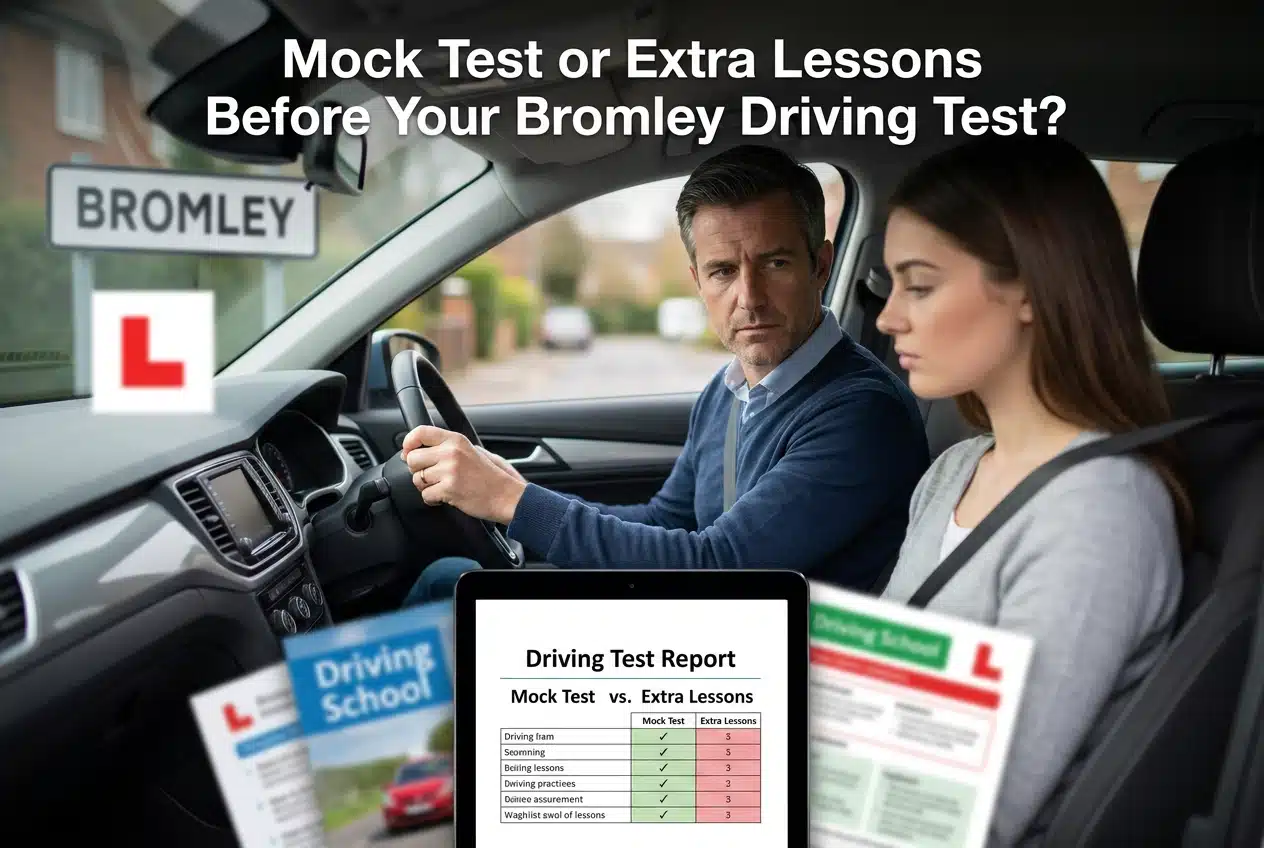
- Mock Driving Tests: Regular mock tests are invaluable. They simulate the real test environment, complete with an examiner-like figure (your instructor or an independent instructor) providing critical feedback. These tests help to manage test nerves, identify remaining weaknesses under pressure, and refine timing and decision-making. Review the feedback from mock tests meticulously to understand exactly where improvements are needed.
Enhancing Observation Skills Systematically
Improving observation is not just about “looking more”; it’s about looking effectively and systematically.
- The “MSM” Routine (Mirror, Signal, Manoeuvre): This fundamental routine should be ingrained. Before changing speed, direction, or position, always check your mirrors (M), then signal (S), and then execute the manoeuvre (M). Practice making it a seamless, automatic habit.
- Head Checks/Blind Spot Checks: Make a conscious effort to perform head checks before changing lanes, pulling away from the curb, or when exiting a roundabout if there’s any ambiguity. This visual cue is important for the examiner and critical for safety.
- Anticipation and Hazard Perception: Constantly scan the road ahead for potential hazards – pedestrians near crossings, cars indicating to pull out, cyclists, parked cars. Develop the ability to anticipate what might happen next and how you would react. The Hazard Perception part of the theory test is designed to train this skill; apply it in practice.
- Junction Routine: Develop a consistent routine for approaching junctions: check mirrors, assess speed, signal, select gear, look (left, right, left again, or further depending on visibility), and only then proceed when safe.
Building Confidence and Managing Nerves
Nerves are a significant factor for many test failures. Even skilled drivers can make mistakes when under pressure.
- Adequate Preparation: The best antidote to nerves is thorough preparation. The more prepared you feel, the more confident you will be. Ensure you’ve covered all aspects of the syllabus and practiced all manoeuvres multiple times.
- Instructor Support: Trust your instructor’s judgment on when you are ready. They have experience in assessing readiness. Don’t rush into booking a test if your instructor feels you need more lessons.
- Positive Self-Talk and Visualisation: Before the test, mentally rehearse successful driving scenarios. Picture yourself performing manoeuvres smoothly and navigating junctions confidently.
- Deep Breathing Techniques: On the day of the test, and even during the test, if you feel overwhelmed, take a few deep, slow breaths. This can help to calm your nervous system.
- Treat the Examiner as a Passenger: While maintaining respect and professionalism, try to view the examiner as simply a passenger giving directions. This can help demystify the situation and reduce pressure.
- Accept Mistakes: Understand that making a minor fault is not the end of the world. Even experienced drivers make minor errors. The key is not to dwell on a mistake but to learn from it immediately and continue driving safely and competently.
By adopting these strategies, aspiring drivers can systematically address the common pitfalls, transform weaknesses into strengths, and approach their practical driving test with increased confidence and a significantly higher chance of success. The ultimate goal is not just to pass the test, but to become a safe, confident, and responsible driver for life.
The Importance of Professional Driving Instruction
While self-practice with a supervising driver is valuable, the role of a professional driving instructor cannot be overstated in preparing a candidate for the UK driving test. Instructors offer structured learning, expert feedback, and a deeper understanding of what examiners are looking for. Their expertise is crucial in navigating the complexities of modern driving and the specific requirements of the test.
Structured Learning and Skill Development
Professional driving instructors follow a structured curriculum designed to cover all aspects of the driving syllabus. They break down complex skills into manageable steps, allowing learners to build proficiency progressively. This systematic approach ensures that no critical area is overlooked.
- Foundation Skills: Instructors begin with fundamental vehicle controls (steering, clutch, gears, brakes) and gradually introduce more complex scenarios, such as junctions, roundabouts, and varying traffic conditions.
- Personalised Feedback: A good instructor provides detailed, constructive feedback tailored to the individual learner’s performance. They identify specific errors, explain why they occurred, and suggest corrective actions. This personalised guidance is far more effective than generic advice.
- Developing Safe Habits: Instructors instil safe driving habits from the outset. They emphasise defensive driving techniques, hazard perception, and the importance of anticipating potential dangers, which are all vital for passing the test and for lifelong safe driving.
- Understanding Faults: Instructors are adept at recognising the types of faults that lead to test failures (minor, serious, dangerous) and can explain how to avoid them. They help learners distinguish between a minor slip-up and a fundamental error that needs significant correction.
Test Route Familiarity and Mock Test Expertise
While instructors cannot guarantee specific test routes, they often have extensive knowledge of the local test areas. This familiarity allows them to:
- Practice Challenging Spots: Take learners to complex junctions, tricky roundabouts, or areas known for unique traffic patterns that are frequently used during tests. This exposure helps learners build confidence and proficiency in these challenging environments.
- Simulate Test Conditions: Instructors are highly skilled at conducting mock tests that closely mirror the actual practical driving test. They replicate the pressure, the independent driving section, and the ‘show me, tell me’ questions, giving learners valuable experience under test conditions.
- Objective Assessment: An instructor provides an objective assessment of a learner’s readiness for the test. They can advise on when to book the test, or if more lessons are needed, based on their professional judgment and the learner’s performance in mock tests.
Managing Test Nerves and Building Confidence
The presence of a supportive and knowledgeable instructor can significantly help in managing test nerves.
- Reassurance and Encouragement: Instructors provide encouragement and build a learner’s confidence over time, helping them believe in their abilities.
- Strategies for Nerves: They can teach techniques for managing anxiety on the test day, such as focusing on the task at hand, deep breathing, and positive self-talk.
- Consistent Reinforcement: Through consistent lessons, instructors reinforce good driving practices, which translates into greater confidence and reduced anxiety when facing the examiner.
In essence, professional driving instruction provides the structured learning environment, expert guidance, and personalised support necessary to develop a well-rounded and safe driver. It’s an investment that pays dividends not only in passing the driving test but also in fostering a lifetime of responsible driving.