Thinking about booking an intensive automatic driving course in Bromley but not sure if it’s actually the right move for you? You’re asking exactly the right question, and the honest answer is: it depends.
Automatic driving lessons intensive courses have a reputation for getting people test-ready fast, and for the right learner, that reputation is well earned. But fast is not the same as right for everyone. Bromley’s roads are busy, varied, and genuinely demanding for new drivers. Throw in a compressed learning schedule and zero prior experience, and what sounds like an efficient shortcut can quickly become an overwhelming and expensive mistake.
This post is here to help you figure out which side of that line you fall on. We will walk you through exactly what an intensive automatic course involves, who tends to do well on them, who does not, and why Bromley specifically changes the equation. You will also find a practical framework for choosing between a full intensive, a semi-intensive programme, and structured weekly lessons. No hard sell, just the information you need to make the right call for your situation.
What an Intensive Automatic Driving Course Actually Involves
“Intensive” simply means compressed. Instead of spreading lessons across six months, you learn over days or weeks, typically in sessions of 2 to 3 hours per day or several times a week. The learning itself does not change; the pacing does.
Automatic transmission is the natural fit for this format. Without a clutch to manage or gears to select, you carry fewer demands in your head at once, which means you can consolidate the skills that actually matter, road positioning, hazard reading, speed management, faster. Reducing mechanical complexity is not about making things easier; it is about freeing up mental bandwidth when you need it most.
It is also worth knowing that “intensive” is not one fixed product. It sits on a spectrum. At one end, full crash courses run daily lessons over one or two weeks. At the other, semi-intensive programmes use 2 to 3 hour sessions a few times a week across several weeks. Both qualify as intensive driving lessons in the automatic format, but they suit very different learners, as later sections of this guide explain.
One thing the format cannot change is the total learning required. The broadly accepted industry figure is roughly 40 to 50 hours of practice before most learners are genuinely test-ready. Intensity affects how quickly you move through those hours, not how many you need. How long intensive lessons actually take depends on your starting point, not just your schedule.
EL’s Driving School offers automatic lesson formats across this full spectrum, from structured weekly builds to concentrated intensive blocks, so the right fit can be matched to where you actually are as a learner.
Why Intensive Automatic Lessons Work Well for Some Learners
So who actually benefits from compressing their lessons? The short answer is learners who already have something to build on.
Muscle memory develops faster when lessons are close together. Leave a week between one-hour sessions and a meaningful portion of each lesson goes on recovering ground rather than gaining it. Clutch-free or not, the physical habits of steering inputs, pedal control, and spatial judgement all fade without reinforcement. Tighter lesson spacing keeps those patterns fresh and lets each session start where the last one finished.
There is also a mental load argument. Spreading learning over six months means repeatedly shifting your mindset between driving mode and everyday life. Intensive formats remove that friction; you stay in the learning zone long enough for habits to feel natural rather than deliberate.
For working adults or anyone with family commitments, protecting a recurring weekly slot for six months is genuinely hard. One blocked fortnight can derail momentum entirely. Blocking out a concentrated period is often easier to defend in a diary.
Community feedback from the New Drivers UK forum backs this up: learners consistently report that 2-3 hour sessions produce noticeably better progress than fragmented one-hour weekly lessons, even when those longer sessions are fortnightly rather than back-to-back.
The ideal candidate for intensive automatic driving lessons is starting to take shape: someone with prior driving experience, reasonable situational awareness, or someone switching from a manual licence to automatic. If that sounds like you, it is worth reading everything to know about automatic driving lessons in London before you book. If you are a complete beginner, the next section is the honest conversation you need first.
When Intensive Automatic Courses Go Wrong: The Honest Case Against
But intensive automatic courses are not right for everyone, and this is where honesty matters.
For a complete beginner, a crash course creates a compounding problem. You are not learning one thing at a time. You are simultaneously managing vehicle control, reading live traffic, judging junctions, and navigating roads you have never seen before, all under time pressure. Each skill is demanding on its own. Stacked together from day one, they overwhelm rather than build.
Dropout risk is real, and rarely acknowledged. On a weekly programme, a difficult lesson is followed by time to reflect and recover. In an intensive format, the next session arrives before you have processed the last one. Learners who fall behind have almost no natural recovery points, and some simply stop.
The research backs this up. A peer-reviewed study published in Accident Analysis and Prevention found that drivers who completed intensive courses showed higher post-test incident rates than those who followed traditional programmes.
There is also a financial exposure worth naming plainly. At around £42 per hour, with 40 to 50 hours needed to reach test standard, you are looking at a baseline of £1,680 to £2,100 before test fees. Choose the wrong format, fall behind, and need to restart or resit; that figure climbs significantly.
Most course providers do not raise any of this. EL’s does, because putting you in the right format from the outset is the only approach that actually works.
Why Bromley’s Roads Make Learner Profiling More Important
That risk is not abstract, it is specific to where you will be learning.
Bromley’s BR1 and BR2 town centre routes put learners into some of south-east London’s most demanding everyday traffic. Busy junctions, pedestrian crossings, bus lanes, and variable speed zones all appear within short distances of each other. For someone still building basic vehicle control, that environment demands a level of situational awareness that takes time to develop. Compressing that development into a crash course does not remove the difficulty; it concentrates it.
The A21 corridor and the routes connecting BR3 (Beckenham) and BR4 (West Wickham) add further complexity. Dual carriageway sections, residential streets with parked cars, and multi-lane roundabouts each require confident hazard perception before a learner can benefit from intensive pacing. Throwing those conditions at someone on day two of a crash course creates avoidable pressure, not productive challenge.
This matters because intensive courses are often designed and marketed with quieter suburban or rural environments in mind. Generic advice about crash courses does not transfer directly to urban south-east London driving. The roads here are a different proposition.
A more defensible progression for a complete beginner starts in quieter BR postcode streets, building control and confidence before gradually introducing more complex routes. That is exactly the kind of sequencing that local knowledge makes possible. An instructor who knows Bromley can match route exposure to learner readiness in a way that a generic national programme cannot. It is one of the clearest practical reasons why local knowledge that gives you an advantage should be a deciding factor when searching for automatic driving lessons near me.
Which Course Format Fits Your Situation: A Practical Framework
So, with Bromley’s road demands in mind, the practical question becomes: which format actually suits you?
Profile A: Complete beginner
No driving history at all? Start with a semi-intensive or structured weekly programme. You need time to build vehicle control and Bromley road familiarity before compressing your schedule. Rushing that foundation creates stress, not progress.
Profile B: Some prior experience, or returning after a break
If you have had automatic or manual lessons before, intensive automatic driving lessons are well-suited. Your existing muscle memory gives the format the base it needs; intensive pacing accelerates rather than overwhelms you. Learn more about what to expect from your automatic driving lessons before deciding.
Profile C: Time-pressured adult with a hard deadline
A job start date, relocation, or new family commitment creates real urgency. For learners without extensive prior experience, a semi-intensive format, think 2-hour sessions several times a week, typically balances speed with retention better than a full crash course. You move quickly without hitting cognitive overload.
Profile D: Manual licence holder switching to automatic
Vehicle control already transfers. Intensive automatic driving lessons make strong sense here; the course can focus on automatic-specific habits and test familiarisation rather than rebuilding your foundations from scratch.
The deciding question is not “how fast do I need to pass?” It is “how much driving have I already done?” That second answer should drive your format choice far more than the first.
The Semi-Intensive Option: A Structured Middle Ground
If the profile framework helped you identify yourself as someone who needs a measured approach rather than a full crash course, semi-intensive is the format worth understanding properly.
Two to three sessions per week, each running 1.5 to 2 hours, gives your brain and body time to consolidate what you have learned overnight rather than being asked to absorb the next skill within hours of the last. Daily immersion works when prior experience provides a foundation; without it, each session risks feeling like starting over. Spaced repetition, even across a few days, produces steadier progress.
Session length also matters more than most learners realise. A 1-hour lesson loses a meaningful proportion of its time to travel, vehicle checks, and briefing. Extending to 1.5 to 2 hours keeps actual driving time high relative to those fixed costs, making each lesson genuinely productive. If you are curious about how the early lessons are structured and what to expect in those first sessions, that progression maps directly onto why session length shapes confidence so significantly.
That route sequencing, quieter BR4/BR3 streets before the busier junctions of BR1/BR2, is exactly what semi-intensive pacing makes possible.
EL’s Driving School offers structured programmes across this full range, from beginner builds to test-focused blocks for those who are nearly ready, tailored to where you are starting from rather than a fixed timetable.
The Real Cost of Getting the Format Wrong
Format choice has a direct financial consequence, and it runs in both directions.
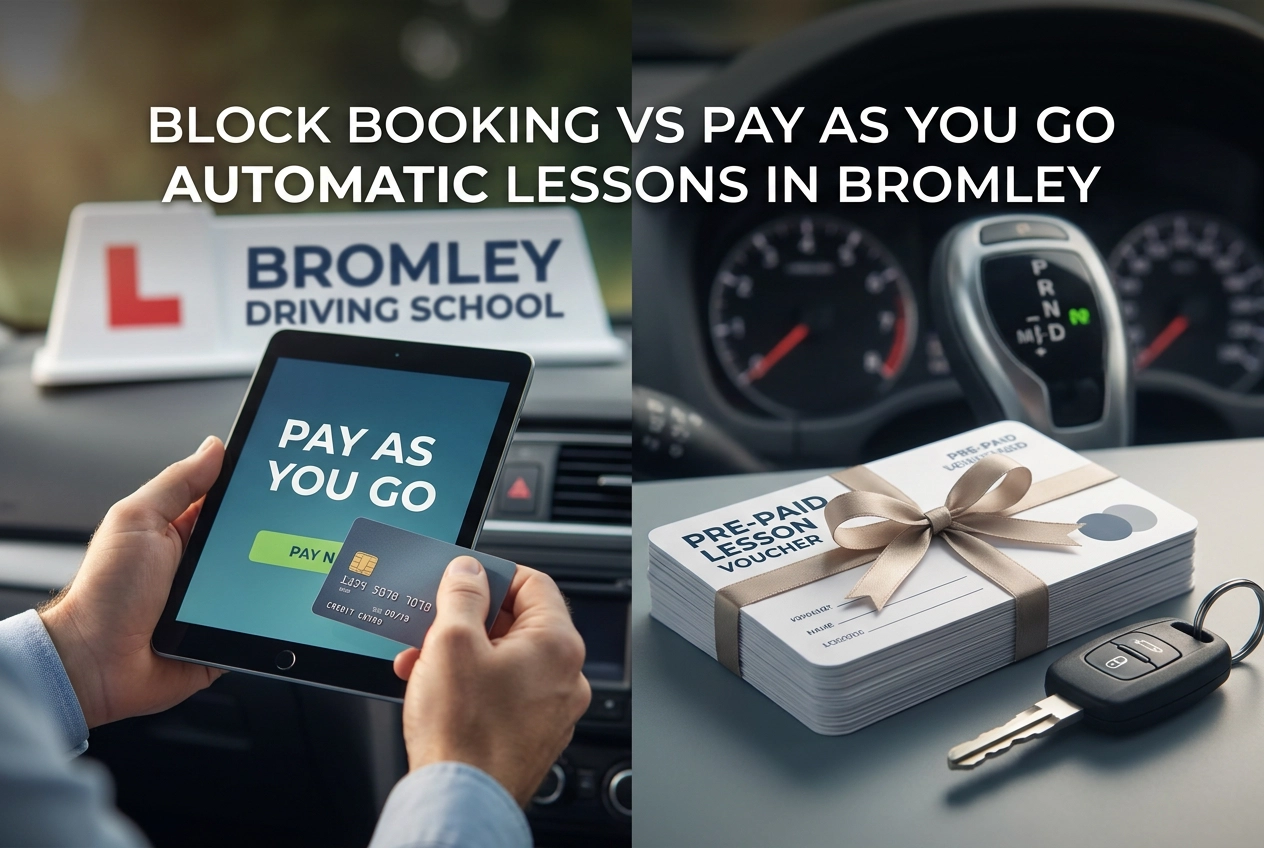
The cost baseline, roughly £1,680 to £2,100 for the 40 to 50 hours most learners need at £42 per hour, is fixed by your learning requirement, not your schedule.
What the format determines is whether you spend close to that baseline or significantly above it.
Picking intensive automatic driving lessons before you are ready raises the probability of a first-test fail. A re-sit costs money, and most learners also need further lessons to address the gaps that caused the failure. Suddenly the baseline figure looks optimistic. Equally, if you already have solid driving experience and spend six months on a slow weekly programme when you could have been test-ready in six weeks, you are paying for lesson hours and delaying the practical and financial benefits of holding a licence.
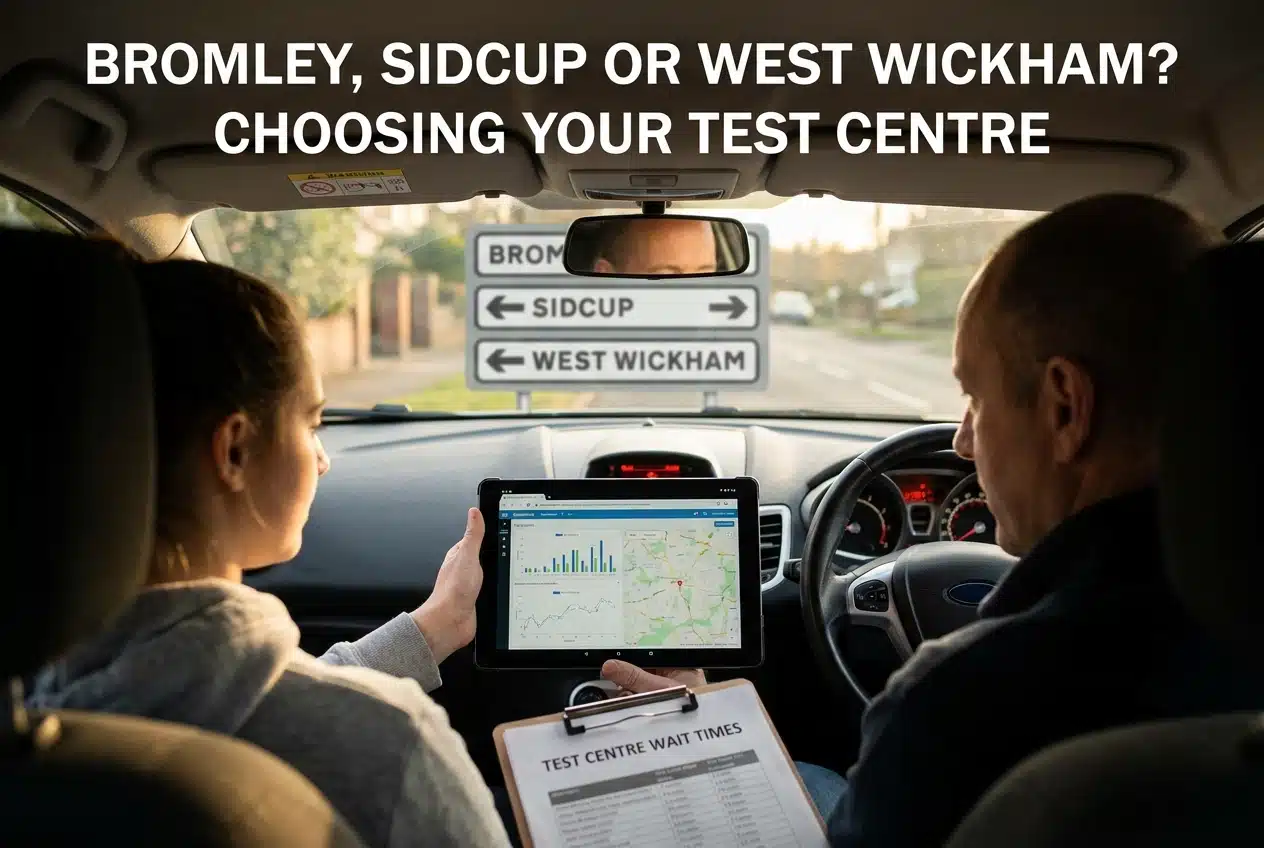
There is also a timing consideration worth noting. Test centre availability in the south-east London area varies and can mean a gap between completing your course and sitting your test. A learner who finishes an intensive course before reaching genuine test standard will need additional lessons to stay sharp during that wait, adding further expense that was never part of the original budget.
The financially protective move is matching the format to your actual readiness, not your preferred timeline. EL’s Driving School tailors format recommendations to each learner’s starting point before lessons begin, and that conversation is genuinely one of the smartest first steps you can take.
Common Questions About Automatic Intensive Driving Lessons
Still on the subject of making the right choice, here are the questions that come up most often.
Can I pass faster with intensive automatic lessons?
Yes, if you have prior experience. The intensive format works best when there is an existing foundation to build on, the stronger that base, the faster the course can move. The key word is starting point, not just how many hours you book.
Are automatic intensive driving lessons harder than manual intensive?
Not in terms of vehicle control. Removing gear changes and clutch work reduces the number of things competing for your attention, which is precisely why automatic formats handle intensive pacing well. If you are curious about the broader case for automatics, Why Automatic Lessons Make a Difference for Nervous Drivers covers this in more detail.
I’ve searched for automatic driving lessons near me and found plenty of providers. How do I choose?
Ask whether they assess your experience before recommending a format. A provider that quotes you an intensive package without asking about your driving history is skipping the most important step. That is the warning sign to act on.
How do I know if I am ready for intensive automatic driving lessons?
A reasonable indicator: you can control the car smoothly in light traffic and have a solid grasp of basic road positioning. If you are still managing basic vehicle control consciously, a structured approach will serve you better.
Does EL’s offer both formats in Bromley?
Yes. Every learner is assessed first, and the format recommended is whichever one is most likely to get them to test standard efficiently and confidently.
So, Are Intensive Automatic Courses in Bromley Worth It?
The honest answer is yes, but only for the right person at the right stage.
If you have some prior driving experience, can commit a concentrated block of time, and are ready to handle Bromley’s busy junctions and mixed road conditions under pressure, intensive automatic driving lessons can get you to test standard faster than any other format. They work because the learning stays fresh, momentum builds, and there are no long gaps for skills to fade.
For complete beginners, the semi-intensive or structured weekly route remains the safer and typically more cost-effective path, the reasons covered earlier in this guide still apply.
The real question was never whether intensive courses work. They do. The question is whether you, at this point in your learning journey, are the learner they work for.
Speaking with an instructor at EL’s before booking is the clearest first step you can take.
Conclusion

The case has been made honestly: the right format is the one matched to your actual experience, not the fastest promise on the page. One conversation with EL’s Driving School is all it takes to find out which one that is.