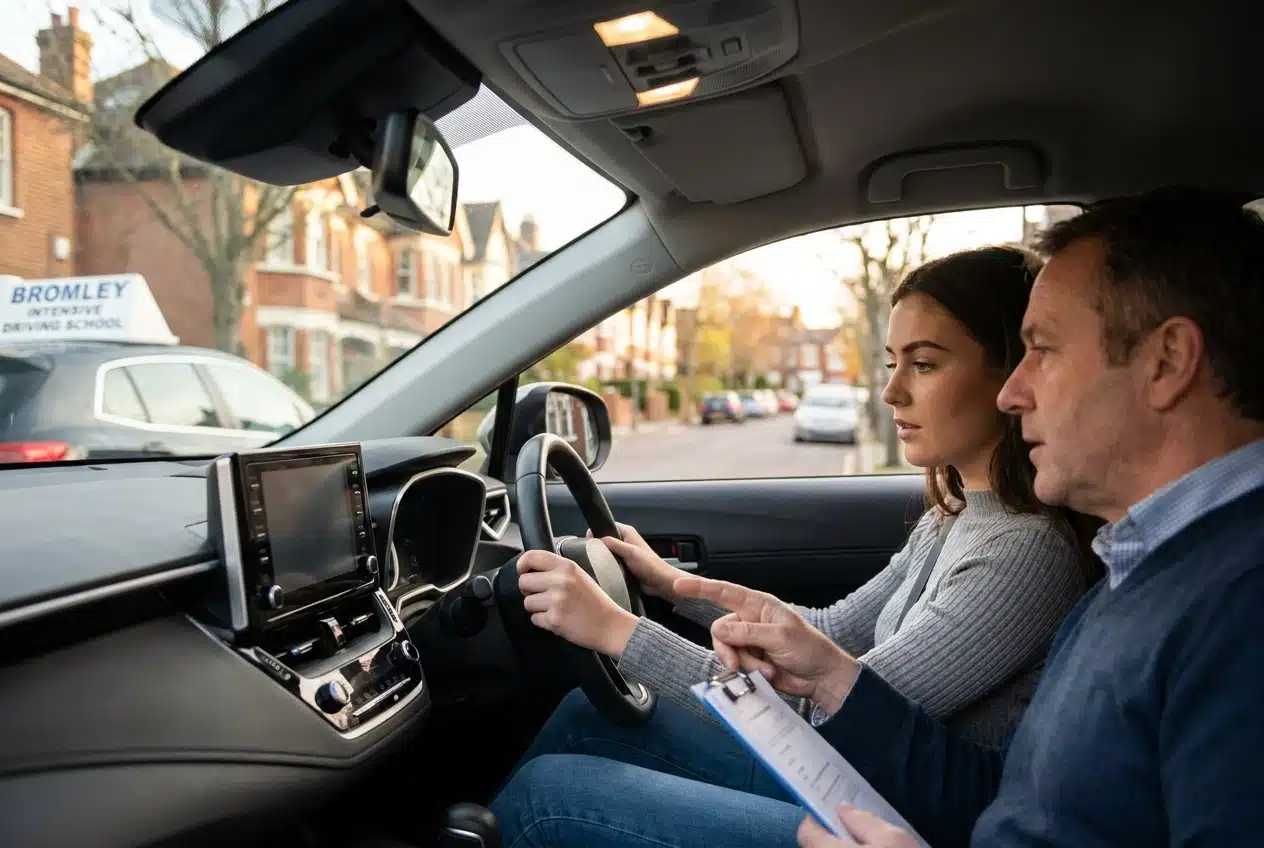
Most learners assume the process works in a straightforward sequence: study for your theory test, pass it, then book driving lessons. It feels logical. It might even feel responsible. But according to DVSA data from 2024 to 2025, this approach is quietly costing thousands of beginners extra time, extra money, and extra failed tests.
If you have been searching for driving lessons near me and wondering when to actually start, the answer backed by official statistics is almost certainly sooner than you think. DVSA trend data from 2024–25 shows that pass rates rose to 48.9% in Q1 2025 even as test volume fell 18.3%, a pattern consistent with better-prepared candidates being the ones who proceed to test.
This post breaks down exactly what that data means for you. You will discover why early lessons improve theory performance, how practical experience and classroom knowledge reinforce each other, and what the most effective preparation sequence actually looks like. Whether you are deciding between an automatic or manual car, or simply trying to give yourself the best possible chance of passing first time, the evidence points in one clear direction.
The ‘Theory First, Lessons Later’ Myth Most Learners Believe
Most learners piece together their understanding of the test process from friends, online forums, and general assumption. The conclusion many reach is logical-sounding but wrong: pass the theory test first, then book driving lessons. It feels sensible to have the knowledge before getting behind the wheel.
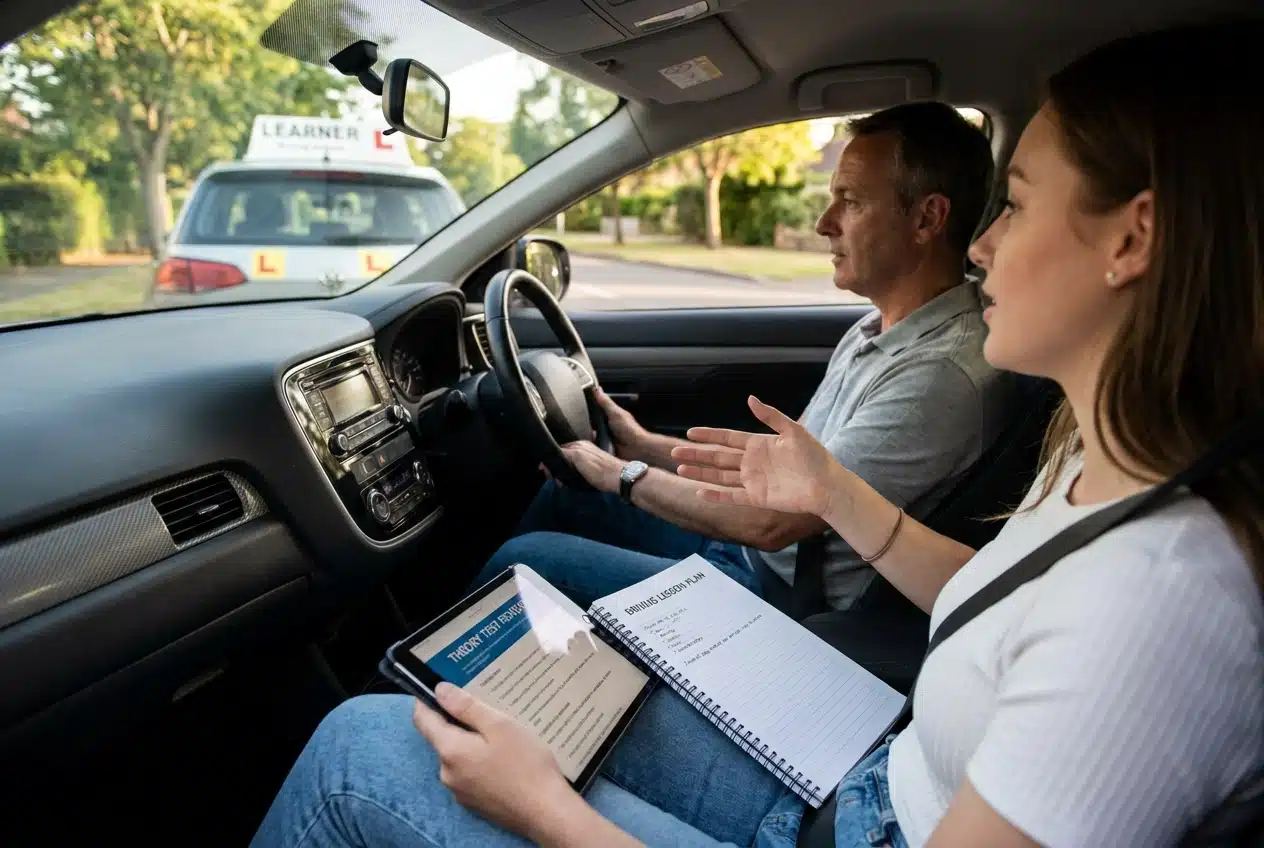
You need your theory certificate to book your practical test, not to start lessons. You can start practical instruction the day your provisional licence arrives.
The misconception carries a real cost. Learners who delay lessons until after their theory pass arrive at their first session with no instinctive feel for vehicle positioning, no experience of scanning junctions, and no hazard perception habits formed through real observation. When they eventually sit behind the wheel, the first several hours are spent building a foundation that could have been laid months earlier. Equally, their theory revision suffers: questions on stopping distances, road markings, and hazard recognition feel abstract because they have no driving experience to anchor them to. For a practical walkthrough of mastering the theory test content itself, that grounding makes a measurable difference. Bromley learners can also use this local guide to driving theory test centres to plan ahead without confusion.
This piece examines what DVSA pass rate data from 2024 to 2025 reveals about the relationship between preparation quality and outcomes, and why the evidence challenges the theory-first sequence directly.
What DVSA Pass Rate Data Actually Shows About Learner Preparation
The numbers tell a clear story. According to DVSA statistics analysed by the RAC, the Q1 2025 practical test pass rate reached 48.9%, up from 47% in Q1 2024. March 2025 sharpened that trend further, recording a 49.0% pass rate against 46.9% in March 2024, a 2.1 percentage point improvement in a single month.
The context behind those figures matters as much as the figures themselves. In Q1 2025, 466,446 tests were taken compared to 560,436 in Q1 2024, a drop of 18.3%. Fewer candidates sat the test, yet a higher proportion passed. In March specifically, test numbers fell 12% but passes fell only 8%, which is precisely what produced the rate improvement.
That combination points to one significant variable: preparation quality. When test volume falls, the pool of candidates tends to skew towards those who have invested more thoroughly in their preparation. Less-prepared learners either delay booking or are advised by their instructors to wait. The result is a cohort that is, on average, more ready, and the pass rate reflects that.
This is not speculation. It is the logical reading of what the data shows, and it has direct implications for how learners should approach their own preparation. For a closer look at what these national figures mean at a local level, the analysis of driving test centre pass rates and what they mean for Bromley learners sets useful regional context.
DVSA publishes the underlying data, including quarterly and monthly pass rate breakdowns, through its official driving test and theory test statistical dataset at gov.uk. That is the primary source for anyone tracking national trends.
Fewer Tests, Higher Pass Rates: What the Trend Is Really Telling Us
As those Q1 2025 figures illustrate, this is a classic self-selection effect: fewer, better-prepared candidates push the pass rate up.
The logical inference matters here. If preparation level is the variable that consistently separates those who pass from those who fail, then anything that raises preparation quality earlier in the learning journey has measurable value. Starting professional lessons before, not after, your theory test is precisely that kind of early investment.
It is important to be transparent about what the data can and cannot show. DVSA public statistics, including the official driving test and instructor data published at gov.uk, do not currently provide a direct breakdown of pass rates by whether a learner took professional lessons before their theory test. A clean, causal comparison is not available from public sources. Anyone claiming otherwise should be pressed for their source.
What the data does show, consistently, is that preparation quality drives outcomes. The argument for starting lessons early does not rest on a single figure; it rests on the direction the evidence points, and on what professional instruction actually delivers: real road experience that makes hazard perception less abstract, observation habits that reinforce theory knowledge, and pass-rate patterns that local learners can contextualise to their own area.
How Driving Lessons Actively Improve Your Theory Test Performance
That consistent direction in the data points to a mechanism worth examining directly: professional instruction does not just prepare learners for the practical test. It actively improves theory test readiness too.
The theory test is not a purely academic exercise. Its hazard perception component requires candidates to watch video clips and click the moment a developing hazard appears. That skill, spotting the pedestrian about to step out or the vehicle beginning to pull away, depends on visual scanning habits and anticipatory thinking that are built behind the wheel, not at a desk. Learners who have already spent time reading junctions with an instructor are not guessing at what to look for; they have already looked for it, in real traffic.
The multiple-choice section reinforces this. Questions on stopping distances, road markings, and hazard categories are considerably more intuitive when a learner has physically encountered those scenarios. A question about the stopping distance at 60 mph lands differently once you have felt a car slow from that speed under instruction. Road markings on a diagram are far more recognisable when you have pulled out across them and your instructor has explained exactly what each line means.
This is why learners who begin lessons early consistently report that theory revision feels less like memorisation and more like recollection. They are matching written rules to experiences they already own, which is a substantially more reliable form of recall under test conditions. Our guide to Driving Test Questions Explained: Theory, Show Me Tell Me and How to Pass First Time sets out the full scope of what is tested, and the pattern is clear: experience makes every section more manageable.
EL’s Driving School instructors across Bromley and south-east London make this link explicit during lessons, connecting what learners are practising on the road directly to the theory topics it underpins, so both skill sets develop at the same time.
Starting Early Builds the Practical Skills That Theory Study Alone Cannot
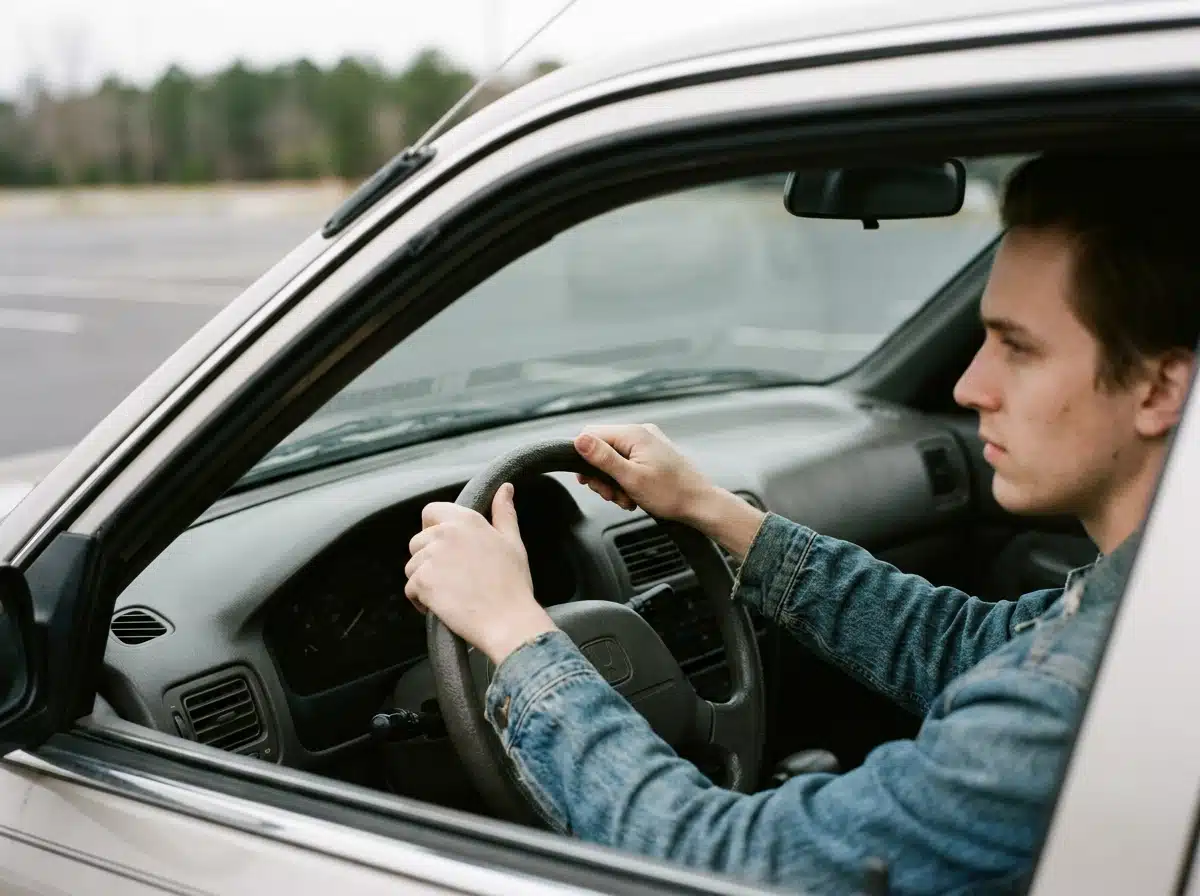
The benefit of lessons extends well beyond theory recall. Learners who study exclusively for their theory test without any concurrent practical experience arrive at their first lesson carrying a significant deficit: no muscle memory for steering inputs, no spatial awareness of where their vehicle sits in a lane, and no instructor-corrected habits to build on. Those gaps do not close quickly once lessons eventually begin.
The DVSA practical test measures more than the ability to execute a manoeuvre on demand. Examiners are assessing whether a learner demonstrates consistent, independent decision-making under real conditions. That quality develops through accumulated hours behind the wheel, with a qualified instructor progressively reducing prompts over time. It cannot be crammed in the weeks before a test date.
What the Q1 2025 trend data cannot capture directly is the individual benefit of building those skills progressively from the start: the observation habits formed in early lessons, the confidence that accumulates over months rather than weeks, and the intuitive hazard awareness that only repeated on-road experience produces.
For early-stage learners, starting in an automatic removes one significant layer of cognitive demand immediately. Without gearchange management occupying attention, learners can direct their full focus towards observation, road positioning, and hazard awareness from lesson one. These are precisely the skills the practical test examines most closely. Learners considering preparing for your practical driving test in an automatic car will find that the lower initial workload allows better habits to form earlier.
For learners in Bromley and south-east London searching for automatic driving lessons nearby, this is not a marginal advantage. Starting early in a low-pressure automatic environment builds a stronger, broader foundation before the practical test becomes the focus.
The Preparation Sequence That Gives Learners the Best Chance
The practical foundation covered above points to one clear conclusion: the sequence matters, and the optimal sequence starts early.
Book lessons as soon as your provisional licence arrives. Since only a theory certificate is needed to book your practical test, waiting until after your theory pass serves no one except the misconception.
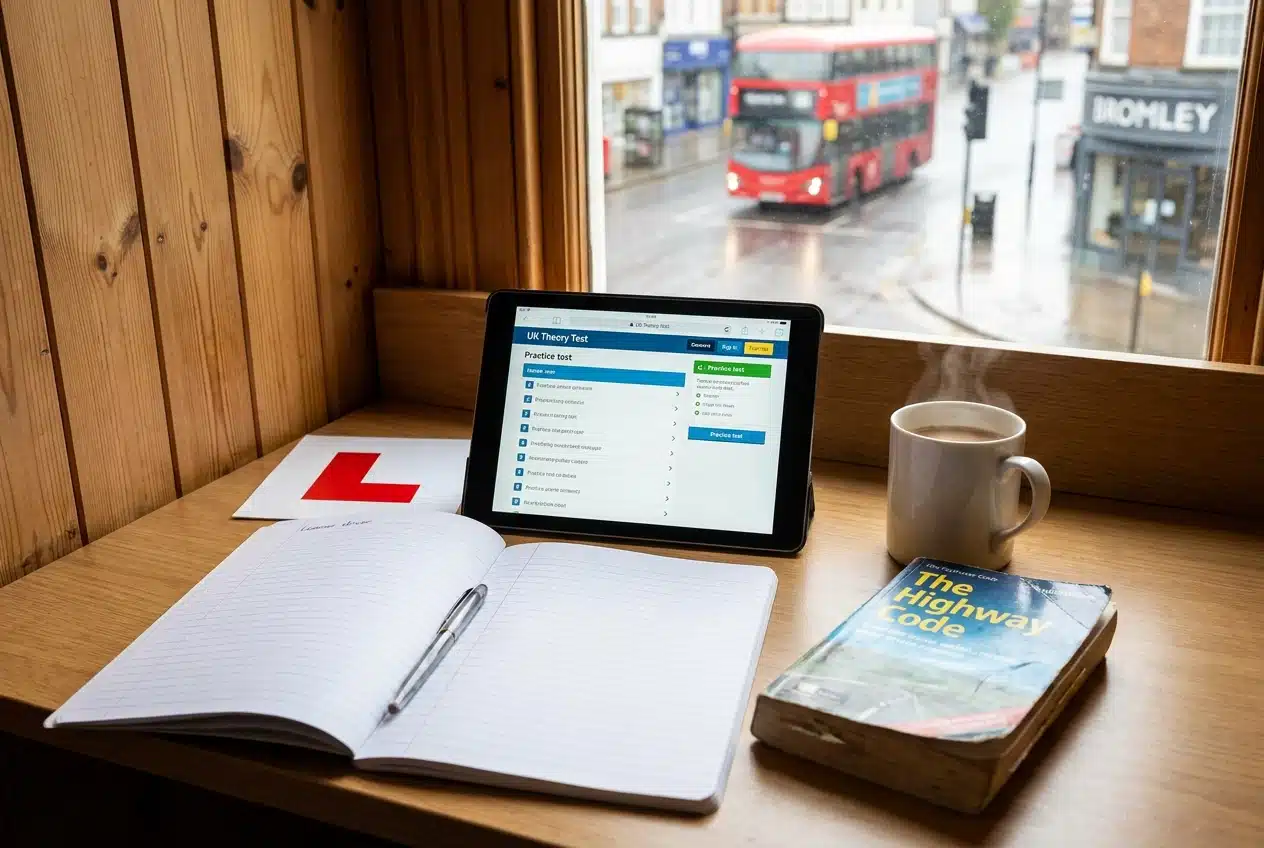
Run theory study and lessons in parallel, not in sequence. Use a revision app for multiple-choice questions and practise hazard perception clips between lessons. Each reinforces the other: a roundabout covered in your lesson makes the corresponding theory question concrete, and a theory topic on stopping distances gives your instructor a useful starting point on the road.
Build a solid block of lessons before you sit your theory test. Hazard perception in particular rewards learners who have scanned real junctions, read real traffic, and anticipated real risk. Arriving at your theory test with genuine on-road experience behind you means the hazard clips feel familiar rather than abstract.
Consistency with a single qualified instructor matters. Corrections and habits accumulate across sessions; switching instructors or booking sporadically resets that progress. Learners who maintain a regular schedule with one instructor develop more efficiently because every lesson builds on the last.
EL’s Driving School has structured lessons on exactly this progressive model in Bromley. Each session is planned to advance on the previous one, producing the kind of cumulative preparation that the improving DVSA pass rate trends implicitly reward. For tips for success that complement this approach, EL’s lesson guidance sets out what to expect at each stage of training.
Should Your Early Lessons Be in an Automatic or Manual Car?
Once you have settled on a preparation sequence, the question of which type of car to learn in is worth considering carefully before your first lesson.
Many learners searching for automatic driving lessons are already following a sound instinct. The desire for a less overwhelming start is not a shortcut; it reflects a genuine understanding of what early driving demands. Learning to drive requires processing road position, mirrors, speed, signage, pedestrians, and emerging hazards all at once. Adding manual gear changes to that cognitive workload in the earliest lessons means attention is split between mechanical tasks and the observational skills that actually determine test outcomes. Removing gearbox management frees mental bandwidth for everything that matters most from day one.
The practical trade-off is worth understanding clearly. An automatic licence restricts the holder to automatic vehicles only. Learners who may need to drive a manual car for work, or who plan to own one, should factor that into their choice. That said, for learners in urban areas such as Bromley and south-east London, where stop-start traffic is the norm and fully automatic vehicles are increasingly common, the restriction carries less practical consequence than it once did.
Critically, the DVSA practical test assesses the same competencies regardless of transmission type: observation, decision-making, road positioning, and independent driving. Starting automatic lessons as a beginner means more focused time developing precisely those skills, rather than managing a clutch.
EL’s Driving School offers automatic driving lessons across Bromley and the surrounding south-east London area. Learners searching for automatic driving lessons nearby can begin building exam-relevant skills from their very first session.
Key Takeaways: What the Data Means for Your Learning Plan
Whether you choose automatic or manual ultimately comes down to your own circumstances. What the data makes clear is that when you start matters far more than what you start in.
The 2024–25 pass-rate trend reinforces the core message. Preparation quality, built through early and structured professional instruction, is the variable that distinguishes outcomes, not a theory certificate sitting in a drawer first.
Three steps follow directly from this:
- Apply for your provisional licence and treat its arrival as your start signal, not a waiting room
- Book lessons promptly with a qualified instructor rather than delaying until after your theory test
- Run theory revision in parallel with practical sessions so each reinforces the other; hazard perception in particular improves when you have real road experience to draw on
Working with a single qualified instructor throughout builds on each session’s corrections and habits, which is why consistency pays off far more than sporadic or split-instructor arrangements.
For learners in Bromley and south-east London, the practical implication is straightforward. Find a local driving instructor and begin as soon as your provisional arrives. EL’s Driving School delivers structured, progressive instruction across Bromley and the BR postcode areas, reflecting exactly the preparation approach the pass rate data rewards.