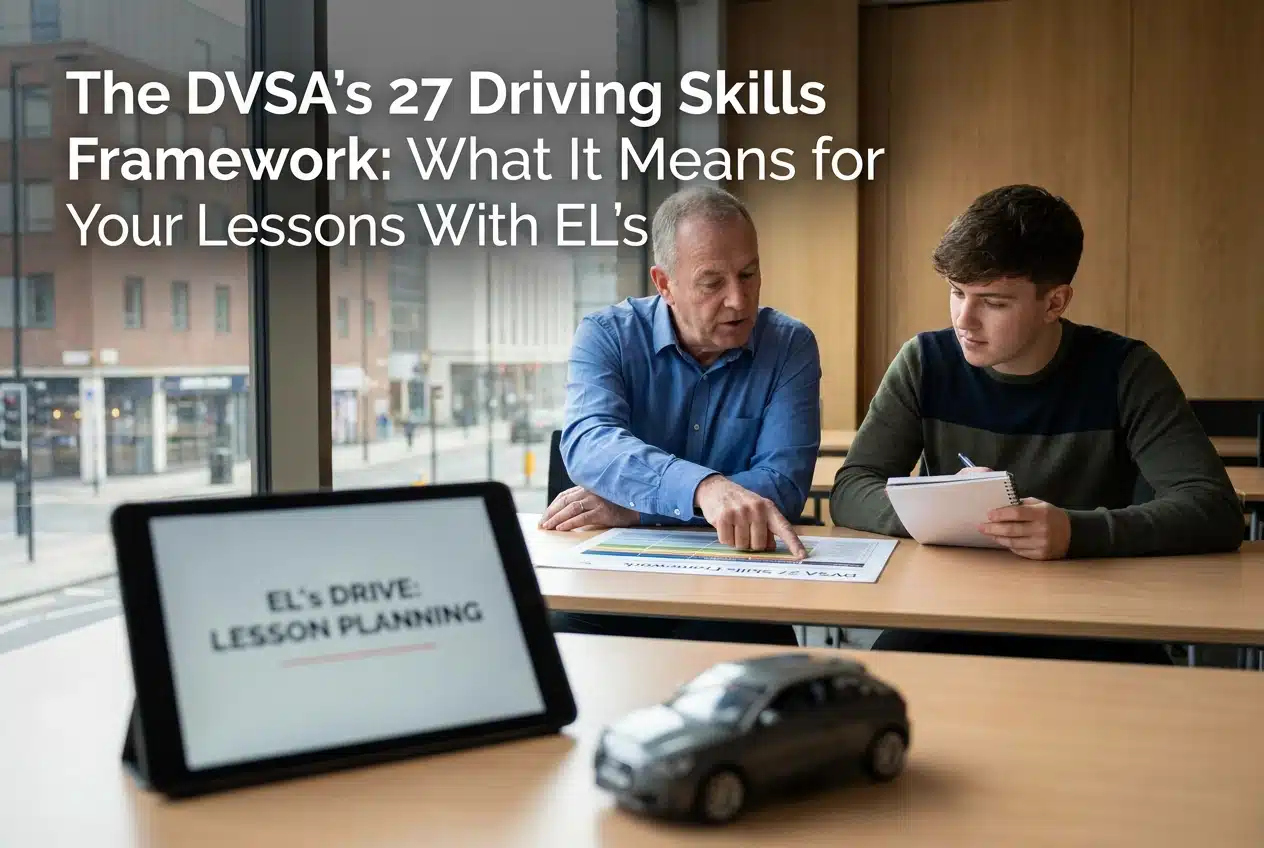
Choosing a driving test centre is not a popularity contest. If you are learning around Bromley, Sidcup or West Wickham, the right question is simple: which roads do you already know, and how long are you prepared to wait? This comparison explains why route familiarity and realistic waiting time should guide your booking, not a flattering pass-rate number. It examines the bromley driving test centre alongside Sidcup and West Wickham, showing what each centre asks of a learner in terms of route character, traffic conditions and booking pressure. You will also learn what actually decides your test centre, why the headline waiting time figure is widely misread, and why a high pass rate is the worst reason to choose. We cover how to weigh waiting time against preparation, then give you a simple framework for choosing your centre. Finally, we show how to turn route familiarity into a confident pass. Before you book, read this. Your test centre should match your driving, not a statistic.
What Actually Decides Which Test Centre You Should Book
Bromley, Sidcup and West Wickham sit within a short drive of one another, so the temptation is understandable: pick the centre with the flattering pass rate or the shortest queue and move on. That choice deserves more thought. The same learner can face a completely different test depending on junction types, speed limits, traffic density and how well they know the roads.
Our decision rule, stated up front: the best centre is the one whose roads you have actually driven. Familiarity beats statistics.
Two factors genuinely matter when weighing options. First, how soon you can realistically book, measured by the centre’s median waiting time rather than a headline “weeks” figure. Second, how prepared you are on that centre’s specific routes.
Note the sourcing. Centre-level waiting-time data has been published by the DVSA since 18 June 2026, pass-rate tables are published separately, and both sit within the GOV.UK car driving test data set. Route character, by contrast, is described from instructor experience, not presented as statistics.
EL’s Driving School has been based in Bromley since 2004 and teaches across BR1 to BR4, so these roads are covered in ordinary lesson time. Our guide to Driving Test Pass Rates: What the Numbers Mean for Bromley Learners explains why a single percentage tells you less than you think.
The Waiting Time Figure Everyone Misreads
The DVSA spent years publishing a single headline: X weeks. That figure is the existing 10% availability measure, meaning the number of weeks until at least 10% of a centre’s weekly appointments are still bookable. It was never the average wait, although it was widely read as one. A National Audit Office investigation published in December 2025 confirmed that the measure does not reflect how long learners actually wait between booking and taking their test.
From 18 June 2026 the DVSA began publishing fuller data at national, regional and individual test-centre level, refreshed on the second Wednesday of every month with the previous month’s figures. It now includes median waiting time between booking and test, tests delivered through examiner overtime, appointments released across the next 24-week booking window, how many are already booked, how many remain bookable, and the percentage still available.
Median means the learner in the middle of the queue: half waited less, half waited longer. The gap can be stark. At Darlington, the old measure showed 13 weeks in May 2026 against a 6.7-week median; St Helens showed 16.5 weeks against 6.1. At those centres, the headline roughly doubled the real wait, though the gap varies by centre and should not be assumed to apply universally.
Check your own centre’s median and 24-week availability in the car driving test waiting time and availability data, not a quoted “X weeks”. Whether you are weighing the Bromley driving test centre or a neighbour, each is listed individually. From 2026, plan in 24-week windows. When comparing centres, read waiting time alongside our guide to driving test centre pass rates rather than in isolation.
Why a Flattering Pass Rate Is the Worst Reason to Pick a Centre
The pass rate published for a test centre is not a verdict on the roads. It measures the outcomes of the candidates who tested there, set against the number of tests conducted. A strong figure can simply mean more learners arrived test-ready, or that local instructors only enter pupils once mock tests confirm they are prepared. It tells you nothing about junction difficulty, examiner temperament or how you would fare.
Treat pass rates as one input, never the deciding one. Read them beside DVSA centre-level waiting-time data, your instructor’s judgement and your own mock test results. The DVSA publishes pass rates for every centre, and London-level waiting-time figures are available separately if you are comparing centres across boroughs. For a local worked example, see our honest review of Bromley’s pass rates and routes.
Bromley Driving Test Centre: What the Roads Ask of You
In our instructors’ experience, Bromley Driving Test Centre asks more of you than either of its neighbours, and it suits learners who have already spent real hours in urban traffic.
Route character
Our instructors find learners encounter decision-dense driving: town-centre traffic, multi-lane approaches, controlled crossings and frequent lane changes, all compressed into a short route.
Traffic conditions
From our experience on these roads, peak periods bring bus lanes, pedestrian-heavy high streets and stop-start queues. Clutch control and observation are tested constantly rather than occasionally.
Booking pressure
The GOV.UK data set lists Bromley individually, pull the current median before you book. New appointments are released 24 weeks in advance, so plan around that window.
Who it suits
Bromley suits learners who have trained across the BR1 to BR4 postcodes and are already comfortable in busy, unpredictable traffic.
As our home patch since 2004, Bromley’s routes, junctions and test-day logistics are covered during ordinary lessons rather than bolted on at the end. If you are weighing up a mock test or extra lessons before your Bromley driving test, that familiarity is often what decides it. Sidcup asks something different of you.
Sidcup Driving Test Centre: Route Character, Traffic and Booking Pressure
Sidcup asks a different question of you. In our instructors’ experience, the routes blend suburban residential streets with larger roundabouts, traffic-light junctions and faster dual-carriageway stretches where lane discipline is tested at speed. That mix rewards learners who have driven south-east London suburbs and are comfortable positioning a car in multi-lane roundabouts and holding a lane at higher speeds.
Traffic is moderate overall, but school-run and commuter peaks slow the main corridors. Timing your test slot matters as much as your driving. Check the GOV.UK monthly release for Sidcup’s current median before assuming it is quicker or slower than its neighbours. National waits remain long, with average booking times near 22 weeks last month against a pre-pandemic five.
Plenty of Bromley-based learners test at Sidcup, but cross-borough travel only helps if you have actually driven those roads. Ask whether your lessons have covered them, or whether you are relying on general driving skill alone. If not, automatic driving lessons in London can build that route familiarity before test day.
West Wickham Driving Test Centre: Quieter Roads, Different Demands
Sidcup asks for speed discipline; West Wickham asks for precision. In our instructors’ experience, its test routes run through quieter residential roads and narrower streets than Bromley’s, with more hill starts, more parked cars narrowing the available space, and tighter junction turns where a missed observation shows immediately.
Traffic is generally lighter than Bromley, though the high street and station approaches still clog at peak times, so a mid-morning slot behaves very differently from a school-run one. Check Sidcup’s or West Wickham’s centre-level median on the GOV.UK data set, never assume a quieter postcode means a shorter queue. As of early 2025, three quarters of test centres across Great Britain were at the maximum wait.
This centre suits learners who have deliberately practised hill starts, narrow residential junctions and manoeuvres in confined spaces, ideally through automatic driving lessons in West Wickham that run these roads directly.
A calm-looking centre is not an easy one. Unfamiliar quiet roads generate hesitation and missed-observation faults just as readily as busy ones. Your instructor’s view of the local roads counts here. West Wickham is the right choice if you have driven it, and a risk if you have not.
Which brings the trade-off into focus: an earlier date somewhere unfamiliar, or a later one where you know the roads.
How to Weigh Waiting Time Against Preparation
If West Wickham’s quieter roads suit you best, the remaining question is when to book, not just where. The honest trade-off is an earlier date at a centre you have never driven against a later date at one where you know every junction.
An early, unready test costs more than the £62 weekday fee. Fail, and you face a rebook wait at a time when overall waits remain long nationally, along with the confidence knock that follows. Weigh that against the cost of driving lessons in Bromley and south east London, and the arithmetic rarely favours rushing.
The GOV.UK monthly release now gives you both figures for each centre.
Plan backwards from your target month. Set the test for when your mock test performance says you are ready, not when impatience does.
Travelling further afield only pays if you have already driven those routes or can arrange lessons there before test day.
Waiting time should break a tie between two centres you know equally well. It should never override route familiarity.
A Simple Framework for Choosing Your Centre
The framework below resolves the trade-off we have just discussed. Ask four questions, in this order.
The Four-Question Checklist
1. Have I actually driven these roads? If yes, that centre moves to the top of your list. If no, it drops until you have.
2. What is the current centre-level median waiting time, and how does it fit my 24-week plan? Check the latest monthly release rather than a quoted headline figure.
3. Can my instructor cover this centre’s routes and mock-test me on them before the real thing? If your instructor cannot access those roads, your preparation has a gap. This matters as much as choosing the right driving instructor in Bromley in the first place.
4. How does my recent mock test performance compare with the standard needed? This holds true regardless of where you book.
The Decision Rule
State it plainly to yourself: route familiarity first, realistic waiting time second, pass rate last.
If two centres tie on familiarity, choose the one with the shorter median wait. If you have driven none of them, book a route lesson before you book the test.
Finally, when searching for driving test centres near me, do not shortlist on distance alone. Proximity is not preparation, check the centre-level median before you shortlist on distance.
Next Steps: Turn Route Familiarity Into a Pass
With your centre shortlisted, the remaining work is preparation. Three points summarise everything above: the waiting-time headline misleads, a pass rate describes other people, and the centre that suits you is the one you have driven.
Act on three things now:
- Check your chosen centre’s median waiting time and 24-week availability on the GOV.UK car driving test data set.
- Agree a route-coverage plan with your instructor, naming the junctions, roundabouts and hill starts that centre tests.
- Set your test date from your mock test results, not from impatience.
EL’s Driving School offers practical test preparation resources and route-based lesson planning for learners across Bromley and south-east London. Automatic lessons and online driving lessons build familiarity with test-centre routes without adding unnecessary hours.
Contact EL’s Driving School to plan lessons around the centre you have chosen, and check the latest DVSA centre-level data before you book.
Conclusion
Choosing between Bromley, Sidcup and West Wickham is not about distance alone. The best centre is the one whose roads you have actually driven, check the latest GOV.UK data, plan with your instructor, and book when your preparation says you are ready.