An explanation of Bromley’s most challenging junctions tailored for learner drivers.
Navigating the roads of Bromley as a new driver can be a daunting prospect, with its unique blend of busy roundabouts, complex traffic light systems, and sometimes unexpected road layouts. For those just starting their driving journey, understanding and confidently approaching these challenging junctions is paramount to safe and successful driving. This guide aims to demystify some of Bromley’s most intimidating road layouts, offering clear explanations and practical tips to build your confidence behind the wheel.
Whether you’re preparing for your driving test or simply looking to improve your road awareness, familiarising yourself with these common complexities is a vital step. Learning to anticipate hazards and make the right decisions at key points can make all the difference to your driving experience. For comprehensive learning resources and to further enhance your driving skills. We are dedicated to equipping you with the knowledge and practical abilities to become a skilled and responsible road user. Don’t let the perceived difficulty of junctions hold you back; with the right preparation and understanding, you can master them. Explore the services offered to guide you through every aspect of your driving education. The journey to confident driving in Bromley starts with understanding its particular road network. Our driving instruction expertise is designed to help you conquer these challenges.
Roundabouts are a cornerstone of modern road design, intended to improve traffic flow and reduce accident rates. However, for new drivers, they can often feel like a maze, especially in busy urban areas like Bromley. The key to mastering roundabouts lies in understanding the rules, observing signs, and anticipating the movements of other vehicles. Bromley, with its various sizes and complexities of roundabouts, presents a valuable learning ground.
Mini-Roundabouts: The Introduction to Circular Flow
Mini-roundabouts are often the first introduction for learners to the concept of roundabouts. They are smaller, often marked with road paint rather than raised islands, and typically have much lower speed limits. The fundamental principle remains the same: give way to traffic approaching from your right.
Observing Lane Discipline on Mini-Roundabouts
Even on mini-roundabouts, correct lane discipline is crucial. If you intend to turn left, you should generally approach in the left-hand lane. For going straight ahead, the left or right lane might be appropriate depending on road markings and traffic. If you intend to turn right, you’ll typically need to be in the right-hand lane, but be mindful of oncoming traffic if there isn’t a central island to separate directions. Always look for road markings that may dictate specific lane usage.
Signalling Etiquette for Mini-Roundabouts
Signalling is vital for communicating your intentions to other road users. When approaching a mini-roundabout, signal left if you are taking the first exit. If you are going straight ahead and there are no specific lane instructions, it’s often best to signal left as you pass the exit before the one you intend to take. For turning right, signal right as you approach and then switch to a left signal as you pass the exit before the one you intend to take. Remember, the general rule is to signal your intention to exit the roundabout.
Larger Roundabouts: Increased Complexity and Multiple Lanes
Bromley features several larger, more complex roundabouts that can have multiple lanes of traffic entering and exiting. These require a greater degree of awareness and planning.
Approaching Multi-Lane Roundabouts
As you approach a multi-lane roundabout, pay close attention to road signs and lane markings. These will guide you into the correct lane based on your intended exit. For exits on the left (first or second exit), use the left lane. For exits on the right or going back around, use the right-hand lanes. If going straight ahead on a roundabout with more than two lanes, the correct lane will usually be indicated by signs overhead or on the road.
Once you’ve entered a larger roundabout, maintaining your position within your chosen lane is essential. Avoid unnecessary lane changes. Scan your mirrors frequently and be aware of vehicles in adjacent lanes. If you need to change lanes, do so safely, signalling your intention well in advance and checking your blind spot. Remember to always yield to traffic already on the roundabout, regardless of their lane.
Exiting Multi-Lane Roundabouts Safely
Exiting a multi-lane roundabout requires careful planning. Ensure you are in the correct lane for your exit well before you reach it. Signal left clearly and in good time. As you exit, continue to check your mirrors and be aware of any cyclists or pedestrians who might be present. It’s important to exit smoothly and avoid cutting across lanes.
For learner drivers navigating Bromley’s trickiest junctions, understanding how to manage driving anxiety can be crucial for building confidence on the road. A related article that offers valuable insights on this topic is available at Learn How to Drive with Anxiety. This resource provides practical tips and strategies to help drivers cope with anxiety, ensuring a smoother and more enjoyable driving experience, especially in challenging situations like complex junctions.
Traffic Light Controlled Junctions: Mastering the Signals
Traffic light controlled junctions are common throughout Bromley and, while seemingly straightforward, can present challenges due to their size, complexity, and the behaviour of other drivers. Understanding how to approach and navigate these junctions is a fundamental skill.
Understanding Signal Phases and Colours
The colours of traffic lights are universal: green means go if it is safe to do so; amber means stop before the line if you can do so safely, but proceed if you’ve already crossed the line or are too close to stop safely; red means stop behind the line.
The Importance of the Amber Light
The amber light is often a point of contention for drivers. The rule is to stop if it is safe to do so. This means that if you are so close to the junction when the light turns amber that braking sharply could cause an accident or put yourself or others at risk, you should proceed. However, if you have time and space to stop safely, you must stop. Hesitation on an amber light can lead to dangerous situations.
Advanced Stop Lines for Cyclists
Many traffic light controlled junctions in Bromley now feature advanced stop lines for cyclists. These are marked bays before the main stop line for motor vehicles. As a driver, you must not enter this bay unless directed to do so by a police officer or traffic warden, or if a cyclist is not present and you are turning left. Always be aware of cyclists who may be waiting in this bay.
Pedestrian Crossings at Traffic Lights
Some traffic light controlled junctions incorporate pedestrian crossings. Always be prepared to stop for pedestrians, even if the traffic lights are green for you. Observe any signals specifically for pedestrians.
The ‘Green Light Lottery’ Phenomenon
In busy urban areas like Bromley, you might encounter what is sometimes referred to as the ‘green light lottery’. This is where traffic lights are timed in such a way that you might experience a series of green lights or a series of red lights. The best approach is to maintain a steady speed and be prepared to stop. Don’t try to “beat the lights”; it’s rarely worth the risk.
Junctions with Pedestrian Crossings: Prioritising Vulnerable Road Users
Bromley, being a busy town, has numerous junctions that incorporate pedestrian crossings. These crossings, whether they are controlled by traffic lights or are zebra crossings, require learner drivers to be particularly vigilant.
Zebra Crossings: An Introduction to Pedestrian Priority
Zebra crossings are painted black and white stripes on the road, often accompanied by flashing amber beacons. The rule here is absolute: drivers must give way to pedestrians who are waiting to cross or are already crossing the road at a zebra crossing.
Approaching Zebra Crossings
As you approach a zebra crossing, scan the roadside for pedestrians. Look for individuals waiting at the kerb. Even if there are no pedestrians visible at the immediate moment, be prepared to stop. Remember that children and elderly people may move more slowly.
What to Do When Pedestrians are Crossing
Once a pedestrian has stepped onto the crossing, you must stop your vehicle before the crossing and wait for them to reach the other side. Do not inch forward, honk your horn, or try to rush them. Patience is key.
The Flashing Amber Beacons
The flashing amber beacons above a zebra crossing are a strong signal that pedestrians are present or about to be. When these are flashing, your obligation to stop is reinforced.
Pelican Crossings: Traffic Light Controlled Pedestrian Routes
Pelican crossings are controlled by traffic lights for both vehicles and pedestrians. Pedestrians press a button, and the lights will change sequentially.
Understanding the Pelican Crossing Sequence
For vehicles, a Pelican crossing operates much like a standard traffic light junction. You will see green, amber, and red lights. However, pay close attention to the red-and-white pole with the flashing orange (amber) light. This indicates that the pedestrian phase is about to end, and their crossing light may be flashing.
The Flashing Amber Light for Vehicles
When you see the flashing amber light for vehicles at a Pelican crossing, it means the pedestrian sequence is ending. You do not need to stop if you are already on the crossing, but you must proceed with extreme caution. You can proceed if the pedestrian phase has finished and the lights have gone out, or if the lights have turned green. It is crucial to be aware of any pedestrians who might be hurrying to finish crossing.
The Importance of Hesitation
If the lights are flashing amber for you, and a pedestrian is still on the crossing or looks like they might step out, you must stop at the stop line. It is always better to be safe than sorry.
Puffin Crossings: The Modern Approach
Puffin crossings are the modern successor to Pelican crossings. They use sensors to detect pedestrians, and the traffic lights for vehicles usually operate independently of the pedestrian signals.
How Puffin Crossings Work
When a pedestrian presses the button on a Puffin crossing, sensors usually detect when they have safely crossed. This means the traffic lights for vehicles may stay green for longer if no pedestrians are detected, or turn red more quickly if they are.
Vehicle Driver Responsibilities at Puffin Crossings
As a driver, you should treat a Puffin crossing much like a standard traffic light. You will see the familiar red, amber, and green lights. However, always be prepared to stop if the lights turn red, regardless of any perceived pedestrian activity. It is the pedestrian’s responsibility to wait for their signal. If the lights are red for you, you must stop.
The Benefit of Independent Signals
The advantage of Puffin crossings is that they aim to improve traffic flow by not unnecessarily stopping vehicles when pedestrians have already crossed. However, this does not diminish your responsibility to observe and obey the traffic signals.

Bromley’s road network includes several instances of roads splitting or merging, often with multiple lanes. These can be confusing for new drivers who are still developing their spatial awareness and confidence in judging gaps.
Multi-Lane Merges: Joining Flowing Traffic
Multi-lane merges occur when two or more lanes of traffic converge into a single lane. This is a common scenario on dual carriageways or larger roads.
Judgement and Gap Selection
The key to navigating merges is to judge the speed and distance of approaching traffic. You need to select a gap that allows you to merge safely without forcing other drivers to brake or swerve.
Signalling and Observation
Always signal your intention to merge in good time. Continuously check your mirrors and blind spot. Be prepared to adjust your speed to match the traffic flow, or even brake if a safe gap is not available.
Split Roads and Lane Discipline
Some roads in Bromley split into different directions, or have lanes designated for specific movements. Understanding these layouts is crucial.
Following Directional Signs
Always pay close attention to directional signs well in advance of the split. These signs will indicate which lanes lead to which destinations.
Maintaining Lane Discipline
Once you have chosen your lane, maintain your position within it. Avoid last-minute lane changes, as these can be dangerous and can cause confusion for other drivers. If you miss your intended exit or lane, do not attempt to force your way in; proceed to the next safe place to turn around.
If you’re navigating Bromley’s trickiest junctions as a learner driver, you might also find it helpful to explore the differences between automatic and manual driving lessons. Understanding these distinctions can enhance your overall driving experience and confidence on the road. For more insights, check out this informative article on automatic versus manual driving lessons.
The Art of Observation: Essential for Bromley Junctions
Effective observation is the bedrock of safe driving, and it is particularly critical when approaching and navigating junctions in Bromley. This involves a constant, systematic scan of your surroundings.
Mirror, Signal, Manoeuvre (MSM) Routine
The MSM routine is a fundamental principle for all driving manoeuvres, including approaching and negotiating junctions.
Mirror Checks: What to Look For
Before any manoeuvre, check your interior mirror, then your side mirrors. On larger roads and approaching junctions, also check your blind spots. This tells you what is happening around your vehicle.
Signalling Your Intentions
Clear and timely signalling is crucial for communicating your intended actions to other road users. This prevents misunderstanding and potential hazards.
Manoeuvring Safely
Once you have observed and signalled, you can then execute your manoeuvre. This could involve braking, steering, or changing speed.
Hazard Perception: Anticipating the Unexpected
Hazard perception is about looking ahead and identifying potential dangers before they become immediate threats.
Looking Ahead
Always look as far down the road as possible. This allows you to see potential hazards developing, such as a car slowing down unexpectedly, a pedestrian about to step out, or a cyclist filtering through traffic.
Scanning Left and Right
At junctions, it’s essential to constantly scan to your left and right. You need to be aware of oncoming traffic, vehicles emerging from side roads, and cyclists or pedestrians approaching from all directions.
Considering Other Road Users
Think about what other road users might do. A driver who is looking confused might be about to make an unexpected manoeuvre. A child on a bicycle might suddenly wobble into traffic.
If you’re a learner driver navigating Bromley’s trickiest junctions, you might find it helpful to explore how to effectively follow the shape of the road. Understanding this concept can significantly enhance your driving skills and confidence at complex intersections. For more insights on this topic, check out the article on following the shape of the road.
Practice and Preparation: Your Key to Driving Confidence
Mastering the trickiest junctions in Bromley, or any area for that matter, ultimately comes down to practice and thorough preparation. Relying solely on theoretical knowledge is insufficient; practical application is vital.
Seeking Professional Driving Instruction
The most effective way to confront challenging junctions is with the guidance of a qualified driving instructor. They have the experience and knowledge to teach you the correct techniques and to identify your weaknesses.
Understanding Local Road Networks
A good local driving instructor will be intimately familiar with Bromley’s road network, including its most demanding junctions. They can tailor lessons to address these specific areas, providing you with targeted practice.
Building Confidence Through Repetition
Repetition is key. By repeatedly approaching and navigating specific difficult junctions under the supervision of an instructor, you will build muscle memory and confidence.
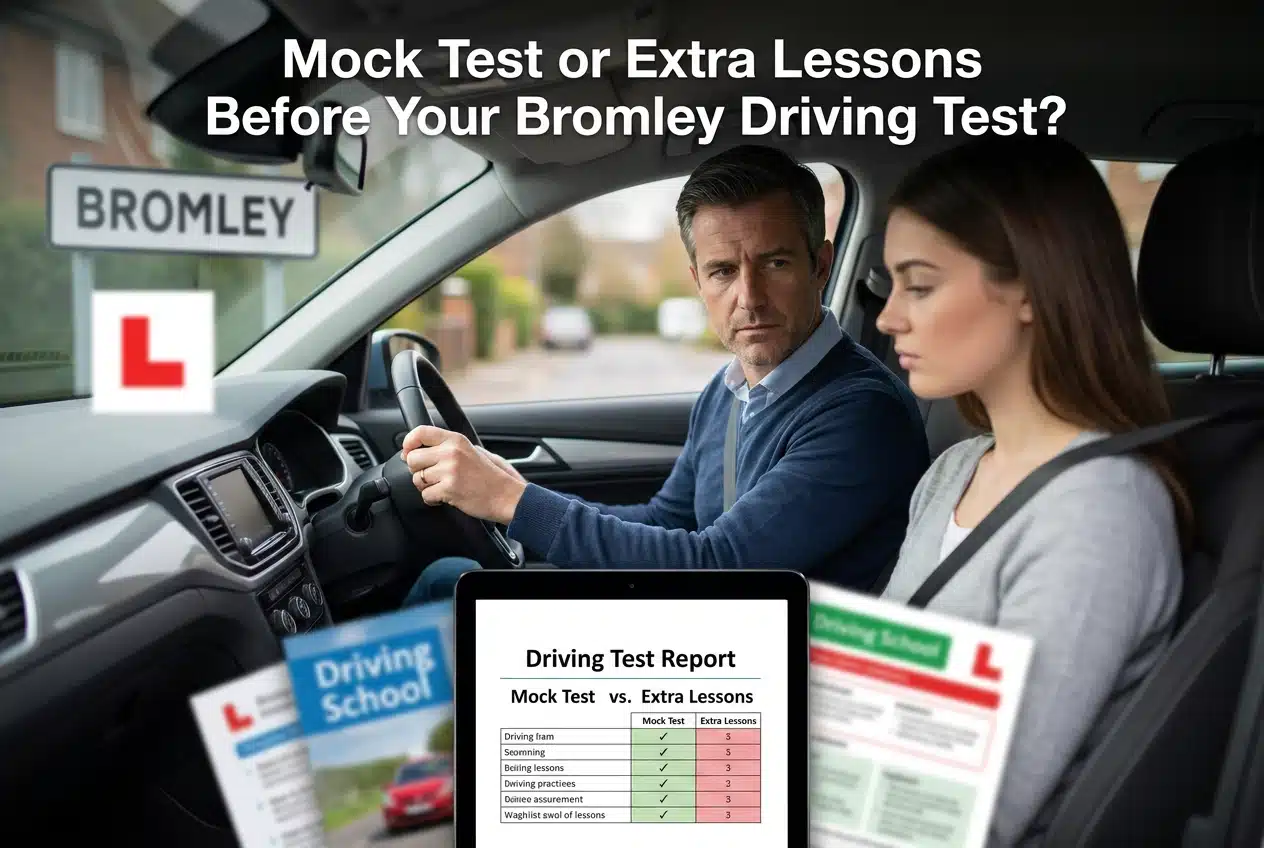
Mock Driving Tests
A mock driving test, conducted by your instructor or another experienced driver, can simulate the real test environment. This is an excellent way to assess your readiness and to experience the pressure of a controlled assessment.
Identifying Areas for Improvement
A mock test will highlight any junctions or situations where you are still hesitant or unsure. This allows you to focus your practice on these specific areas before your actual test.
Self-Study and Observation
While practical instruction is paramount, you can also supplement your learning.
Driving Theory and Hazard Perception Study
Ensure your understanding of the Highway Code and hazard perception is up-to-date. There are many online resources and apps that can help you prepare for the theoretical aspects of driving.
Observing Experienced Drivers
When you are a passenger, observe the driver’s actions at junctions. How do they approach roundabouts? How do they deal with complex intersections? This can provide valuable insights.
By understanding these key areas and committing to practice, you can transform Bromley’s challenging junctions from sources of anxiety into manageable parts of your driving experience. Consistent effort, combined with expert guidance, will lead you to become a safe and confident driver. For further assistance and to enrol in our comprehensive driving courses in Bromley, explore our services and contact us today.