How Long Does It Take to Pass a Driving Test?
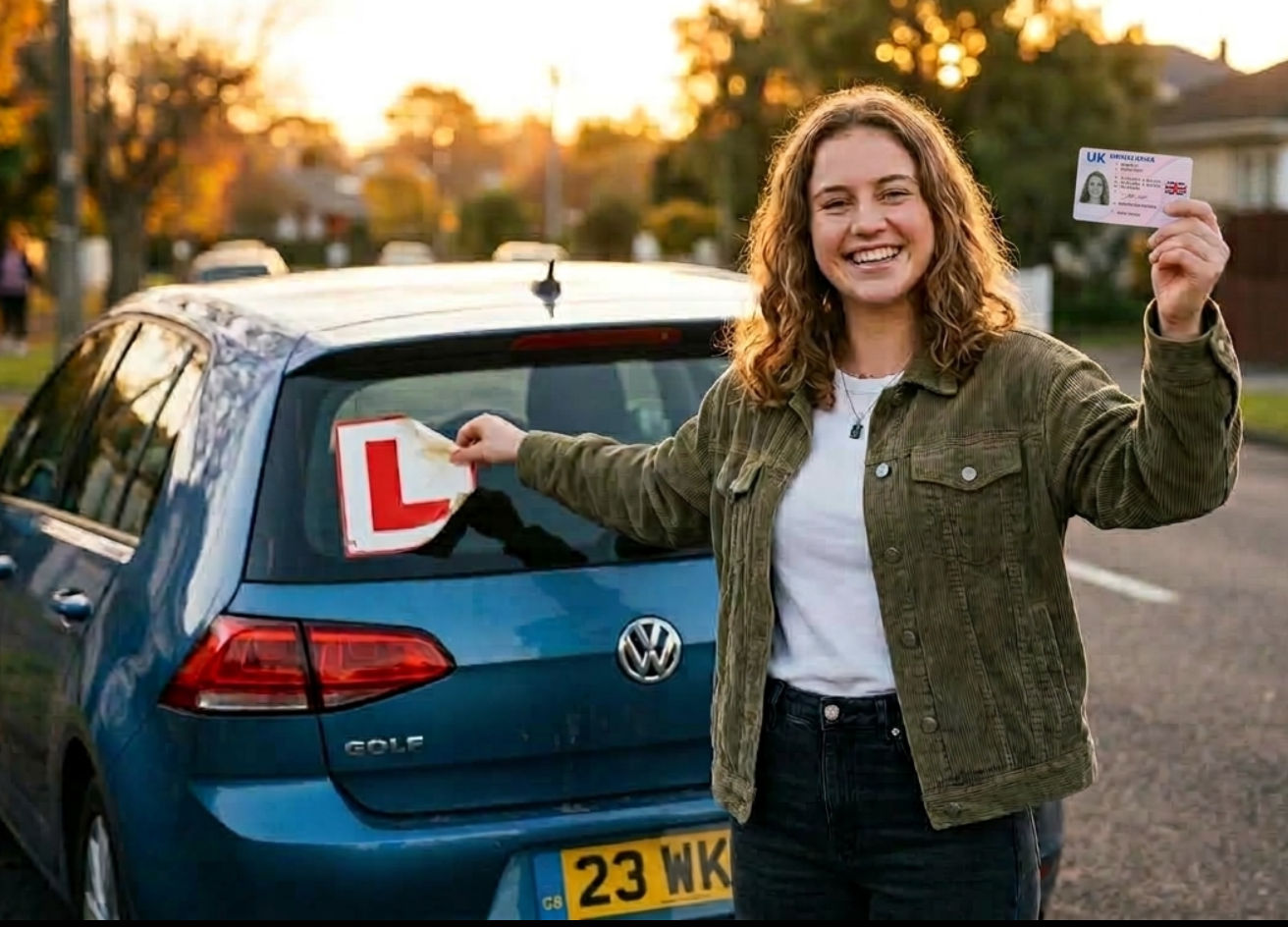 One of the first questions most learner drivers ask is: how long will it take me to pass my driving test?
Unfortunately, there isn’t a set number of lessons or a fixed amount of time that applies to everyone.
Some learners become test-ready relatively quickly, while others need considerably more practice. Your previous driving experience, confidence, how often you have lessons and how much private practice you get can all make a difference.
The important thing isn’t simply getting to the test as quickly as possible. It’s becoming good enough to drive safely and independently.
How long does it usually take to learn to drive?
For a complete beginner, learning to drive can take several months when lessons are taken regularly.
A learner having one lesson a week will naturally take longer to build up experience than someone having two or three lessons every week.
There is also a difference between having enough experience to attempt a test and actually being ready to pass one.
You may be able to control the car quite well after a relatively small number of lessons, but becoming consistently safe and independent in different traffic conditions takes longer.
How many driving lessons will I need?
There is no magic number.
Two learners could have exactly the same number of lessons and be at completely different stages.
The amount of tuition you need can be affected by:
- Whether you have any previous driving experience
- How quickly you learn new skills
- How confident you are behind the wheel
- How regularly you have lessons
- Whether you practise between lessons
- How well you deal with busy traffic and unfamiliar roads
- How quickly you become independent
- Whether you need extra time with particular areas such as roundabouts or manoeuvres
A good instructor should assess your progress rather than simply working towards an arbitrary number of lessons.
Does having lessons more frequently make you learn faster?
It can.
Regular lessons mean you’re spending less time trying to remember what you learned previously and more time building on it.
For example, someone having two lessons a week may be able to build skills and confidence more consistently than someone having one lesson every couple of weeks.
That doesn’t mean everyone needs several lessons every week. Your available time, budget and ability to practise outside lessons all matter.
The key is consistency.
What about private practice?
Private practice can make a significant difference when it is done safely and appropriately.
Driving with a suitable supervising driver gives you additional time to practise things you’ve already been taught by your instructor.
It can help you gain experience with:
- Junctions
- Roundabouts
- Parking
- Different speed limits
- Busy traffic
- Unfamiliar roads
- Independent navigation
However, private practice shouldn’t be used to replace professional instruction. Your instructor can identify mistakes and habits that you may not realise you’re developing.
Does an intensive driving course make you pass faster?
An intensive course can compress your learning into a shorter period, but that doesn’t necessarily mean you’ll be ready for your test after a few days.
Your starting ability is important.
Someone with previous experience may be able to make rapid progress, whereas a complete beginner may need more time to develop basic car control and road awareness before moving onto more complex situations.
Intensive training can work well for some learners, but it isn’t a shortcut around learning the necessary skills.
When should I book my driving test?
Don’t book your test simply because you’ve reached a particular number of lessons.
You should be working towards a point where you can drive safely and independently without constant prompts from your instructor.
Before recommending that you’re ready, your instructor should be looking at things such as:
- Your observation
- Speed control
- Road positioning
- Use of mirrors
- Junctions and roundabouts
- Meeting and passing other traffic
- Pedestrian crossings
- Lane discipline
- Manoeuvres
- Independent driving
- Your ability to deal with unfamiliar situations
Most importantly, you should be able to do these things consistently, rather than getting them right occasionally.
How long does it take to get a driving test?
Your learning time and your test waiting time are two separate things.
You might reach the required standard but still have to wait for a suitable practical test appointment.
For that reason, it’s worth thinking about test availability when planning your training rather than leaving everything until the last minute.
Your instructor can help you judge when you’re approaching test standard and whether it makes sense to start looking for an appropriate test date.
Can you pass your driving test in a few weeks?
It is possible for some learners, particularly those who already have substantial driving experience or who can commit significant time to training and practice.
However, it isn’t realistic for every learner.
If you’re starting from scratch, trying to force the process into an extremely short timeframe can leave you feeling underprepared.
The goal should be to reach test standard efficiently without rushing your development.
How do you know when you’re ready?
One of the clearest signs is that you no longer need your instructor to tell you what to do all the time.
Instead of:
“Mirror, signal, move over.”
you should increasingly be recognising the situation yourself and making the appropriate decision.
You should also be able to deal with unfamiliar roads without becoming completely dependent on your instructor’s directions.
A good test of readiness is whether you can make safe decisions before being prompted.
What if I’m taking longer than other learners?
Don’t worry about comparing yourself with someone else’s lesson count.
Everyone learns differently.
One learner might find clutch control difficult. Another might struggle with roundabouts. Someone else might be perfectly capable technically but lack confidence in busy traffic.
Taking more lessons doesn’t mean you’ve failed to learn. It means you need more time to reach the required standard.
It’s far better to take the lessons you genuinely need than to rush into a test before you’re ready.
Automatic driving lessons
Learning in an automatic can remove the need to coordinate a clutch and gears, which can make some aspects of learning easier.
That doesn’t mean you’ll automatically pass faster.
You still need to develop strong observation, anticipation, positioning, hazard awareness and decision-making skills.
For some learners, removing the additional workload of clutch and gear control allows them to concentrate more on what’s happening around them.
A realistic example
Imagine two complete beginners.
Learner A has one lesson every week and rarely practises between lessons.
Learner B has two lessons a week and regularly practises with a suitable supervising driver.
Learner B may build experience more quickly, but that doesn’t guarantee a quicker pass. If Learner A develops the necessary skills more quickly, they could still be ready first.
That’s why lesson numbers alone aren’t a reliable way of predicting when someone will pass.
So, how long will it take you?
The honest answer is: it depends.
For most beginners, think in terms of months rather than weeks, particularly if you’re having lessons once a week.
The best way to shorten the process isn’t to chase an arbitrary number of lessons. It’s to:
- Have lessons regularly.
- Practise safely between lessons where possible.
- Work on the areas you find difficult.
- Listen to your instructor’s feedback.
- Build your ability to drive independently.
- Take your test when you’re genuinely ready.
The aim isn’t simply to pass your driving test.
It’s to pass it because you’ve developed the skills and judgement to drive safely without an instructor sitting beside you.