So you are staring down your theory test and wondering whether free theory test practice can really get you through. Short answer: yes, often it can. The catch is knowing what free material actually gives you, and what it does not.
This guide compares free and paid routes so you can spend your time and money wisely. We will look at what free theory test practice actually gets you, the accuracy question around official format versus the live question bank, and where free online practice falls short. We will also cover why hazard perception is a separate skill, not extra revision, and what you really pay for when you buy an app or book. Then it is free versus paid side by side on accuracy, feedback and hazard practice, plus when paying is genuinely worth it and when it is not. You will get a simple free practice routine that works, some local pointers for a Bromley theory test, and a clear verdict on what to use before test day.
What Free Theory Test Practice Actually Gets You
Start at the source. GOV.UK signposts free mock theory tests for cars, motorcycles, lorries and buses and coaches, and every link points to the DVSA’s own Safe Driving for Life platform. Nothing sits behind a paywall.
The multiple-choice mocks are split into parts, labelled “1 of 2”, so a full free mock set exists for each vehicle category at zero cost. Hazard perception is treated separately, with a free practice test made up of 3 clips, letting you rehearse the moving-clip format before test day.
This free driving theory test material is official in origin, not a third-party imitation. That matters more than most learners realise: official wording and question format train the right reading habits early, and our guide to preparing for the theory test in Bromley shows how to build a routine around it.
What free practice does not give you: no pass tracking over time, no weak-topic breakdown, and no tailored explanation when you get something wrong. You see the right answer, not the reasoning behind it.
The Accuracy Question: Official Format vs the Real Question Bank
That matters because of one sentence on GOV.UK that most learners skim past: the practice questions are not used in the real test, but they are based on the same topics as the test. Read that twice. It means no free or paid platform can honestly promise you the literal questions you will sit, and any that do deserve suspicion.
So judge free theory test practice on format, not on question-bank claims. The real multiple-choice paper keeps a consistent tone, the same option structure and a similar level of detail. Practising questions written that way trains you to read properly under time pressure.
If a site repeats GOV.UK’s own caveat, that is honesty, not weakness. Our guide to driving test questions explained shows how theory topics feed into the rest of your test.
Use official-format mocks to build recognition of phrasing patterns. Whatever topics still feel unfamiliar afterwards become your real revision list.
Where Free Theory Test Practice Online Falls Short
Even the most accurate free questions leave gaps that only bite once you start practising seriously.
Feedback depth is the biggest one. Many free theory test practice online tools mark your answer right or wrong and move on. They skip the reasoning, so a wrong answer never teaches you the rule behind it. You learn to avoid that option, not to understand it.
Progress tracking is often basic or missing entirely. That makes genuine improvement hard to judge. Are you getting better, or just recognising questions you have already seen?
Topic analytics matter for the same reason. The syllabus spans road signs, rules of the road, safety, vehicle maintenance and legal obligations, so one total score can hide an entire weak area. You can pass mock after mock while one topic quietly stays shaky.
Repetition fatigue is real, too. A small free bank lets you memorise the options rather than the meaning, and that is not the same skill.
The fix is rotation: alternate official mocks with hazard clips instead of grinding one question set. Wondering how theory fits around your lessons? See What About the Theory Test?.
Why Hazard Perception Is a Separate Skill, Not Extra Revision
So if you want to refresh your practice, rotate rather than grind. Hazard perception deserves its own slot entirely. It sits as a separate part of the theory test, and GOV.UK lists its own free practice hazard perception test, which is your cue to rehearse it alone rather than wedging clips between question sets.
The scoring rewards speed and accuracy. Each clip holds one scorable developing hazard worth up to 5 marks, and the earlier you spot it, the more you bank. Click in a pattern or hammer the mouse and you can score zero for that clip. Judgement and timing beat click volume every time.
You cannot revise this like multiple choice. It is a watching and anticipating skill, built by repeating the clip format over several weeks. Start with the free 3-clip official practice test to learn the interface and how scoring feels, then practise hazard perception on Bromley’s roads alongside your lessons so the anticipation becomes instinct. One panic session the night before will not do it.
What You Actually Pay For When You Buy Theory Test Practice
Once hazard perception gets its own sessions, the question is whether paying adds anything to your multiple-choice revision.
The officially signposted paid tier is DVSA-published, not third-party: GOV.UK points learners to apps, software and books from the DVSA, with separate shop listings for car and motorcycle materials.
Paying buys convenience, not secret questions. The clearest upgrade is feedback: paid official materials explain the reasoning behind each answer, where free answer-only mocks often do not. Everything else, such as progress tracking or offline access, is a feature to check for rather than assume.
Commercial apps sit outside that GOV.UK list, so their value is usability and feedback design, not proximity to the live paper. Prices vary widely across apps, books and bundles; compare contents before treating a subscription as the default.
Pay only for features you will actually use, never for a claim that the content is closer to the real questions. Still deciding where to sit yours? Our local guide to driving theory test centres covers what to expect on the day.
Free vs Paid Side by Side: Accuracy, Feedback and Hazard Practice
Now you know what the paid tier actually buys, here is how the two routes stack up side by side.
- Accuracy. Free DVSA mocks match the official syllabus and question format. Paid third-party apps may or may not follow official wording conventions, so read a sample question or two before you commit.
- Feedback. Free tools often give you the correct answer and nothing else. Paid tools frequently explain the reasoning, which is the difference between passing and genuinely understanding the rules.
- Hazard practice. Free official clips exist and teach the real interface. Paid packages usually add more clips plus scoring breakdowns, which is what builds consistency over weeks.
- Cost. Free costs nothing but your time. Paid ranges from a single book purchase to an ongoing subscription, so weigh the price against how many features you will truly use.
- Tracking. Paid tools usually win on progress dashboards, but a simple paper log of mock scores and wrong answers replicates most of that benefit for free.
Wondering how this fits your practical test? Read Mock Test or Extra Lessons Before Your Bromley Driving Test? to see which suits your situation.
When Paying Is Genuinely Worth It (and When It Is Not)
Paying is worth it when it solves a specific problem, not when it promises an edge. Pay if you keep missing passes narrowly and cannot see why; an explanation-first tool diagnoses what answer-only free mocks leave hidden. Do not pay if you have never taken an official mock, because until you know your baseline score and weak topics you cannot judge what you need. Pay if you need structure, such as a dated revision plan; free material assumes self-organisation, and many learners struggle without it. Do not pay for the promise of real questions. No legitimate source makes that claim, and GOV.UK confirms practice questions differ from the live paper. Pay if your hazard perception scores are inconsistent, since extra clip practice with scoring feedback is one of the few upgrades that directly targets a separate test component. Test first, then spend. If you are tempted to skip the groundwork, The Hidden Costs of Rushing is worth a read before you buy anything.
How to Build a Free Practice Routine That Actually Works
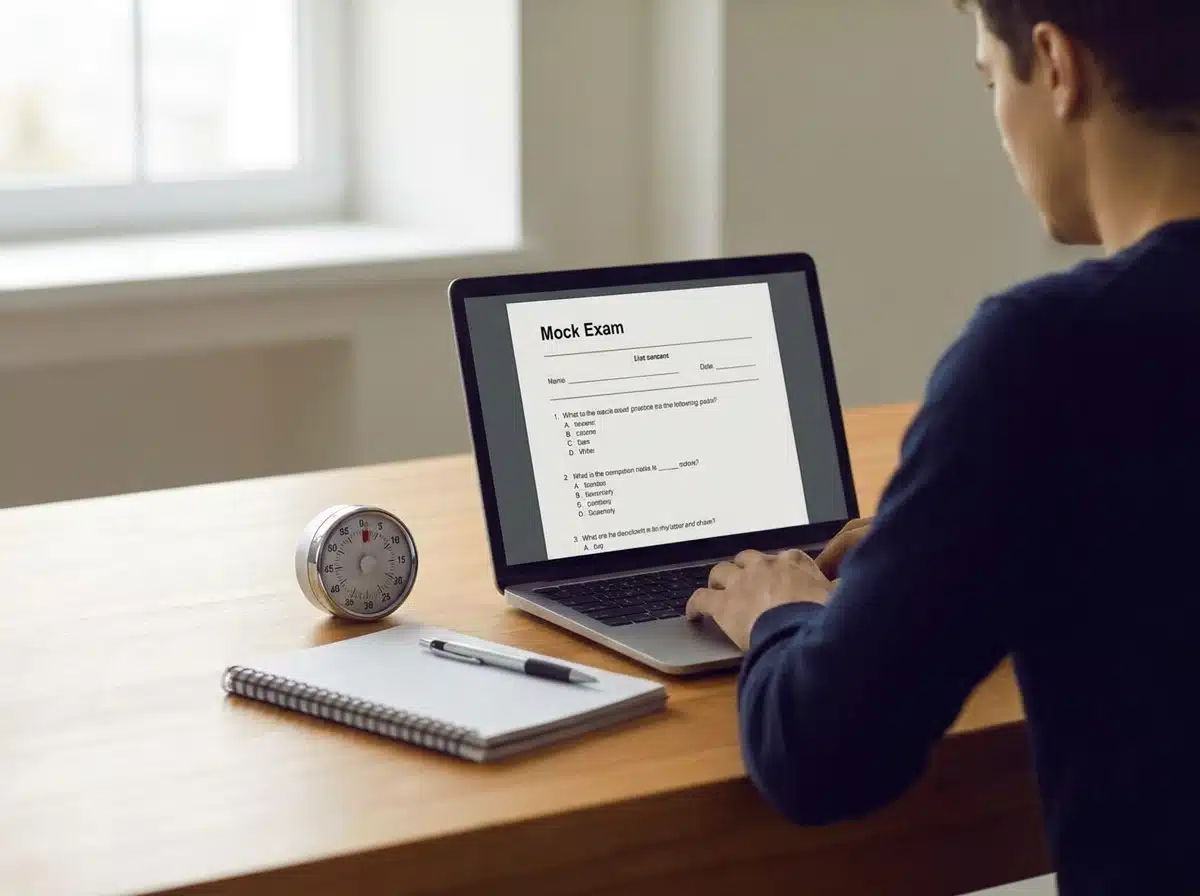
Whatever you decide about paying, free theory test practice only works if you use it like a test rather than a textbook. Block out one fixed weekly slot, phone in another room, and sit official-format mocks as timed exams. No pausing, no checking answers mid-paper.
Take one full mock a week. Log the score and every wrong answer, then revise only those weak topics before the next attempt. Aim to be scoring consistently above the 43/50 multiple-choice pass mark and 44/75 hazard perception mark, not once on a lucky day, before you book.
Run hazard perception sessions separately from multiple-choice sessions. Watching clips and answering questions are different skills, and the official test scores them separately, so mixing them blurs both.
Instructors at EL’s Driving School in Bromley regularly meet learners who can recite answers but freeze on hazard clips. Splitting your practice fixes that faster than adding more questions. Pairing revision with practical lessons also helps, and why booking driving lessons before your theory test boosts your pass rate explains why the order matters.
Practising for Your Bromley Theory Test: Local Pointers
Your routine works the same whether you sit the test in Bromley or Birmingham. The car theory test is set nationally by the DVSA, so the free official mocks you use at home are the same ones used across the country, drawn from the same national publications. No local variation in question content, no Bromley-specific paper to hunt for.
What does vary is availability. Slots at busy south-east London test centres fill quickly, so book early and aim for a date that leaves you several weeks of steady practice rather than a fortnight of panic. Booking runs through the official service.
Then tie theory to lessons. Junction priority, speed limits and roundabout rules you revise connect to real roads around BR1, BR2, BR3 and BR4, so mention what you’ve studied in your next lesson.
Ask your instructor to sanity-check your revision list. A second pair of eyes spots weak areas you’ve overlooked.
EL’s Driving School has taught learners across Bromley since 2004 and can suggest a practice order if you’re unsure where to begin.
The Verdict: What to Use Before Your Test
So, after all that, what should actually be sitting on your screen before test day? Free official practice, used properly, is genuinely enough to pass. The catch is two-fold: the material must match official format, and hazard perception needs its own practice, not a rushed add-on.
Start with the DVSA’s free mock sets for multiple choice and the free three-clip hazard perception test. Together they teach you the real interface before you spend a penny.
Then pay only when a specific gap justifies it. If you keep getting answers wrong and the tool will not explain why, or you want progress tracking, a structured plan, or more hazard clip repetition, paid options earn their keep. Otherwise, they are convenience.
Judge every free driving theory test by whether it follows the official syllabus and question format, not by bold claims about containing the real questions. Nobody legitimate can promise that.
Whatever route you choose, practise consistently over weeks. Log your mock scores, watch for a steady trend, and book once you are stable. One lucky pass mark is not readiness. Steady scores are.
Conclusion
Free theory test practice can absolutely get you test ready, provided it mirrors the official format and question style. Paid tools make sense only when they fill a real gap, such as clearer feedback, progress tracking, or extra hazard perception clips. Hazard perception is a separate skill, so give it its own regular slot. Consistency beats cramming: log mock scores over weeks and book when your results are steady.
Start today with the DVSA free mock sets and three-clip hazard test. Then review your weak spots, build a simple weekly routine, and ask your instructor or EL’s Driving School to check your plan. With focused practice, honest tracking, and local road awareness around Bromley, you can walk into your theory test calm, prepared, and ready to pass.