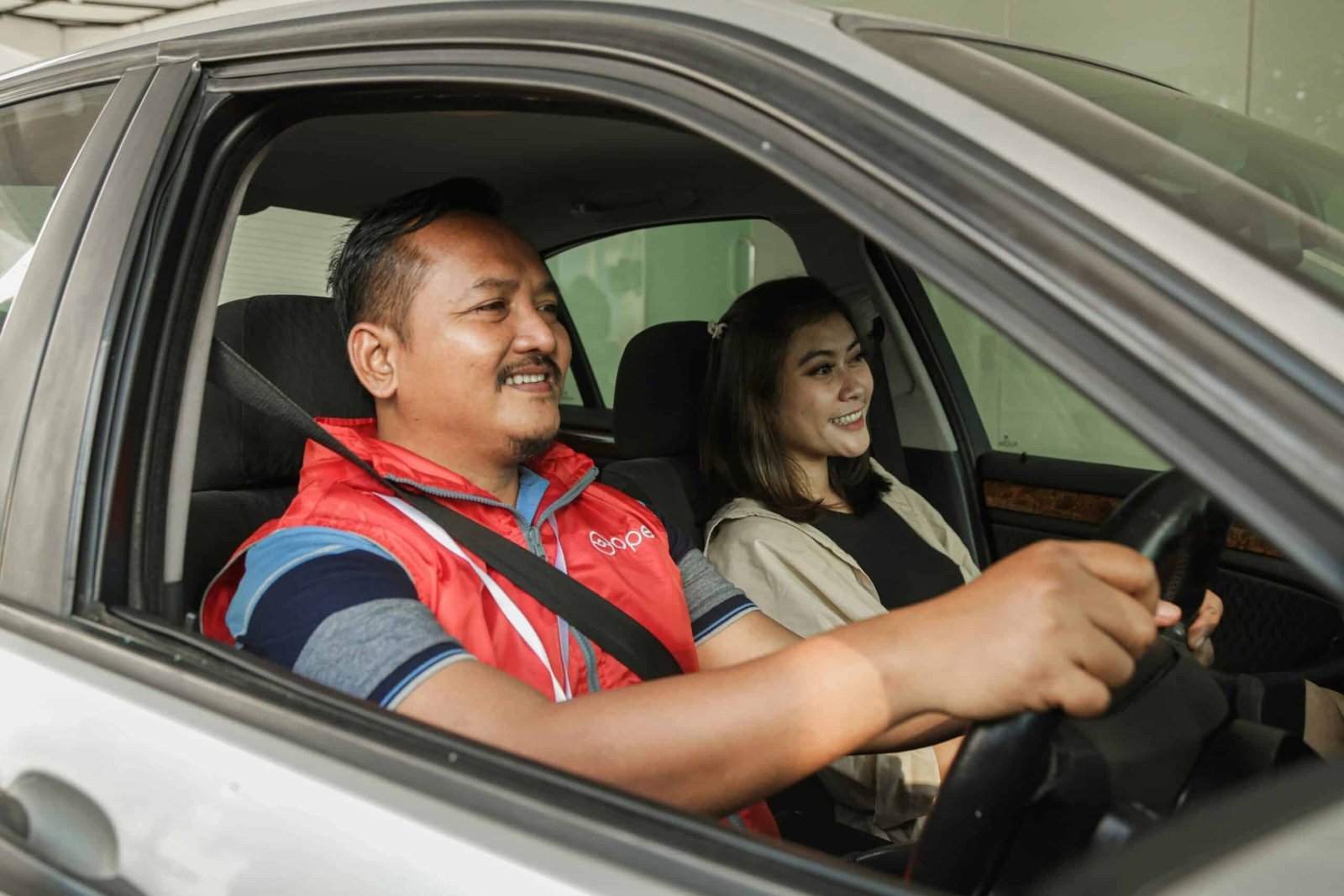
Your palms might already be a little sweaty, and that’s normal. The nerves before lesson one rarely come from driving itself. They come from not knowing what happens first, second, and third. If you’re about to learn to drive automatic car, the good news is that the first hour has a clear shape. In this post, we walk through lesson one hour by hour, from the cockpit drill and moving off with no clutch to stall, to steering that feels twitchy before it settles. You’ll also see how mirrors and observation become a simple routine, where your first quiet Bromley roads take you, and what your instructor is watching while you drive.
We’ll cover the debrief at the end, how quickly automatic learners reach road-ready basics, and what to bring so you feel prepared. At EL’s Driving School in Bromley, the first automatic lesson is built around that no-clutch start. By the end, booking that first hour should feel smaller, and you’ll know exactly what to expect when you get behind the wheel.
Why the First Hour Feels Scarier Than the Driving Does
After teaching in Bromley since 2004, we can tell you this: the nerves that arrive before lesson one are almost never about the car. They are about not knowing the script.
The worries are specific. Stalling. Holding up traffic. Misjudging speed. Being watched while getting it wrong. Having no idea what an instructor actually expects in the first 60 minutes.
Here is the automatic advantage in plain terms. With no clutch pedal and no gear lever to work, a whole category of beginner error simply cannot happen. You cannot stall an automatic because you released a pedal too quickly. If nerves are the main obstacle, it is worth reading why automatic lessons make a difference for nervous drivers.
Lesson one is deliberately low speed, low traffic and repetitive. Nothing about it resembles the driving you have watched on the A21.
You are also not an outlier: DVSA-reported data shows one in four practical tests are now taken in an automatic, up from around one in twenty in 2012/13.
Before You Move an Inch: The Cockpit Drill
The cockpit drill is a short, fixed sequence you complete while parked. Its job is to make sure you are safe, comfortable and able to reach every control before the car moves.
EL’s instructors work through it in the same order every time, so your first driving lesson feels predictable rather than overwhelming:
- Doors closed and secure.
- Seat position and backrest angle, close enough to press the brake fully.
- Head restraint centred behind your head.
- Steering wheel reach, wrists resting on the rim.
- Seatbelt on.
Mirrors come next, while you are still parked. Horizon across the middle, a sliver of your own car on the inside edge, nothing to adjust while moving.
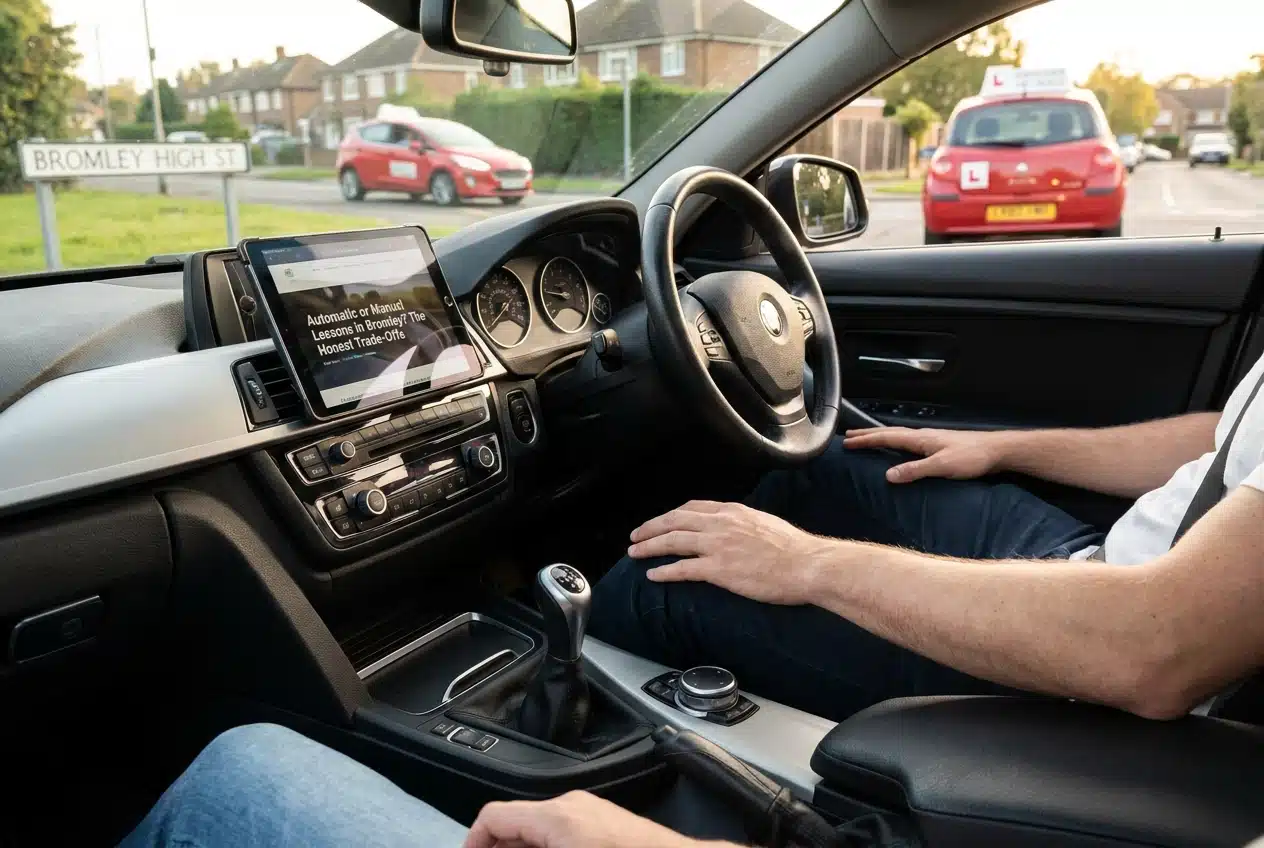
Then the controls, named and explained: the gear selector (P, R, N, D), parking brake or electronic handbrake, indicators, wipers, lights, and the two pedals you will use, brake and accelerator. Automatics vary, so your car’s handbook governs the detail.
Doing this while parked builds a mental map of the car so nothing feels unfamiliar at walking pace, where first-lesson nerves tend to peak.
The First Ten Minutes: Moving Off With No Clutch to Stall
Your instructor demonstrates the move once, narrating each action, then hands it over. You are copying a sequence, not inventing one: foot on the brake, select D, release the parking brake, then ease off the brake and let the car creep forward on its own.
That creep surprises nearly every first-timer. Most automatics roll forward at walking pace on idle, with no accelerator input at all. It is your first lesson in how much control the car already gives you.
To stop, use gentle, progressive brake pressure and bring the car to rest smoothly. Repeat the whole move four to six times so the pattern beds in.
Automatic learners often get more repetitions into the same hour than manual learners, because there is no clutch coordination to rehearse between attempts. That spare time goes into observation and smoothness instead, habits that pay off later in manoeuvres like reverse parallel parking. Once the sequence runs without prompting, you move on to steering.
Steering: Why It Feels Twitchy and How It Settles
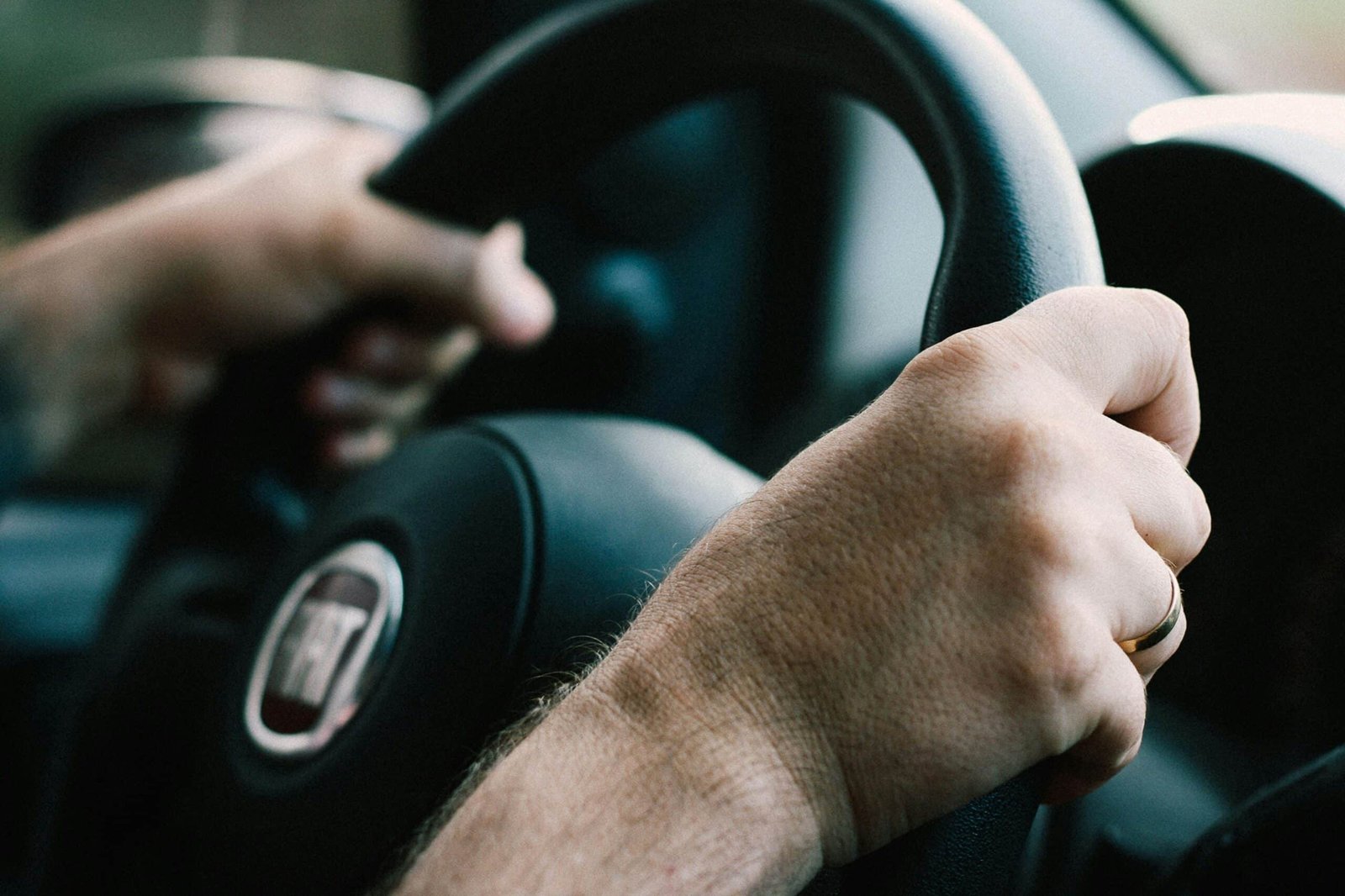
Once the car is creeping and stopping cleanly, the next thing your hands meet is the wheel. Hold it around nine and three or ten and two, with thumbs resting on the outside of the rim rather than hooked inside it.
You may have heard debates about pull-push versus keeping your hands fixed. On the UK practical test, examiners look for control and observation, not a particular hand dance. Pull-push is the technique most instructors teach, and it is what you will likely use, but smoothness counts more than style.
Steering feels twitchy at first because small turns at the wheel become surprisingly large changes in direction at low speed, and your hands are still calibrating.
So your instructor builds it gently: short straight sections to feel the centre point, then slow left and right corners, with the turn called well in advance. Judgement of how much steering to apply is one of the essential driving skills that arrives over several lessons, not one. In hour one, unhurried inputs beat precise ones.
Mirrors and Observation: The Routine That Becomes Automatic
Once your steering settles, observation becomes the real skill. The Highway Code calls it Mirrors, Signal, Manoeuvre, and it is the spine of every action, even ones that feel too small to bother with.
Interior mirror first, for the big picture. Then the relevant side mirror, for the blind area you are about to move into. That order matters.
Mirrors still leave blind spots. Before moving off or shifting position, a quick shoulder check is the one thing glass cannot replace.
Here is the automatic advantage. With no clutch and no gear hand, your attention stays outside the car rather than on your feet. That spare headroom is why automatic learners often build observation habits early, and it pays off at busy junctions, as this guide to The Art of Observation: Essential for Bromley Junctions explains.
Want to speed it up? Try commentary driving: say out loud what you see and what you are about to check. It feels odd for one lesson, then becomes second nature.
Your First Quiet Bromley Roads: Where Lesson One Actually Goes
With your mirror routine fresh, the hour moves onto real roads. Lesson one sticks to quiet residential streets and low-traffic back roads, chosen so nothing competes with you for attention. For a closer look at what that means locally, see What Are the Bromley Roads Like for a Beginner?.
Timing matters too: mid-morning and early afternoon slots are calmer than the school run.
Three situations come up first. Judging a safe gap to pull out. Meeting oncoming traffic on a narrow street. Passing parked cars where only one vehicle fits at a time. Bromley’s residential streets are largely 20 mph zones, and holding a steady, appropriate speed is harder, and more useful, than it sounds.
Your instructor’s dual controls are a safety net you will barely notice. They will talk you through a correction long before touching the pedals themselves.
What Your Instructor Is Watching While You Drive
Once you’re rolling on those quiet streets, here’s the reassuring part: lesson one is not an assessment. Nothing is being scored. Your instructor is building a baseline, and a fairly generous one at that.
What is actually being tracked? Four things: how smoothly you steer, whether you check your mirrors without being prompted, how well you control your speed, and how quickly you settle after a mistake.
Small corrections come in the moment. The bigger picture gets saved for the debrief, so it isn’t competing with the task in front of you.
One honest note: your instructor may let a small mistake play out for a second or two. That’s deliberate teaching, not inattention. Feeling the wobble and fixing it yourself sticks, which is why pairing practical lessons with a theory test revision plan built around your driving lessons works better than revising in isolation.
Everything noticed in hour one shapes what lesson two covers. That’s why the debrief matters more than it looks.
The Debrief: What You Will Be Told at the End of Lesson One
The debrief is short, maybe five minutes, and it follows a pattern. Your instructor starts with what went better than you think it did, then narrows to two or three specific focus points for lesson two.
Expect the answer to “how did I do?” to be kinder than your own verdict. You will remember the one moment the car lurched; you will have forgotten the other 55 minutes of steady work.
Ask this out loud: “What would you have me practise first next time?” Vague reassurance is useless. Specific feedback is the point: “your mirror checks were early and consistent, your speed on the narrow section needs work” tells you something; “you’re doing fine” tells you nothing.
Then wrap up while it is fresh. Book your next slot there and then, because good intentions fade by Thursday, and ask what EL’s online lesson resources cover if you want to read between sessions. If you are returning after a long break, what refresher lessons at EL’s actually involve is worth a look.
Lesson two already has a plan.
How Fast Do Automatic Learners Reach Road-Ready Basics?
The debrief gives you something concrete to work on. The next question is usually time.
Honest answer: there is no fixed number of hours. Progress depends on how often you drive, any previous experience, and how quickly observation habits stick.
Removing the clutch deletes one task, not the whole job. Reading traffic, judging gaps and holding a steady road position still take repetition. That bottleneck is the same whether you learn to drive an automatic or a manual.
The statistics deserve care. DVSA figures show the automatic share of practical tests rising sharply over the past decade, but that counts how many people test in automatics, not how fast anyone learns.
Frequency matters more than transmission. One lesson a week with no practice between builds skills far more slowly than the same lessons bunched closer together.
So ask for milestones, not a test date. What should you manage by lesson five? By lesson ten? And what has to be true before you book a practical test? A good instructor will answer all three plainly.
What to Bring and How to Prepare for Lesson One
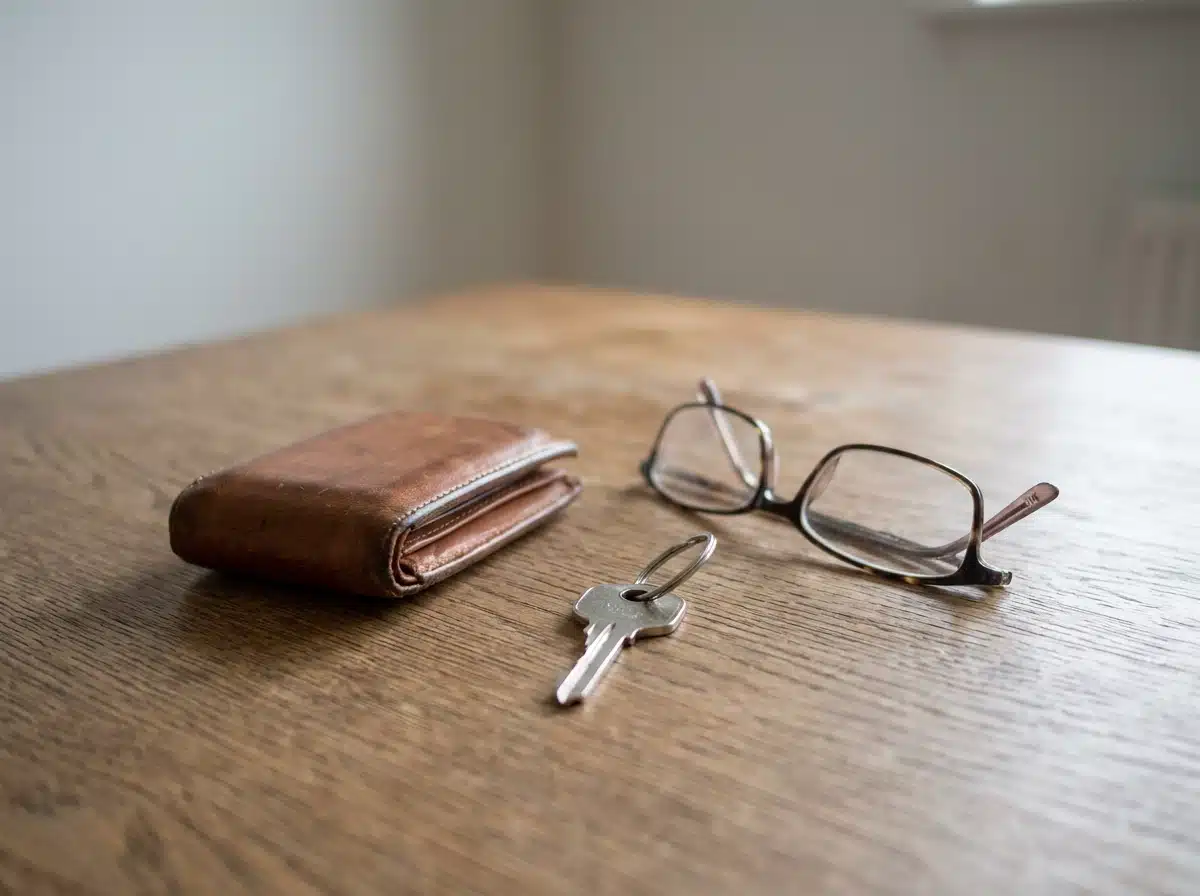
Preparation here is mostly about lowering the barrier, not gathering equipment.
Bring three things:
- Your provisional licence
- Glasses or contact lenses if you need them to meet the eyesight requirement
- Flat shoes you can feel the pedals through
That is the whole list. No kit, no checklist.
The mental preparation matters more. Accept that you will be slow, that the car will feel enormous, and that neither is a problem your instructor has not seen a hundred times before.
EL’s Driving School is an independent Bromley driving school established in 2004, serving BR1 and BR2, BR3 and BR4 plus the wider south-east London area, with premium automatic lessons for learners at every experience level, complete beginners included. If you want to cover theory, cockpit drill basics or test preparation before or between practical sessions, online driving lessons are an option.
Still unsure whether automatic suits you? Book a single lesson rather than a package. That is the smallest step available, and one hour will tell you more than any amount of reading.
Your First Hour, Summed Up
So that is hour one: cockpit drill while parked, moving off with no clutch to stall, gentle controlled stops, low-speed steering, mirror and blind spot routines on quiet residential roads, then a debrief naming exactly what lesson two will target.
Three things worth acting on:
- Book a single first lesson rather than a block, so you keep the choice.
- Ask for a mid-morning or early afternoon slot if you can; the roads are calmer.
- At the debrief, ask what to practise first next time, not whether you did fine.
The fear was never really about the driving. It was about not knowing the shape of the hour, and now you have it. The only way to find out how naturally an automatic comes to you is to sit in one for 60 minutes. You will learn more there than from any amount of reading.
Conclusion
Your first automatic lesson in Bromley has a clear shape: cockpit drill while parked, moving off without clutch worries, gentle stops, low-speed steering, and mirror and blind spot routines on quiet residential roads. It ends with a debrief that tells you exactly what lesson two will target. The fear comes from not knowing the hour, not from the driving itself.
Your next step is simple: book a single first lesson with EL’s Driving School rather than a package. EL’s Driving School is an independent Bromley driving school established in 2004, serving BR1, BR2, BR3 and BR4 plus wider south-east London, with premium automatic lessons for complete beginners. Ask for a quieter mid-morning or early afternoon slot if you can.
One hour behind the wheel will teach you more than any amount of reading. The only way to know how naturally automatic driving comes to you is to sit in the driver’s seat and begin.